
Time for another five reviews!
Four of them are audiobooks, which some may say don’t count, but fuck those people. Three of them are classics that I’d long wanted to read (or ignored, in the case of one of them) so I was pleased with this brace.
Let’s get into it.
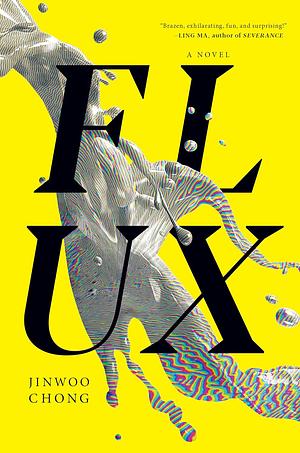
Flux by Jinwoo Chong.
My rating: four stars.
This was one that was the result of judging a book by its cover. I saw the … digital jizz? … cover on a shelf at Kinokuniya during a birthday holiday, and noticed that the back mentioned something about time travel and curiously evil corporations and, well, sold.
The narrative involves a company run by an Elizabeth Holmes-alike named Io Emsworth, a tech girlboss who’s so perfectly tech girlboss she could’ve been focus-grouped into existence. (Which I suppose it what happens if you spring fully formed from an Excel spreadsheet rather than the ground or a horny god’s forehead? Anyway I digress.) The company is ostensibly a battery power concern but there’s… loopier shit afoot.
(And there’s also Lev, a management guy who has, apparently, an enormous knob and more money than God, if that’s what it takes to get you in the door.)
Our planet is dying. We no longer have the resources to sustain our growth. And don’t say I’m just shitting you. You want to call me pessimistic? Fuck you. I’m the most optimistic person in the world. I know exactly what we can accomplish if we have the money, and the time, to do it.
It’s worth noting that both these people are in jail at certain points in the book. For CRIMES of IMPORT. Which will become clearer – or will it? – as you read on. Because as you read on, you will discover that the book is actually the story of three distinct narrators: Brandon, a 20something guy retrenched from a fancy magazine, Bo, a recently bereaved child, and Blue, who’s involved in a documentary being made about the collapse of Flux Corporation (that snappy company with the dodgy ethics) some decades previously.
What results is a story where sadness dogs each narrator, and the unreliability of memory – as well as some perhaps more tangible chronological fuckeries – is a big driver. I don’t particularly want to go into the plot too much itself, because part of the joy of the novel is finding out. But it was deeply enjoyable with a keen sense of how important TV shows can be to one’s identity in youth, and how queerness affects how one moves through the world as an adult.
This is something I hadn’t heard of – because apparently I am completely ignorant of PEN nominees, it seems – but I really dug it.
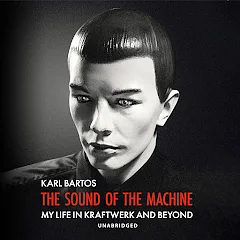
The Sound of the Machine: My Life in Kraftwerk and Beyond by Karl Bartos.
My rating: three stars.
This is the second ex-Kraftwerker biography I’ve read, and I must admit that Karl Bartos talks a lot more about music (and a lot less about his dick) than Wolfgang Flür did.
(This is a good thing.)
For aside from all the facts and images in my head, there is an absolutely reliable source that provides information on everything I cannot say in words, and that source is music.
Bartos is much more focused on music than his fellow bandmate, too. This very long book is, seemingly, ghostwriter-free, and goes into laborious detail about his musical journey from childhood to adulthood, from orchestral playing to Kraftwerk and beyond. At each step, the music that Karl was listening to is described, in an endearingly dorky manner.
Look, I’ll be frank: there’s probably not going to be any reason for you to read this if you’re not a Kraftwerk fan. Bartos’s life post-robots sounds great but it’s always going to be in the shadow of his time with Ralf and Florian. But if you are a Kraftwerk fan, there is some incredible production and songwriting information from a man who contributed to some of their biggest tunes.
Could it be shorter and better written? Yeah, but what couldn’t, really? Bartos provides an enjoyable look at life in pre-reunification Germany, at the birth of the electropop movement. It’s a different world, and his enthusiasm compensates for most of the lesser moments.
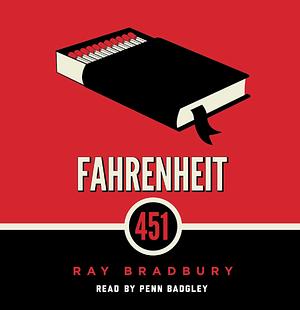
Fahrenheit 451 by Ray Bradbury
My rating: three stars.
This is another one of those books that somehow had passed me by. I’d seen the 1966 Truffaut adaptation, so I knew the story – I’d seen it in the first flowering of my annoying Film Guy teen years – but I hadn’t actually read the source.
(Technically, I still haven’t, as this version was an unabridged audiobook read by Penn Badgley, who is a fearsomely good narrator for the subject matter even if it felt like it was being put in my ear by a serial killer on occasion.)
How long is it since you were really bothered? About something important, about something real?
I’m pretty sure this is the first Bradbury I’ve read, and it’s another instance of Luke Feeling Like An Idiot For Sleeping On This Shit. It’s a blind spot I’m glad to have cleared. The book snaps along, telling the story of a world in which humanity has embraced consumption of brainless slop to anaesthetise the bulk of people into civic-minded somnolence and… oh. Oh wait.
It doesn’t matter what you do, he said, so long as you change something from the way it was before you touched it into something that’s like you after you take your hands away.”
Yeah. Something written in 1953 is once again CRUSHINGLY PRESCIENT. Books are banned, groupthink is pretty cool, and Guy Montag (which is honestly a brilliant drag king name, no matter how much it makes me think of Guy Smiley) is a Fireman, in charge of burning banned books until he has second thoughts.
The books are to remind us what asses and fool we are. They’re Caeser’s praetorian guard, whispering as the parade roars down the avenue, “Remember, Caeser, thou art mortal.”
See, this is the book people who keep using the phrase Orwellian should be looking into instead, because it’s way more reflective of how fucked we are, collectively, and how much potential for hope there is, individually. If you’ve not read it, read it. There’s a lot in there that seems obvious, but after almost 75 years it still holds a charge.
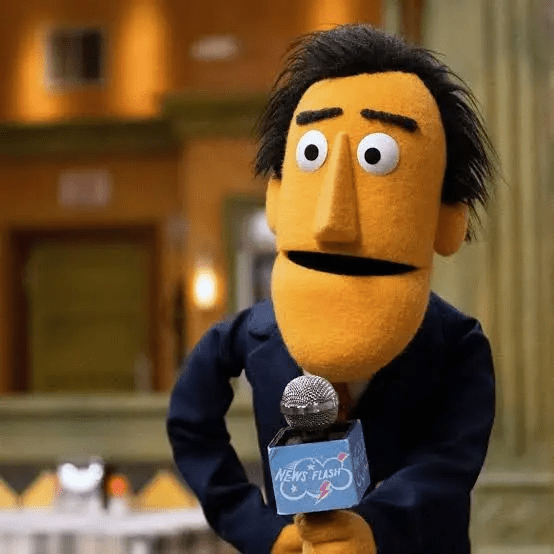
(I am choosing to ignore the fact that Bradbury, later in life, made parallels between political correctness and the restrictions in the book because I am separating the art from the artist saying absolutely clown-shoed stupid shit.)
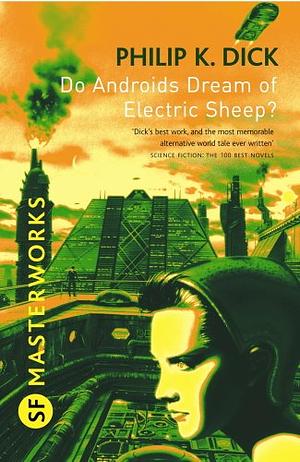
Do Androids Dream of Electric Sheep? by Philip K. Dick
My rating: three stars.
Another one that I’ve never read but thought that I probably should get around to.
First thing: this is a lot more thought-piecey than I had been led to believe by Blade Runner. (I mean, duh.)
Second thing: there is a lot more schlong-measuring by way of animal ownership than I was expecting. To be fair, I wasn’t expecting any, but boy howdy there’s a lot in here.
To say, ‘Is your sheep genuine?’ would be a worse breach of manners than to inquire whether a citizen’s teeth, hair, or internal organs would test out authentic.
(Saying that, this is set in a period – 1992! – where extensive codpieces have to be worn to protect from genital-withering fallout from World War Terminus, a war that has so severely fucked things on earth that anyone with any wherewithal has Done An Elon and Fucked Off To Mars.)
The brief novel is the story of Rick Deckard, a bounty hunter in search of escapee androids (and perhaps a real owl). He’s married to a woman named Iran, who is rather fond of feeling depressed (in spite of their constant use of some futuristic dial-an-emotion console that homes have in the go-go ’90s). She doesn’t like his job, but there’s also the distinct feeling that he doesn’t, either .
Regardless, as they say in Futurama, y’gotta do what y’gotta do. Rick’s gotta whack androids – or those that can’t pass particular tests that might sniff out synthetic humans. (Which, inconveniently, might include people with mental illnesses, so looks like I’m shit out of luck.)
‘Is this testing whether I’m an android,’ Rachael asked tartly, ‘or whether I’m homosexual?’
Rick’s story is told in a very noir style – all loaded dames and shoe-leather investigation, even if those shoes are occasionally ensconced within a hovercar. The story takes him to an android manufacturer’s luxurious digs (this is when a petting zoo is considered like having a Kandinsky hanging in your reception area), and in search of renegade androids with no qualms about killing. He knows he’s a killer, but he also knows it might help him buy some nice animals, so COME ON, let him do his thing, ok?
What a job to have to do, Rick thought. I’m a scourge, like famine or plague. Where I go the ancient curse follows.”
There’s a lot more to the story than that – a lot of rumination about what it takes to be human, about self-anaesthesia, about religion and the veracity of stories upon which we base our lives. About reality and artifice and whether one is more important than the other. I was surprised at how weighty yet how insignificant the story felt, by turns – as if vibes and deep thoughts were the polar points of the narrative machine that Dick occasionally threw a spanner into.
It’s probably safe to say that this is a story that was thought about more, or more influential than it was good – though I don’t think that’s a bad thing. I’ll be reading more Dick (particularly after reading Erik Davis’ book about Dick, Wilson and McKenna) to see what other notes he might ring. These ones I enjoyed, but I think they were too coloured by Vangelis’ scoring to Ridley Scott’s interpretation of them.
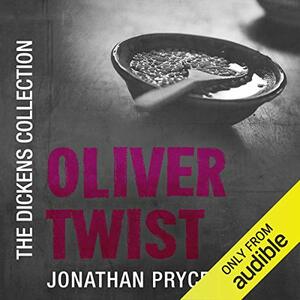
Oliver Twist by Charles Dickens
My rating: three stars.
I think I had been poisoned against this book a bit by the musical film version.
You know the one.
I’d watched the film when I was very young, probably when I was hoping to get some cool film about a robot dog (it seems nobody but me remembers C.H.O.M.P.S., alas) but instead got a film about orphans and pickpockets and creepy adults. (Cool cigs on the kids, though.)
As part of my recent foray into Dickens (including other titles I’d been sidestepping for decades) I figured that long car trips for work provided another time to dive in. I’m pretty glad I did, largely because Jonathan Pryce’s reading is exemplary. I know it’s probably a bit below me to go moon-eyed over the fact he does the voices but he does the voices! And they’re great! Especially when he’s doing thugs like Sikes (as which he has to go against ROBERT LOGGIA and OLIVER REED performances, and does a creditable job).
(To be fair, it’s the same series that’s given me Miriam Margolyes’ Bleak House and Simon Callow’s A Tale of Two Cities, so I’ve yet to hit a dud.)
The story is a lot deeper than the Lionel Bart distillation, surprising nobody. It’s an early Dickens novel, so it seems a bit more beholden to the happy ending than some of his other works, I suppose. But there’s plenty of grimness-of-the-poor to go around, which is unsurprising as it’s basically an exploration of the Poor Laws and the problems experienced by people in the wake of industrialisation. We hear about the life of Oliver, a kid whose background May Not Be All It Seems, Not That He’d Know It, who seems to either have options as a drudge or a pickpocket, which doesn’t seem entirely favourable.
Oh! You know what else isn’t favourable? Fagin. He’s basically a more ragged-ass version of the Child Catcher from Chitty Chitty Bang Bang. And how’s he presented? Oh, he’s Jewish. Which, if you know anything about Dickensian subtlety, means that we have references to sneakiness and THE JEW throughout the text. Had you forgotten? That Fagin was Jewish? Don’t worry, old mate Chuck gonna remind you whenever he shows up!
(Debate rages about whether it’s antisemitic, but it’s certainly on the fucken nose. Cock it down a notch, Chilla.)
Anyway, I did enjoy the novel through Pryce’s reading. It’s not a top-tier Dickens for me (that’s still Great Expectations and Bleak House, absolutely) but there’s a lot more to it than I had expected, and I was touched and disturbed by lots of the twists (ha!). I found Oliver himself a bit too creepily good, but some of the other children were really well fleshed out.
(I was also pleased to note how little gruel actually features.)
This takes me up to fifty titles for the year so far. Looks like I might hit a hundred this year without it feeling like I’m making up the numbers or doing things by rote? Look, that’s a good result, at least for me.
If you’re after some good bookish times, please check out my profile on TheStoryGraph.
If you’d like to buy me some books to review, there’s a wishlist over here.

