
Well well well.
If it isn’t me getting more manageable book reviews online in a relatively acceptable timeframe.
Right, let’s go.
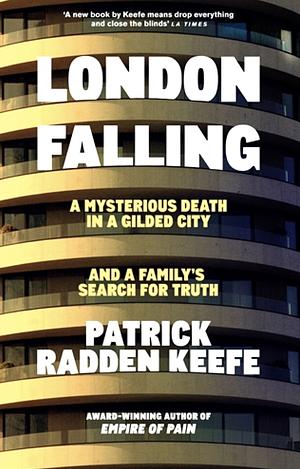
London Falling: A Mysterious Death in a Gilded City and a Family’s Search for Truth by Patrick Radden Keefe.
My rating: five stars.
A while ago I read an excellent article about Zac Brettler, a teenager who died after falling from a London apartment building. It was written by the author of Say Nothing, an excellent book about the Troubles that I read last year, and when I finished that book I was excited to see that the article was becoming a fuller work of its own.
What has resulted is an excellent investigation of a young man’s death, through which the reader explores London’s underworld, its embrace of dubiously monied oligarchs, and a family’s grief – not only at the death of their son, but also at how little they truly knew him.
‘London is to the billionaire as the jungles of Sumatra are to the orangutan,’ Boris Johnson, who at the time was the city’s mayor, boasted in 2014. ‘We’re proud of that.’
As with his other works, London Falling comprises verbatim quotations from a raft of personal interviews. The author spent a lot of time talking with the Brettlers about their departed son, but also chased down most of the players in the story – those that are still living, at least. What emerges is the story of someone wanting to fit into a world they perceived as grittily appealing – the James Bond lifestyle dreams of a teenager who goes to school with rich kids – with a pretty decent capacity for bullshittery.
The story is not a pleasant one. Initially one might suspect this is because of the strong-arm merchants that Zac was enthusiastically courting (who made suitably street-forged chancers nervous, not least because one of them had a habit of frightening people by hanging them off balconies), but ultimately because the despair of the family left behind is palpable. The grief of loss is compounded by the parental drive of protection, of feeling that there’s something that could have changed the outcome.
But how do you change the outcome when you don’t know who your son really is?
I’m not a parent. I’m sure particular elements of this work will resonate more fully with readers who have kids. Reproductive status aside, this is an incredible read. It’s grim as fuck, and a sad story of getting in too deep, too young.
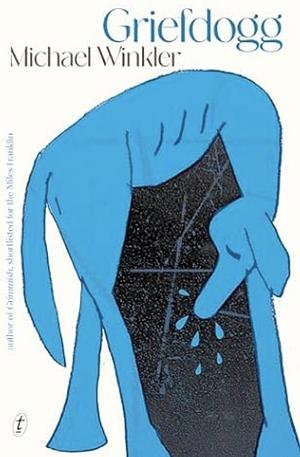
Griefdogg by Michael Winkler.
My rating: five stars.
So hey, I read Winkler’s novel Grimmish a few years ago and absolutely loved it. Was it because it featured a swearing goat? I mean, the fact it had a swearing goat in it certainly was a boon. The fact it was described as an exploded non-fiction novel also held some absolute lit wankery appeal for me, I won’t deny. I was captivated by Winkler’s writing, and the way the story was occasionally put on the shelf to discuss the travails of writing, masculinity and the mortification of the flesh that comes from toughing it out.
Griefdogg is about one man’s abnegation of responsibility in Mildura. It follows the story of Jeffrey, who has a strange encounter with his cousin after unexpectedly inheriting a comfortable amount of cash from a deceased relative. Jeffrey decides he wants to live the life of a pet: taken care of, but with no responsibilities.
Life is a confidence trick. Capitalism is a confidence trick. Democracy is a confidence trick. So is banking, and religion, and formalised education, and to some extent medicine. The idea that we should work for fifty years to save enough money to sandbag us from the greatest vicissitudes for the last portion of our life, and that this is a good use of our given time on the blue planet, and that no work should be expected in our later years, is a trick masquerading as a middle-class right.
So he becomes Hubert. The family pet. Figuring out to tell the family is difficult, but not as difficult as what comes next: the realisation that he can detect people’s secret griefs.
(He also develops a fine line in terrible one-liners, but that’s another part of the transformation.)
The novel splits between Hubert’s point of view and that of a narrator. From Hubert’s side we get geological and water table musings, diving into a very First Nations-aligned perception of what Country is, and the secret movements of water. From the narrator we get a helicopter view of Hubert’s life, and the narrator’s own. It’s through this narrator that we get some more thoughts on writing and composition, mostly self-deprecating.
I wonder what Les Murray weighed. It would be a consolation if we took the same size in shorts.
Griefdogg is a very short book. It is also very funny and deeply sad. It looks at how fucked the world is, how short our lives are, how we try to find joy in little things, and how grief flows through us all, mostly hidden but sometimes bursting forth like a spring.
It’s fucken great.
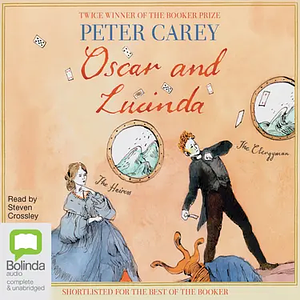
Oscar and Lucinda by Peter Carey (reread).
My rating: five stars.
I’ll keep this one short because by now you probably know whether you’re a fan of Peter Carey or not. I am one, and this is probably as close as I get to a comfort read.
I first read this book for the HSC. It was part of the English curriculum that year, and my normal lack of organisation meant I read it in one night and wrote a reading journal for it as I went, rather than having read it over the holiday like I was supposed to.
The book was inhaled. I couldn’t stop. It was a pleasure to keep going, and the story dragged me along. I’ve only had one other instance of compulsively enjoyable all-night reading with a set text – Dickens’ Great Expectations – and it’s no surprise to me that they share certain similarities of form and popcorn-munching high stakes.
Carey’s book – which lifts some elements of character from Edmund Gosse’s Father and Son and plot from Patrick White’s Voss – details the life of two gamblers, a parson (Oscar) and an heiress (Lucinda). The journey from England to the middle of nowhere, Australia, is Oscar’s tale, while the journey from Parramatta to London (and back) is Lucinda’s.
I know the book is flawed and historically inaccurate in parts. I just don’t care. It’s a story of love, of glass, of chance and of colonies and colonisation. It’s well researched, almost too slick in parts, and I feel bereft if too many years pass without giving it another read.
My physical copy is the one my now-dead maternal grandmother gave to me to read for the HSC, and it is age-spotted now. But every time I open it I feel lighter, and every time I read the closing lines I tear up.
Every time.
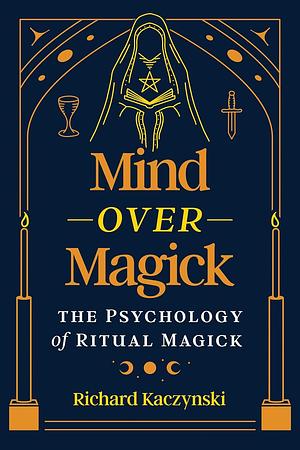
Mind Over Magick: The Psychology of Ritual Magick by Richard Kaczynski.
My rating: three stars.
Richard Kaczynski is a well-known occult writer, mostly about Aleister Crowley. But he’s also a PhD in Social psychology, a statistician, a research affiliate at Yale’s School of Medicine, and a well regarded academic.
This is interesting to me: someone who has an abiding interest in esoterica and ritual, but who also is possessed of a strong sense of the scientific method, of evidence, cause and effect.
Mind Over Magick links the practices of ritual magicians of various traditions with peer-researched psychology, neuroscience and brain imaging papers. He examines things like the flow state, for example, linking it with in-ritual practitioner states.
I didn’t feel entirely convinced by the book: or rather, I felt it wasn’t entirely tied together. There is an incredible amount of referenced material, and none I think the conclusions drawn are solid , and some goals – describing a framework to understand at a psychological or neurological level what happens in a magickal experience, say – are pretty admirable. I just felt that there was some knockout blow missing.
(That said, Kaczynski has some good tips for practitioners (current or would-be) which largely boil down to the application of rigour to one’s practice. This is pretty good advice, though it’s also fairly benign. I’m probably sounding more down on this than I mean to be: I liked it, sure, I just wish I got more out of it.)
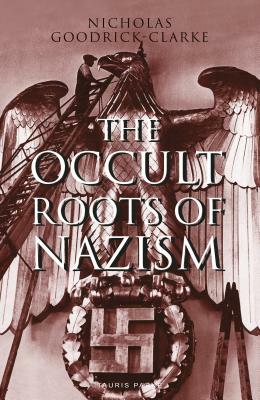
The Occult Roots of Nazism: Secret Aryan Cults and Their Influence on Nazi Ideology by Nicholas Goodrick-Clarke.
My rating: three stars.
Firstly, fuck Nazis.
(Start as you mean to go on, right? And just to set the scene for anyone seeing the cover and thinking ‘I wonder…’)
Secondly: this is a great book. Not in terms of flow – it’s dusty as fuck – but because of the facility with which Goodrick-Clarke is able to frame the occult ideologies that influenced the Nazi party and enabled their plans for wholesale extermination of entire peoples.
The book (which I just learned was based on the author’s PhD thesis, potentially explaining the dryness of some of its prose) covers Austrian and German esotericists between 1880 and 1945. This mainly focuses on Ariosophy and Armanism, pro-Aryan inventions of Lanz von Liebenfels and Guido von List, and their influence on the Völkisch movement. (Basically, blood and soil fuckheads with a yen for dressing up and pretending they’re knights or some such shit.)
At best, these occult beliefs might bolster and justify resistance to processes of social change. At worst, they provided a fantasy world, in respect of which the present could be lamented and the possessors of the true gnosis could comfort themselves in their assumed superior wisdom.
While Goodrick-Clarke doesn’t suggest that Hitler was directly influenced by this pair of chucklefucks, he does show that National Socialism certainly adopted a lot of its racist and antisemitic motifs, symbols and drives, ultimately empowering the Nazi pursuit of extermination. The author also pushes back on the idea of Nazism as some kind of hocus-pocus-driven organisation, pointing out that most connections of the regime with occultist powers stem from sensationalist publishing of the 1960s and 1970s than with truth. (I don’t know what he thinks of the Wolfenstein series, however.)
Writing for the 2004 reprint of the book, the author captures why understanding the admittedly dry histories of this book are important.
AS WE witness the renewed growth of the far right across Europe, America and the former East Bloc, The Occult Roots of Nazism helps illuminate its ideological foundations. By examining the occult ideas that played midwife to the Hitler movement, the most destructive rightwing ideology in history, we can better understand their implications today.
This has me HYPED to read Black Sun, the follow-up that examines similar ideas in the neo-Nazi movement. Because… well, you’ve seen the world, right?
(If you wish to read this book, a copy is available online here. It can be tough going, but it’s worth it.)
If you’re after some good bookish times, please check out my profile on TheStoryGraph.
If you’d like to buy me some books to review, there’s a wishlist over here.

