Well, this is a better stab at timely reviewing.
I mean, it’s timely inasmuch as there’s some reviews generated before the amount due overwhelms me and stops me from doing anything at all. There’s not twenty for you to wade through – there’s only ten this time.
Baby steps, I suppose.
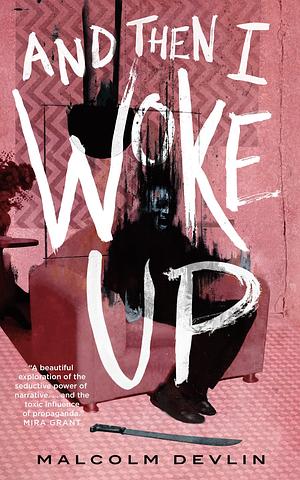
And Then I Woke Up by Malcolm Devlin.
My rating: four stars.
Look, I won’t lie to you: I bought this because a) it was cheap and b) the cover had enough of a Francis Bacon vibe to draw me in. Sometimes, that’s all you need.
What follows is a novella-length story that examines truth, and how stories can change perception based upon changes in the retelling. We meet characters in what appears to be a treatment facility, held while they come to terms with horrendous crimes committed before they ‘woke up’ – while they were in a state discontinuous with reality.
Or is it?
Isn’t it beautiful how stories can work like that? The subtle way they help the teller, the subversive way they reach the listener, how they creep inside you like waking dreams.
Spence is one such facility resident. What’s their story? Well, it depends on who you ask. You’re probably not going to like the answer, however.
I let her choose the rules that defined how reality was destined to work. I let her decide how far we were permitted to go. My worldview teetered until she said the word.
This is something better experienced by going in blind. Without giving away much of the plot, expect some rumination on mythologising (collective and self) and on the perception of reality that fits into the Lost Highway view of things. Pretty good.
Pink Mountain on Locust Island by Jamie Marina Lau
My rating: three stars.
This Stella-nominated debut work is not for everyone. I’m not entirely sure it was for me – I’m pretty certain I’m far from its target audience – but I did enjoy it, even though I felt by the end of the work that its welcome had well and truly been worn out.
The book describes the life of Monk, a 15-year-old girl with a relatively atomised home life. She meets up with Santa Coy, an artist of the most pretentious type (nepo-baby, coolly distant and seemingly talentless?) who, with Monk’s father, starts flogging art to wankers.
I sit on the floor with a box of cornflakes and watch the radio station logo rebounding off the screen’s edges. No one’s listening but still I ask: when was the last time you considered the fact that you are not kings of the world?
For a large chunk of this book I felt like a past-it observer, which is undoubtedly true. Lau has some incredible imagery in here, and there’s the smell of lived experience to the text. But for every crystalline moment, there’s a laboured metaphor or something that made my eyes roll. It’s a work that takes chances and often falls flat, but whether you’ll see that as endearing elements of growth or the overknowledgeable bar-chat of a new student convinced they know everything is probably up to you.
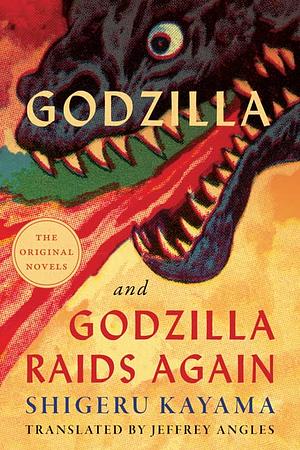
Godzilla and Godzilla Raids Again by Shigeru Kayama.
My rating: three stars.
This collection of novella-length works can be considered the basis for the whole Godzilla canon. The two stories – written for adolescent readers, and thus possessing a certain amount of gee willikers! energy – are expansions of the film treatments Kayama wrote for the first two Godzilla films.
The stories themselves aren’t necessarily brilliant in themselves; they both involve an attacking monster (monsters in the case of Godzilla Raids Again), some by-the-way romance and a feeling of impending doom. But there’s something quite appealing in their simplicity and in the knowledge that they kickstarted a still-ongoing series of films. It’s serviceable prose, with characters that occasionally drift beyond two dimensions, but let’s be honest: you’re here for big lizards, and that’s what you get.
There’s a certain amount of information about the creation of the stories that’s helpful:
As you readers already know, the main character of this tale, Godzilla, is an enormous, imaginary kaiju—a creature that doesn’t actually exist anywhere here on the planet. However, atomic and hydrogen bombs, which have taken on the form of Godzilla in this story, do exist. They are being produced and could be used for war at any moment. If that were to happen, it wouldn’t just be big metropolises like Tokyo and Osaka that would be destroyed. The entire Earth would likely be laid waste. To prevent something so frightening and tragic from coming to pass, people all over the world are pouring their energy into a new movement opposing the use of atomic and hydrogen bombs. As one small member of that movement, I have tried to do my part by writing a novel—the tale you now hold in your hands. Reading this book in that context will make it all the more informative and interesting.
It’s worth remembering, especially today, that Godzilla, while being an enormous beast that exists to fuck up architecture and rake in box office receipts, also has a meaning and was based in the horrors of human endeavour. While the stories here didn’t flip my wig, I appreciated being reminded of their provenance, and of the broader concerns that birthed them.
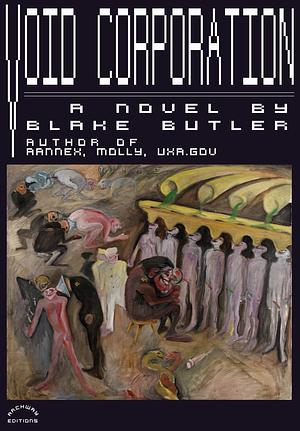
Void Corporation by Blake Butler.
My rating: four stars.
Previously published as Alice Knott, this is Blake Butler’s preferred edition of that story. I have no idea whether Void Corporation is any easier to read, but there is certainly enough going on to keep a pseud like me entertained for the runtime.
The novel exists in a world where social media is ablaze with secretive video of great works of art being destroyed. Seems that the artworks have been lifted from the collection of Alice Knott (a rich older lady – or is she?) without her knowledge, and then destroyed for the benefit of some very Squid Game motherfuckers. (Masks? I imagine masks.) Things being what they are, the destruction doesn’t stay online very long: memetic infection means that people are soon pissing on masterworks and hammering fuck out of sculptures, causing museum closures, consternation, and general cries of what the fuck is going on?
(A cry you will likely find yourself echoing.)
There’s a lot of consideration about the consumption (here made literal) of art by the very rich, by those who only experience is through a screen. The role of art, of wealth, of identity is considered, but it occurs in a frame that is full of lens flare and light beams: the intentionally (?) cold narrative seems to swing for the ephemera, rather than the focused, trying to convey feelings rather than information.
(Rather, I know there’s information there, but it feels a little bit like Lovecraft’s description of monsters: attempting to look full on at something by not looking at it at all.)
Your enjoyment of this book will hinge on how much you like lit-boy wank. There is a lot of it here, and while it was not all successful, it was intriguing enough to earn a poser’s thumbs-up.
The Glass Bead Game by Hermann Hesse (reread).
My rating: four stars.
I’m not sure that my review of Hesse’s last novel will contain any revelations. I first read it when I was a teenager, and reading it at fifty has only confirmed that younger me had absolutely no fucking idea what was going on.
It also confirmed that fifty-year-old me also has no idea about what was going on, but I’m more okay with admitting it these days.
For the most part, the book is the story of Joseph Knecht, a student who rises through the academic ranks to become magister ludi – master of the game – in Castalia, a province dedicated to intellectual pursuits. The high point of this is the Glass Bead Game, an endeavour that’s never explained in depth but which Hesse makes us believe has a lot in common structurally with the latticework structures of Bach’s music.
Ostensibly a history of Knecht (and a pisstake on the pomposity of some biographical endeavours), the book details the main character’s excursions into the rarefied air of intellectual purity, the contention this engenders from his less-able friends (for whom the real world is much more critical) and his personal crisis of faith, ultimate rejection of the Castalian way of life, and departure from his position.
There is truth, my boy. But the doctrine you desire, absolute, perfect dogma that alone provides wisdom, does not exist. Nor should you long for a perfect doctrine, my friend. Rather, you should long for the perfection of yourself. The deity is within you, not in ideas and books. Truth is lived, not taught.
There’s more to the story than that – including another retelling of parts of Knecht’s history from different sources, and a brace of Knecht’s short stories, much different in tone – but that’s largely it: a Jung-influenced examination of the way reality, the intellect and the self collide, and which comes out the winner.
As someone still in a state of growth (and still relatively undecided on what the fuck is going on with life, let alone this book) I freely admit that this book confuses me, still. I enjoyed it, yes, even more than I did previously (and certainly more than I have other of Hesse’s works), but I still find myself wondering if I like the book itself or the idea of it. Or is it just the Game that I like, crystalline and pure in its indescribability?
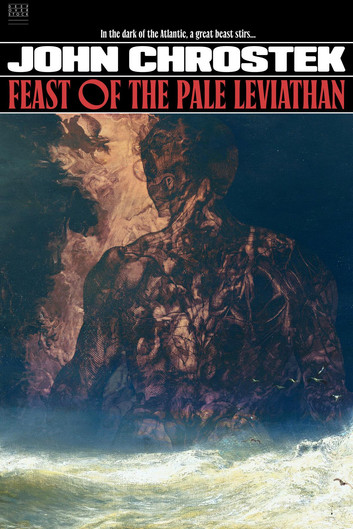
Feast of the Pale Leviathan by John Chrostek.
My rating: three stars.
Look, I know. People like to go to water parks, get blasted on booze and mushrooms, and tube their way into oblivion. It’s a natural desire, surely, and one that most people can relate to. Nice afternoon, probably a bit of a shit day the next day, but hey: no omelette occurs without breaking some eggs etc etc.
What definitely doesn’t feature in most people’s water park munted afternoons, however, is what happens to this book’s major character, Owen: drifting out of bounds to be swallowed by a fucking leviathan.
The mountainous silhouette now blotted out the moon. In its place there were two wide reflective surfaces catching what little light remained. Those are eyes, Owen thought.
That is… less than ideal. Certainly, not the sort of thing you’d want to encounter at the best of times, let alone buzzed on shrooms. Still, you make the best of the situation: at least, that’s what Owen has to do, along with the crew of ageless sailors he’s discovered inhabit the body cavity of Levi, their host and cosmic abomination.
“He doesn’t know the first thing about aquatic skin coagulation,” Nina said bitterly. “He’s a hundred plus year old sailor, he barely remembers fucking electricity.”
Will he get out of Levi? Well, that depends. In the meantime, there’s secretive cabals (well, not so secretive, given that they have induction sessions), terrible deeds designed to bring on catastrophic change, romance, ambrosia, ignorance and growth. There’s Lovecraft-mythos references, kick-ass battles and rather upset Russians. It’s a book that has a lot to recommend it; humour and horror done well, which is no easy task.
One of the things that pulled me out of the story more than it should’ve – and probably because of my OCD tendencies rather than anything else – is the fact the ebook version of this story contains a large number of weird hyphenations. It’s not regular enough to be a stylistic choice, and it happens in words that normally wouldn’t be hyphenated, even if you were putting on airs. I can only assume it’s occurred when the book was turned from a print edition into an ebook: the text either hasn’t reflowed properly, or (more likely?) the book designer turned lines over manually. Either way, I found it pretty annoying, which, coupled with the slightly rushed ending of the work, has seen the score land where it has.
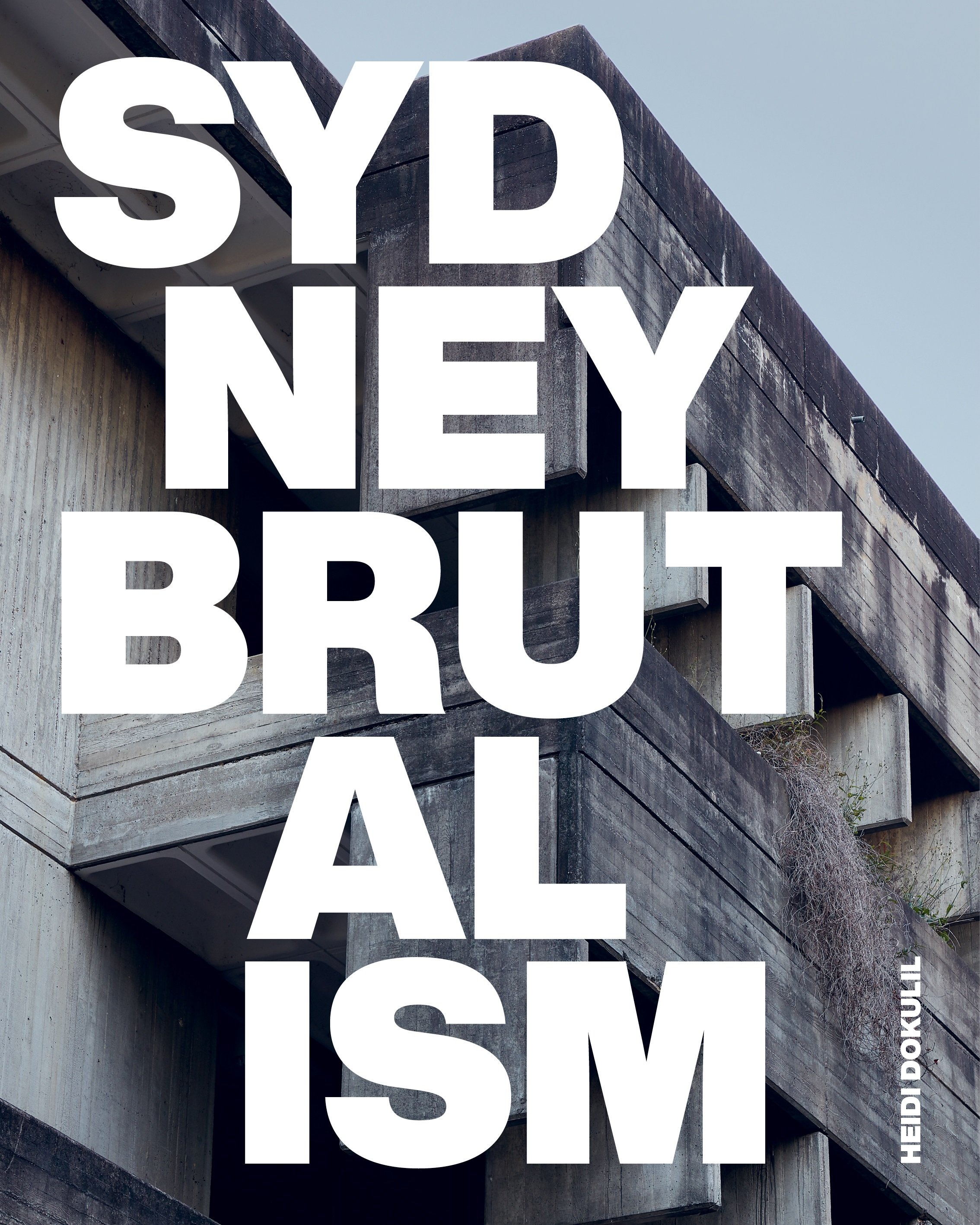
Sydney Brutalism by Heidi Dokulil.
My rating: five stars.
I was gifted this book by my coworker Tessa, an architect by training, for my birthday. We’d discussed cool buildings – understandable when you work in construction, I guess? – and on the lure of modernism in general and brutalism in particular, and so this was a welcome birthday present. Why? Because it rules.
(And yes, the Sydney Opera House is brutalist: the tiles make you think it’s not, but just look at it.)
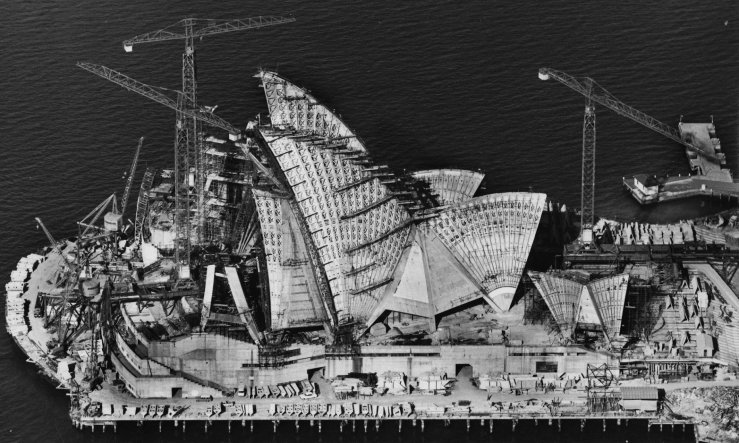
It’s the second book by Dokulil I’ve read: Sirius was the first, covering Tao Gofers‘ Sirius building (and the shameful eviction of tenants from the property, its lack of heritage listing, and its cash-grab sale to developers). Sirius figures in here, too, but the gaze is much wider: this takes in Sydney’s brutalist entirety, even if it’s a tag some architects prefer not to apply to their buildings.
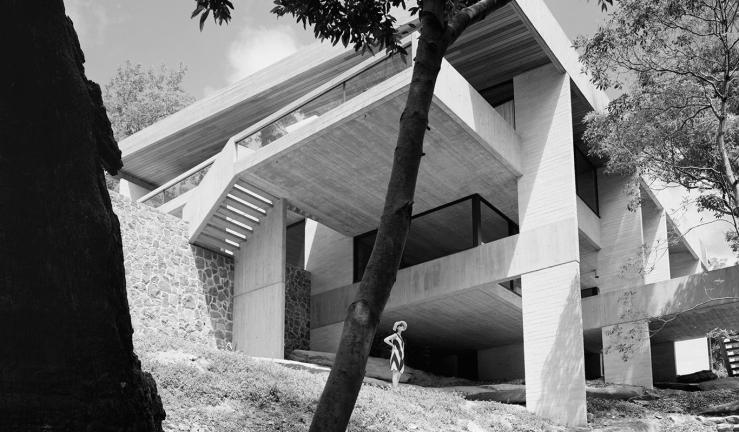
The book provides a good history of brutalism as a term, and of the application of the approach in Australia. Broadly speaking, brutalism is about not hiding things: concrete is concrete, doing what concrete does – things are not hidden, you can see how the building ‘works’. Australia featured more wood than perhaps other overseas projects did, but the key difference is that landscaping (including plantings on the buildings, whether as cascading greenery, rooftop gardens or carefully considered landscaping) was much more prominent with local development.

There’s a great sense of who in the book, as well: Dokulil spoke to a great may of the architects crucial to the movement in Australia, many of whom worked for the Government Architect’s Branch (or Office, depending on the time period). The book conveys that part of the dislike of brutalist buildings also stems from a dislike of the politics underpinning their creation: that they were affordable, fit for purpose and built with an eye for collective public use.
The attention to detail of the publication is excellent: the photography is absolutely brilliant. Granted, that’s to be expected when a lot of the pics are lensed by Max Dupain, but still: these forms are given the room to breathe on the page that conveys their weight. The offset paragraphs make reading and place-keeping a joy. It’s obvious, given the extensive and thoughtful quotations and detailed investigation of buildings current and lost, that this was a passion project, and I am here for it. It certainly captures the passion that modern Sydneysiders have felt towards these buildings, particularly Sirius.
Brutalism is important because it is a chapter in our history. Governments are keen to pull these things down (the Darling Harbour Exhibition Centre being a prime example: demolished after only 30 years) in favour of keeping Federation or colonial buildings, despite the massive carbon costs of doing so. But if we remove all the concrete behemoths in favour of ‘prettier’ buildings, we’ll end up with a gap-toothed mouth, an incomplete history. I’m glad things like this book exist to provide testament of such frankly bold undertakings, as it is proof that we can do great things. And should.
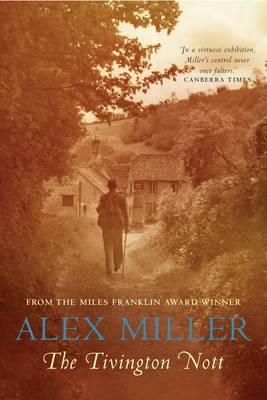
The Tivington Nott by Alex Miller.
My rating: four stars.
This brief work is an excellent evocation of time and place. Semi-autobiographical, it’s the story of a young man – an authorial stand-in – and his experiences as a farmhand in Somerset, on the borders of Exmoor.
(Miller makes no secret of his borrowing from real life: the introduction to this reprinted version contains photos showing the younger man in farm garb, as well as the career farmhand whose vibe he’s jacking. It’s a pretty safe assumption that the rest of the people in the book are real also, albeit renamed.)
What we get is a narrative that has the usual worker/boss power dynamics at play, set in a wider world of lords and landowners. But what sets this apart from a by-gum-hard-life kind of narrative is the voice with which Miller writes about horses: horseflesh is key to the tale. The main character is asked to look after Kabara, an incredibly able steed his boss has his eye on following an accident involving the horse’s owner, a garrulous Aussie.
The looking-after goes so well that he’s asked to ride Kabara in the annual stag hunt. And the descriptions of man-and-horse are so finely detailed, so naturally rendered that it’s intoxicating. The hard-riding country, the desires of the beast under rein, and the pecking order bullshittery of the hunters and their hangers-on are conveyed so completely that I was drawn onwards without cease, even though I’d probably fall off a horse if I ever tried to ride one again.
The titular nott, an antlerless stag, is an outsider, a survivor with almost mythic powers. The scenes in which Miller encounters the nott in its natural habitat, in which he recognises its power and its right of residence, are profound and meaningful. It’s a world I don’t know but was easily drawn into.
(I still fucking hate hunting, though.)
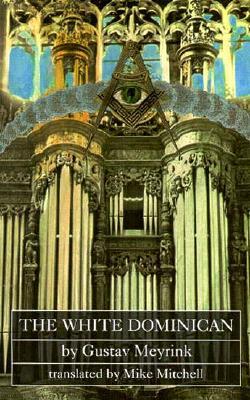
The White Dominican by Gustav Meyrink.
My rating: three stars.
I first read a Meyrink novel a couple of decades ago because I thought it’d be neat to read The Golem. It was (and I’m due a reread) and it set expectations fairly high for the rest of the author’s work.
Generally, I’ve found I really enjoy his stuff. It’s spooky and weird, but usually has some kind of thread to pull you through: Walpurgisnacht and The Angel of the West Window (his novel about John Dee) I recall being more or less straightforward.
Then there’s The White Dominican.
Dreaming is the footbridge between waking and sleeping; it is also the footbridge between life and death.
The story doesn’t make a huge amount of sense, but that’s intentional: it’s his most mystically esoteric work, drawing on a number of traditions (including Taoism) to make a point that I am obviously Too Dumb To Get. Set in an unnamed town surrounded by water (a stand-in for Wasserburg, Bavaria) spiritually transformative fuckery is undergone by Christopher Dovecot, as he is advised by a number of luminaries (and dead targets of passion) on how he can be transfigured to escape the Medusa’s head of life. There’s astral travel, a titular character-delivered Get Out Of Sin Free card, and some typically shonky theatrical manipulations.
Given the length of the work, I was happy to sail through on vibes. Any longer and the indeterminacy would’ve been a turn-off. As it is, though? Brilliantly confusing.
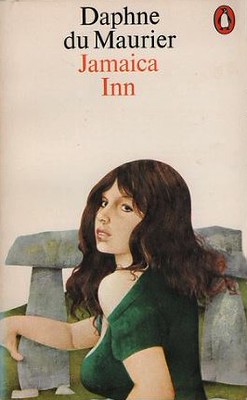
Jamaica Inn by Daphne du Maurier.
My rating: four stars.
I went into Jamaica Inn knowing nothing other than the fact it was considered a gothic work. I also read it in a small cabin in the middle of nowhere, by lamplight, which as it turned out was fucking perfect because, well, moors and bastardry and TERRIBLE MEN.
(And that’s just in my cabin.)
The novel is the story of Mary Yellan, an orphan who ends up living in a Cornish inn with her aunt and her husband, one of the aforementioned TERRIBLE MEN. The inn has a bad reputation, and the uncle – Joss – a much worse one. Bad shit is afoot, though it’s not entirely clear until later in the book what that might be.
Dead men tell no tales, Mary.
Coachwheels in the courtyard at midnight. Drunken confabulation. Horsewhippings. Albino preachers. Looming druidic markers. A LOT OF RAIN. A fanciable horse thief. This is a dark narrative (with some excellent moments of levity, despite Mary’s intentions) that takes place in a liminal space, a place disregarded by pleasanter society. It’s populated by pedlars, vagabonds and worse. And Mary’s journey from a secure farm to a damp in with a frightening backstory is one that sees her resolve ebb and flow like the Cornish tides. While it’s a much-is-hidden story, it’s also a narrative about deciding what you hold dear, what you want to be, and when you should let go of things.
I really enjoyed it. It was literate popcorn with a touch of drizzle.
Existence itself is a long enough journey, without adding to the burden
The only other du Maurier I’ve read is Don’t Look Now, a collection featuring the source material for Nic Roeg’s masterfully creepy film of the same name. Jamaica Inn has also been turned into a film – one I haven’t seen which is weird given that it’s a legendary adaptation by Hitchcock. I’m going to move it up the ladder a bit to see if the creeping gloom is captured as hauntingly as the book deserves.
And then maybe I’ll read a du Maurier that’s not a film, just for kicks. I’m definitely a convert.
If you’re after some good bookish times, please check out my profile on TheStoryGraph.
If you’d like to buy me some books to review, there’s a wishlist over here.

