
So hey, I’ve read 60 books this year. And, unbelievably, this post means I’m up to date with reviews!
I’m more impressed with the second bit than the first: reading is something I do because I love doing it. While the number-goes-up part of it is pleasing in a way (hurr) I have stopped trying to meet random reading targets because it was making me focus on the wrong thing: quantity over enjoyment. But keeping up with reviews? That’s something.
Anyway, books!
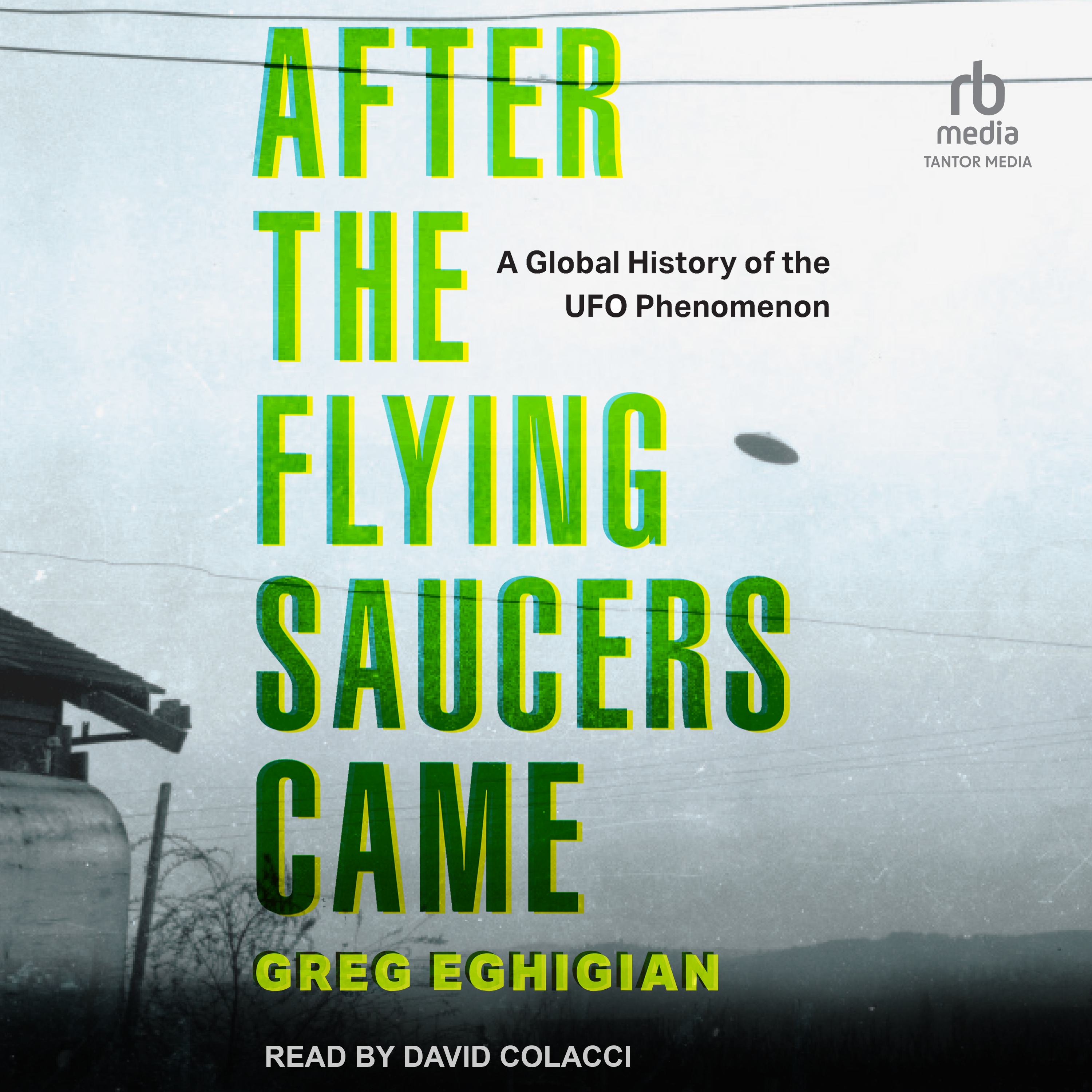
After the Flying Saucers Came: A Global History of the UFO Phenomenon by Greg Eghigian.
My rating: two stars.
My low rating of this book probably reflects my expectations rather than the author’s intentions. But it doesn’t mean that it’s wrong.
After the Flying Saucers Came doesn’t intend to settle whether aliens are real or a convenient hoax. The actuality of sightings is a fairly remote interest to Eghigian, it appears. What he’s interested in is not the phenomenon itself (or its debunking) but rather the way society reacts to it: how people across the globe reacted to the idea of UFOs, and how culture adopted and reflected it.
There’s historical information in here, of course – there’s no way you could tell the story of flying saucers without the ideas of contactees or of the Roswell incident or various Pentagon or USAF projects – but that’s for framing. What’s more important to the author is how events were reported and communicated across society (through the media and special interest groups) and how different nations differed in their absorption and dissemination of the information.
What you get is a fairly robust history of how people have reacted to UFOs, and how culture has been shaped by their appearance. A very dry history. If you were ever interested in the cross-cultural differences in running niche UFO mailing lists in the 1960s, this is probably your book.
If you’re not interested in that, you probably should stay far away and look for books with more anal probing. (And aliens, I guess. If you must.)
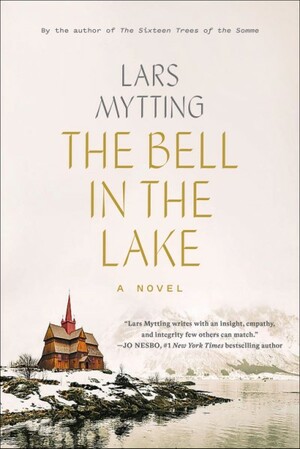
The Bell in the Lake by Lars Mytting.
My rating: three stars.
I recall the blurb for this book making reference to a darkly mysterious, folk horror kind of tale. A clash of cultures, some long-held superstitions being brought into the cleansing light of modernity and so on.
What The Bell in the Lake delivered, however, was a loose story that enabled the author to indulge his Special Boy Interests: in this case, stave churches of Norway and their disassembly.
The carpenters worked very hard to please all the gods, just in case Odin and Tor were still active.
(To be fair the thing does start with conjoined twins who exist seemingly solely to weave like motherfuckers and give two memorial church bells a reason to exist. Their mother’s name is, uh, lost to time? Sure, why not? It won’t be the first (societally appropriate) birth-related misogyny we’ll see here.)
The novel is (more or less) a romance tacked on to an architectural study. We’re in a small Norwegian village and two men (priest Kai Schweigaard and artist Gerhard Schönauer) appear to try and tempt local (though her argot is mysteriously rendered so you know she’s been on Ilkley Moor bar t’at) woman Astrid Hekne with their obsessions and pants.
It’s all very emotive and learned-man-meets-simple-lass, but it doesn’t particularly ring true, no matter how many roadblocks and period-appropriate pshaw-you’re-just-a-woman incidents are thrown into the mix.
If you enjoy stories about the strictures of (religious and artistic) patronage, and some truly wonderful descriptions of landscapes and belltowers, then this is a good read. The characters feel like an afterthought, however – the world that’s been recreated is obviously more important to the author than the travails of those within it. And if I’d known that going in, perhaps I’d have been less disappointed. The details are interesting! It’s just that there’s only so much interest one can wrest out of the minutiae of churches at the expense of character development.
A deep-blue light hung over … a light he had never seen before, which he would later find out the Norwegians called “blåmørket” – the bluedark – and he felt giddy with the desire to capture it in paint.
It’s frustrating: the turn of phrase is good, while the action is pedestrian. This is the first of a trilogy and it’s safe to say that while I’d read an historical text by Mytting (or his book on woodchopping) I’m not inclined to continue with this hamlet and its people.
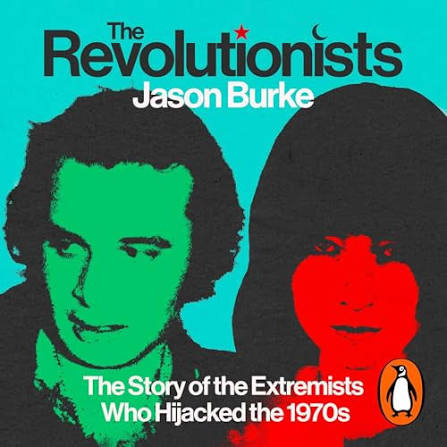
The Revolutionists: The Story of the Extremists who Hijacked the 1970s by Jason Burke.
My rating: five stars stars.
In the past while I’ve been trying to improve my knowledge of geopolitics, especially of the Middle East. This has meant I’ve read some excellent books (ready anything by Robert Fisk) and some not-so-greats.
The Revolutionists is a lot more specific. It covers the rise of modern terrorism as a tool of revolution, beginning more or less in the early 1970s. Terrorism, in its turn, has shaped geopolitics for decades – potentially much more profoundly than its instigators (no matter their political leanings) could have imagined .
The book focuses on a mixture of pro-Palestinian, hardcore Islamic and Marxism-aligned groups and associated individuals, including Leila Khaled, Germany’s Baader-Meinhof Gang, Japan’s Japanese Red Army, Carlos the Jackal and the PFLP.
Burke, an international security correspondent for The Guardian, certainly knows his stuff. The big events (the Munich Olympics, the Entebbe raid by Israel, the Iranian revolution and the deep roots that would eventually birth the Taliban and Al Qaeda) are covered at a level that conveys meaning but avoids drowning in detail. The positional shift from fairly lefty hijacking (to bring focus to Palestine’s plight and general Arab liberation) to repressive religious fanaticism is well conveyed and explains so much of the modern world.
September 11 has its genesis in the acts in these pages. So does the current Strait of Hormuz fuckery: the travails of the peace process (and the way several of its participants engaged in something less than good faith) and the us-and-them divide is clearly delineated here. The responsibility ‘western’ nations bear for much of what’s happened is unavoidable, and a terrible reminder of how much the good guys have fucked things up. (Does sarcasm come across in italics? Asking for a friend.)
It’s serious stuff, though the moments of unexpected levity (Carlos being a chancer, topless sunbathing during terrorist training) ensure that it’s not as much of a relentless downer as the topic might suggest. This is the book to read if, like me, you were alive in these times but not politically astute then.
(In my defence, I was still under ten.)
(The audiobook edition is excellently enjoyable – Kristin Atherton’s narration is both mysterious and precise, befitting the subject matter. Did Atherton ever narrate some of The Guardian‘s Long Reads? Her voice is curiously familiar, and the reading is supremely solid.)
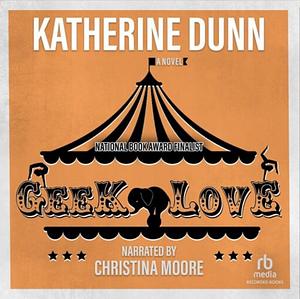
Geek Love by Katherine Dunn (reread).
My rating: five stars.
I was first given a copy of this book almost 30 years ago by a tattooed New Yorker, back when tattoos were the preserve of tough guys, weirdoes and outsiders, not norms like me.
(Yeah, I know I’m a goblin but you get where I’m going with this.)
Anyway, I knew nothing about this book other than the fact I was instructed to read it. I don’t think it made as big an impact on me the first time as it did this time, though.
(Again, I was much younger and more stupid.)
This time, however, I am completely converted, and can happily state that it’s a no-qualms five-star classic, as well as one of the more engrossingly awful, hopeful and sad things I’ve ever read.
Those poor hop toads behind me are silent. I’ve conquered them. They thought to use and shame me but I win out by nature, because a true freak cannot be made. A true freak must be born.
Dunn’s novel is the story of the Binewskis, a travelling carnival family. Olympia, one of the Binewski children (and a humpbacked albino dwarf) is the narrator, writing a history for her daughter. The history involves her siblings: conjoined, beflippered, telekinetic (amongst other peculiarities) by dint of the paterfamilias’ drug regimen experimentation during his wife’s pregnancies.
When your mama was the geek, my dreamlets,” Papa would say, “she made the nipping off of noggins such a crystal mystery that the hens themselves yearned toward her, waltzing around her, hypnotized with longing.”
There’s two stories running at once: the story of the Binewski clan and the story of current-day Olympia and her daughter Miranda, who is unaware of her mother or her family. The stories intertwine, moving from past to present, from narrative ignorance to terrifying knowledge.
And then there’s the tent religion. You’re gonna have to discover that for yourself.
Dunn took ten years to write this thing, in a state of self-described “private autism” and the level of attenuation and care shows. It’s immensely sad, and a thorough examination of the way family, loss and revenge can drive a life. It’s sincere, brutal and sometimes deeply beautiful, which is something I would not have expected from something so full of carnies.
Geek Love is a perfectly unfilmable novel. Tim Burton bought the rights, but nothing came of it. I imagine American Horror Story might’ve given it a stab if they hadn’t already done a midway murders type thing, but the content in here is too raw, too confrontational to be put on the screen in a way that would fairly echo the subtle sadness and hope that’s woven throughout the source. This is a horror story, but shock isn’t the only trick in the bag.
I probably should’ve known what to expect from the novel from the fact that it was introduced to me by someone from the Tom Waits email list, Raindogs. It’s a storehouse of the old megaphone-hailed HUMAN ODDITIES of that balladeer’s particular patch, and is both a grim reaper and a grand weeper.
If you’ve not read this, do not delay. It is unlike anything else you’ve read: a combination of Tod Browning’s film and Jonestown, but with more spangles.
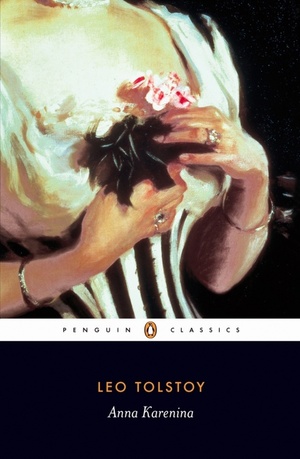
Anna Karenina by Leo Tolstoy.
My rating: four stars.
Spoilers? Spoilers I guess.
Normal person witnessing a vehicular suicide: OMG that is terrible.
Tolstoy witnessing a vehicular suicide: What a fuckin’ great idea for a book.
This is one of the big ones. I’d not read any Tolstoy before, and was a little worried that he’d be too stentorian or fusty for me. Thankfully the Volokhonsky/Pevear translation take care of any “oops, accidentally read a translation dating from Victorian times and now am trapped in a morass of sentences with too many clauses” worries.
It’s also a work that Tolstoy himself considered his first ‘novel’ – apparently War and Peace, written earlier, didn’t count but was instead a mysterious other thing – and seems to have been written entirely out of “oh, so you don’t like society novels eh? HERE’S ONE YOU FUCKERS” pique.
(That’s a bit exhausting and I guess I can see how the Russian church got jack of the guy and ended up excommunicating him. Whomst among us etc.)
And so the liberal tendency became a habit with Stepan Arkadyich, and he liked his newspaper, as he liked a cigar after dinner, for the slight haze it produced in his head.
However.
The novel is really good. Exceptionally so. It’s a lot more like a modern work than I had expected, though it is a lot heavier on the joys of peasant farming life than I had stomach for. Nonetheless, the core stories – the titular Anna’s infidelity and the non-titular Levin’s story of love – are engrossing, in a kind of “see you at the opera later?” way. Anna Karenina‘s characters move in the rarefied world of Russia’s upper class, where appearance and inner life are sometimes inconvenient and often incompatible.
Kitty also smiled here at the ball as she glanced at it in the mirror. In her bare shoulders and arms she felt a cold, marble-like quality that she especially liked.
Ah, society! It’s what drives the story, and not just the bits where there’s intense scrutiny on how many acres one can mow in an afternoon given x muzhiks and y vodka. The duties of a man of property and the expectations made of a married woman fuel the drama. Acting outside the confines of what’s considered socially acceptable brings ostracism, illness, worry and death. Moving outside the realm of social acceptability pushes characters from the public stage into the thickets of their minds, with the solace of religion questioned and found wanting. (At least compared to morphine, for some.)
All happy families are alike; each unhappy family is unhappy in its own way.
The inner turmoil of struggle, of fighting with oneself to find how to go on is incredibly well portrayed here. Slipping from a preordained spot in society sparks self-interrogation that is merciless in its portrayal, and terrifyingly familiar to anyone that’s ever been caught in a panic attack. The direct, electric nature of these passages, of the author’s description of jealousy and the machinations of a mind left too long to pick at its regrets is compelling and dreadful.
I’m aware I’ve not said anything profound about the work. For something like this, I think it’s difficult to. The book appears schizophrenic at times, fuelled by a kind of mania. It’s messy, and only partially focused on its titular character. It goes off on jags about agriculture and the civil service. There’s more dead horses than I like. But when it comes to the bones and gristle of human experience, of the things that drive people to either take their lives or embrace them, it’ really is something that’s incomparable.
(This was a buddy read with Elizabeth, and as ever I was very glad to have had someone to make bitchy comments with. I recommend buddy reads as a way of tackling books such as this – and am looking forward to whatever canonical monolith is chosen as the next port of call.)
If you’re after some good bookish times, please check out my profile on TheStoryGraph.
If you’d like to buy me some books to review, there’s a wishlist over here.

