
Not as quick as I’d hoped, but here’s another five book reviews.
I say ‘book’, but in this lot there’s just one physical book. The rest were audiobooks because the physical books I’ve been powering through are phonebook-sized volumes, and I’ve needed something shorter to break them up a bit.
(It’s an indicator of Books of Some Length when Paradise Lost is considered a quick read.)
Anyway, there’s nice range of stuff in here, and I’m quite pleased to have powered through them while driving, whether that be a) to Sydney and back or b) around the block on the mower.
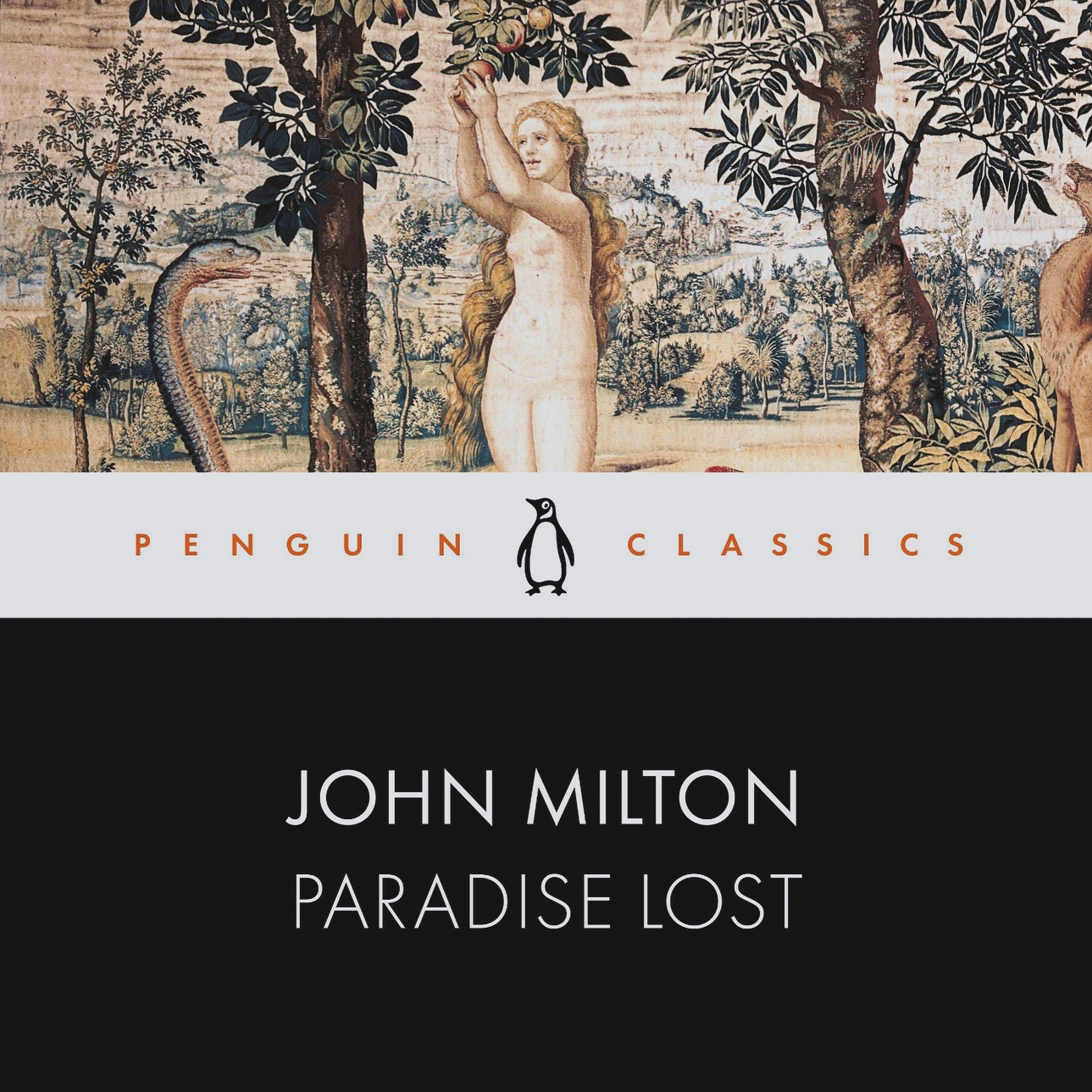
Paradise Lost by John Milton (read by Adrian Schiller).
My rating: three stars.
This is another university hangover. Milton’s enormous work about the fall of man (and woman) and the bitchery of pissed-off angels was something that I wasn’t technically meant to read during my literature course, other than in excerpts. But it’s been something that I’ve felt guilty about not reading for quite some time – it’s a fundamental part of the literary canon, and has influenced so much other work. As I progressed through the poem, there were a lot of oh so that’s where that’s from moments, and not just for the bits that turned up in Se7en.
“Long is the way and hard, that out of Hell leads up to light.”
As I said, I’ve often considered reading this epic poem (and have begun reading it a handful of times) but I was seemingly never in the frame of mind to progress much beyond the first book. (of 10). Not being the sharpest knife in the drawer, it only occurred to me to give an audiobook a go this time around. Which, when you consider that poetry is generally an oral form, seems to be a bit of a no-brainer which I should’ve come to earlier. But here we are.

Anyway. Adrian Schiller’s reading of Milton’s work made it a lot more digestible than it might otherwise have been. It’s a performance of the work, in truth, with a lot of emphasis put on getting the emotion of the soliloquies across. This works exceptionally well when dealing with particularly pissed-off fallen angels bent on doing Some Bastardry to their old boss’s newest creations, Adam and Eve.
“What reinforcement we may gain from hope,
If not what resolution from despair.”
While I didn’t particularly enjoy a lot of the work – there is a lot of still-dry stuff to get through, even with the benefit of a motivated reader – I certainly appreciated that it is where a lot of our conceptions of hell and the underworld were forged. I liked that it wasn’t as straightforward as I had imagined it might’ve been, and it highlighted my own preconceptions of writers from other eras that someone writing in the 1600s had a more nuanced view of religion and free will than I would otherwise have expected. It was a worthwhile listen, and I’m glad I’ve experienced it.
(And yes, the Devil does have the best lines.)

Terminal Boredom by Izumi Suzuki (read by Cindy Kay).
My rating: four stars.
Izumi Suzuki lived a big life in her 36 years as a model, actress and writer. She was married to Kaoru Abe (a free-jazz saxophonist), had a novel written about her marriage to him (by Mayumi Inaba, that was later filmed as a semi-porno biopic (directed by a yakuza-member-cum-director), and was photographed repeatedly by Nobuyoshi Araki. (The photographs were collected in a book called Izumi, this bad girl, released posthumously.)
She also wrote fiction, including some incredible stories that are now receiving their due in English translation. Terminal Boredom is a collection of several of Suzuki’s science fiction tales, rendered in English by several translators.
What appears in the book is a world that’s not too dissimilar from our own. There’s the feeling that, despite a bit of dated slang, it’s occurring in a time not all that far away. This is the kind of SF that asks the “what if?” questions rather than the stuff that requires a graphing calculator to get through: elements of eugenics (population control through cryogenics, anyone?) or or inter-species relationships are the order of the day. The only thing that’s common to the stories is the level of ennui that runs through the narrative – these people are seriously bummed.
“INSUFFICIENT VEGETABLE OIL,’ quoth the replicator.”
I appreciate that Suzuki doesn’t give a fuck whether you vibe with her particular style of writing. I did find it to be almost too acerbic at times – these can be sour little slices of possible life – but there’s something that kept me drawing onwards. There’s a distaste for the world at work here, the sense of someone (whether human or not) who’s seen too much, often describing the rude awakenings of those who haven’t yet seen enough. The idea of innocence disappearing, of great truths being learned is key here – but there’s a distinct feeling that even though some characters may end up educated about some things, they never really have breakthroughs. It’s both reassuring and frustrating.
Verso Books, publishers of this collection of stories, has recently released two more Suzuki titles – Hit Parade of Tears (another collection of short stories) and Set My Heart on Fire, a novel. After the normal-but-dystopian-but-what-the-fuck range of the selection collected in Terminal Boredom, I definitely will be seeking these out.
High Weirdness: Drugs, Esoterica, and Visionary Experiences in the Seventies by Erik Davis (read by Erik Davis).
My rating: three stars.
This is the sort of book I’m all over, even though I’m intensely irritated by some of the subjects. It’s a write-up of spirituality informed by psychedelic consumption, rising out of the counterculture of the 1970s, focusing on three authors: Philip K. Dick, Terence McKenna and Robert Anton Wilson.
The book considers these three writers not only for their drug intake or their written output, but as signifiers for the weirdness that was running through the West Coast of the USA at the time, and how their creations and thoughts intersected with the changes in culture occurring while they were active.
Consequently, there’s a lot of writing about drugs, either the lick-a-frog kind or the bikers’ speed kind. And Davis is an excellent researcher: he has plumbed the depth of published and unpublished papers of the people he’s writing about, often to excess. I’m not a particular fan of Robert Anton Wilson – I tend to view him as a goofier version of Thomas Pynchon, and there’s already almost too much goof with ole mate TP already – but my interest was sustained, despite the fact The Illuminatus! Trilogy remains the only book I’ve ever thrown out a window upon completion. I learned some things and they weren’t against my will!
That said, it feels as if the section on Philip K. Dick went on interminably. My interest was absolutely piqued regarding his work – I’ve never read any, and I immediately bought a couple of his texts in the wake of finishing High Weirdness – but fuck me, that section went on forever.
Erik Davis’s narration of his own work is a mixed bag. It wasn’t the most irritating narration I’ve come across, but there was a certain element of oh but do you SEE? at some points that didn’t sit particularly well with me. I also noted that when he was reading quotes from some of the subjects of the text, he tended to lapse into Frinkspeak, which was probably unintentional, but certainly fits how I imagine Robert Anton Wilson would talk.


Man-Eating Typewriter by Richard Milward (read by Richard Milward and Marc Graham).
My rating: five stars.
This is another book that absolutely benefits from being heard rather than read. Man-Eating Typewriter is an avant-garde experiment, a book that’s about publishing, London in the late ’60s/early ’70s (amongst other times), queerness (when such was still illegal), terrorism, free love, communes and dressmaking. In it, you’ll learn about what goes on on cruise ships (including certain equatorial rites of torture), how the smut-publishing game in Soho worked, the differences between the French and the English, how many pieces of seafood fit in one’s arse.
Oh, and it’s written in Polari.
This book takes the form of manuscript pages sent to a dirty book publisher, detailing the life (and counting down to an impending fabuloso crime) of Raymond Novak, son of Madame Ovary and self-described anarcho-surrealist reactionary. It’s written in camp Nadsat, and the sheer balls on display here (both in terms of Milward’s ambition and, well, balls) is simply breathtaking.
In duey-chenta setta-daitcha-heksa junos (276 days, for those without the lingo), myself and my devotees will commit a fantastic crime, a fantabulosa crime that will revolt the mond. My nom will be on the oyster-levers of every daffy jittery civvy as news breaks of this dazzling atrocity. My eek splattered across the cover of every inky and glossy on the newsstand. The Establishment brought to its lally-caps. The system left thoroughly smashed and charvered!
This is the sort of thing where a description won’t actually do. I’m keen on getting a physical copy of the book, but I am absolutely convinced that hearing the book – particularly given that it’s read by its author who would have a better grasp on the musical intentions of the text – is the best way of experiencing what’s going on. Between the two narrators (one representing Novak’s voice, rising up from typescript, and the other forming a sort of footnote from the folk at Glass Eye Press, the people who might well publish the miscreant’s work) there’s a tick-tock of drama, a ratcheting of tension as the date of the crime-to-be approaches.
The book is a publishing tale at heart, and a portrait of a grottily fabulous life. I absolutely loved it, and remain dazzled by the chutzpah on display. It doesn’t quite stick the landing in a couple of spots, but I’m still incredibly impressed that someone even attempted this thing. If you like books that’re a bit challenging but also rather fun (and funny!) then this it the one for you.
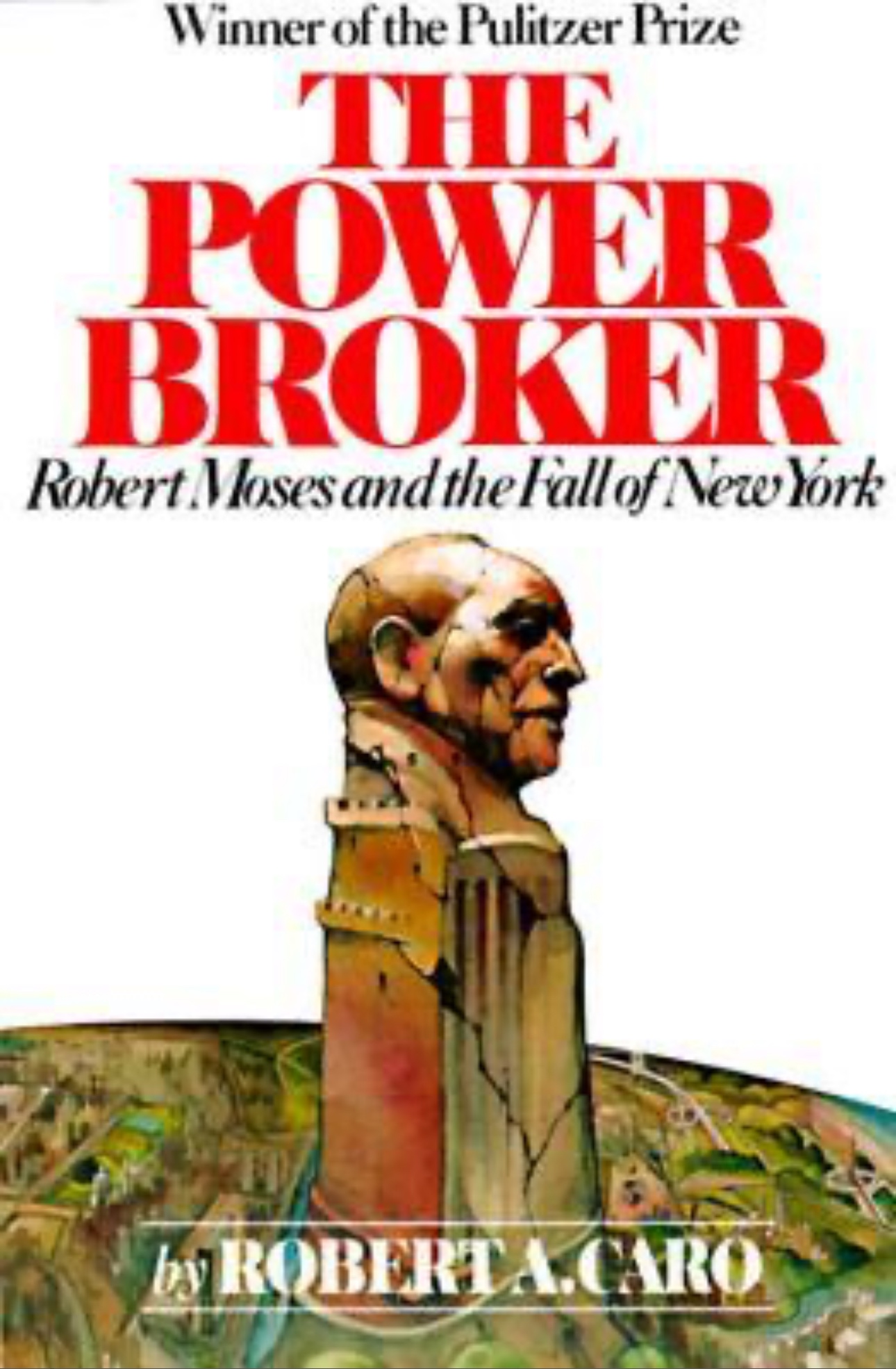
The Power Broker: Robert Moses and the Fall of New York by Robert A. Caro.
My rating: five stars.
This is another one of those forever-intending-to-read books. At 1300-ish pages, it’s the sort of thing that requires a bit of dedication to get through. Surprisingly, though, I found that the dedication was to wrist strength rather than daunting text: holding the bastard up for the required reading time may be the most taxing part of the endeavour. The prose is clear and engrossing, even if (like me) your familiarity with New York comes mostly from movies and the occasional flying visit.
What’s told is the story of Robert Moses, who in theory was just responsible for parklands in NYC, but ended up using that as a base to become a man who pulled the planning strings for the better part of 40 years, with mayors such as LaGuardia having to play second-fiddle to his planning peccadilloes. He was someone who became city royalty with a fabulous desire for improving public works (unless you weren’t someone with white skin) and an incredible boner for building bridges. New York’s thrall to the car, the bridge and the tunnel – abated somewhat with the development of public transport in post-Moses years – is largely to be laid at Moses’s feet. He was a master manipulator, a fudger of figures and someone whose debt you never wanted to be in, because eventually your marker would be called in, and going against the man was simply not an option. It’s a weirdly Machiavellian portrait, with a certain amount of wait, WHAT happened? to the prose, but I suppose that coming out of the Tammany Hall era, some breathtaking graft as certain to stick around.
Before I started reading this work, I was wondering how it was that a book discussing Robert Moses could have been printed without referring to Jane Jacobs. I’d listened to her landmark book earlier in the year, and was surprised by the omission of her battle with Moses over roads through Greenwich Village. The excision was, it turns out, expediency rather than maliciousness: the book as it currently exists is the edited version, possibly the bare-bones iteration of Caro’s take on the story. When I’d read the thing I was amazed at how easily it flowed, and how much must have been taken out as result of ensuring this didn’t become a multi-volume set, much as other of Caro’s projects since have.
(I hope those pages are at some point available to read: what a blow-up!)
This was a masterful book, impeccably researched. If you’d previously told me that a book on city planning would hold me in its thrall for the entirety of 1000-plus pages, I wouldn’t have believed you. But The Power Broker is an incredible discussion of power: how to get it, how to keep it, and how quickly it can be lost. It’s a story of hubris – what political story isn’t, ultimately? – and of the moments where vision becomes self-aggrandisement.
If you don’t have the stomach for reading the whole book, the Behind the Bastards podcast has done a few episodes describing Moses’ life. If you do have the stomach but need a bit of support, 99% Invisible have a reading plan and discussion you can check out. And if you’re just going to rawdog it, then you’re in for a hell of a ride. I wish you well: this was truly one of the most remarkable things I’ve ever read, and I’m happy I finally got around to it. What a concrete and rebar treat!
If you’re after some good bookish times, please check out my profile on TheStoryGraph.
If you’d like to buy me some books to review, there’s a wishlist over here.
 Yeah nah.
[…] was at a loss for what to listen to after I finished The Power Broker and its story of parks-and-roads domination. It turns out Bascomb’s book about skyscraper […]
[…] is, after The Power Broker, probably the longest thing I read this year. The difference is that this book has no footnotes, no […]