Well, we’re nearing the end of the first month of 2022, and I figured it’s as fine a time as any to check in and let you know what I’ve been reading. I’m assuming you’re interested because you are reading this but then I could also be overestimating whether anybody reads this.
This year, I had intended to write reviews of everything I read.
Obviously, with this year being this year I haven’t been able to do that for a lot of the books I ploughed through. I really wanted to record some thoughts on them, because it’s an important part of the reading process, for me: it helps bed down each book in my mind, so that I’m not taken by surprise halfway through an unintended reread by a plot development that suddenly reminds me that oh yeah, I’ve read this before.
Part of my process this year has involved the taking of notes to serve as a sort of memory aid for my reading. Generally, they require a Rosetta Stone to be sifted through, even by me, so they’re not particularly enlightening on their own, but they do allow me to crack out a couple of brief thoughts about what I’ve read this year.
Yes, there is a certain type of pen I like to use while writing these. No, they’re probably not very profound. But hey, there’s two notebooks full of them this year, so I guess that’s meaningful.
Nina Simone’s Gum by Warren Ellis My rating: five stars
Let’s get something out of the way up front.
Warren Ellis is a fuckin’ delight.
Like, a we’re pretty lucky to have him-level delight.
Nina Simone’s Gum is a rare thing: a shortish book that seems to be filled to the brim with delight. It’s about Ellis, but not really. It’s about chewing gum, but not really. It’s about a sense of the man as conveyed by a worshipful consideration of a legendary singer’s ephemera.
But I suppose Nō masks have such symbolic properties that everyone sees in them the faces of his own dead.
It’s taken me a long time to get around to writing a review of this novel. Partially that’s due to the year that’s been – all pandemic-related head fog and a lack of drive to do anything – but it’s also due to the fact that the book has taken up space in my attention, the way a loose tooth constantly draws the attention of a tongue.
You Were Never Really Here by Jonathan Ames My rating: five stars
Falling behind on both reviews and my reading for the year, so I decided to pick up the pace a little with a short, sharp shock of a thing: Jonathan Ames’ novel(la) about a blunt tool, used in the most unseemly of circumstances.
With the right tools you can get ANYTHING done.
And HOLY FUCK but did it put things back into gear.
I am not, particularly, a sci-fi kind of reader. A couple of years ago I set myself a task: to read through the SF Masterworks series of books. How’s that going, you ask?
Well, this is the third book I’ve tackled.
I was expecting – largely based on decades-old memories of the flying-underpants film version – the book to be crap, so I didn’t have my expectations set to stun. Happily, the novel surpassed that, even if nobody tells you at the outset that you’re going to be reading a political, economic and ecological thriller about the universe’s most hotly-contested product: magic wormshit.
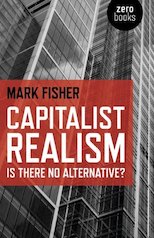
Capitalist Realism: Is There No Alternative? by Mark Fisher. My rating: four stars
Well, this year’s been enough of a bummer so let’s do this thing.
I have wanted to read some of Mark Fisher’s longer writing – having been acquainted with his blog for ages – for some time, and I figured, given that 2020/21 had pretty much clocked the woe-meter, it was time. So I settled down for an afternoon of anticapitalist invective.
Novel with Cocaine by M. Ageyev. My rating: four stars
This is a strange one. It’s a novel set in revolutionary Russia that only mentions the fact twice, and then at an angle. Its title refers to David Bowie’s chief ’70s bodily compound, but it’s only really introduced (or considered) in the last quarter of the work.
Oh yeah, and it’s written by a seemingly anonymous guy, who only wrote this thing, submitted it to a French magazine for Russian émigrés, and then disappeared into the woofle-dust of history.
Fragments of Horror by Junji Ito. My rating: three stars
Junji Ito is known for being a bit, well, odd. I’ve reviewed some of his other works, and I’ve enjoyed them for the most part. This collection, however, didn’t seem to strike the same fantastic chord in me, and I’m still trying to decide whether it’s due to some duff stories, or because I’m a bit more tuned into his method of writing.
I know, but even I got out of bed this morning you LAZY HIKIKOMORI FUCK.
War is a Racket by Smedley D. Butler. My rating: four stars.
Occasionally it’s nice to read something written by a bona-fide badass.
War is a Racket, a book written by a guy who won the Medal of Honor twice, certainly fits the bill. It’s also breathtakingly candid about the waste of war, something remarkable given its author’s exploits in the name of his country.