
I’m not going to deny it: this is a pretty good tally for the first month of the year.
(I’ve read more than this, and I’m AWARE that the first post of the year about books is breaking my rule of reviewing five at a time, but it’s currently an extra day off work so I’m going with it.)
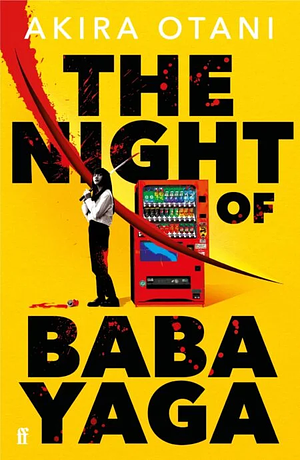
The Night of Baba Yaga by Akira Otani.
My rating: five stars.
First book of the year: and I’m starting a) as I mean to go on and b) with something resolutely silly and action-filled. The Night of Baba Yaga is a Japanese kinda-sorta buddy cop movie if the cops were a pugnacious delivery driver who owes gangsters her life because she, uh, beat the shit out of them and their boss stopped them from killing her and, uh, the daughter of that particular gang’s patriarch.
From a different angle, this was an all-you-can-eat buffet of skulls to crush.
Set in 1979’s Tokyo, the story focuses on Yoriko Shindo, a 20something woman who isn’t averse to kicking shit out of some dudes with punch-perms, and Shoko, the daughter of a yakuza leader who is prim, proper, and promised to an incredibly violent mobster out of either respect or family opportunity. (Either/or.)
Shoko looked awfully out of place in this den of yakuza. Like a crane perched in a landfill.
The text reminded me a lot of playing a Yakuza game. There’s moments of HIGH DRAMA, the sort that makes revenge tragedy look a bit like Days of Our Lives. But then there’s people being beaten until they piss themselves over dining room disrespect. There’s queerness running throughout. There’s jumps forward and backwards in time. There’s incredible ultraviolence and a pace that doesn’t relax, even as there’s moments of beauty passing by .
There’s a strong core to this thing: the developing relationship between Shindo and Shoko, and the roles each plays to pass in a dangerous world, whether they were born into criminality or not. Meditation on the role of violence as a way through existence pops up here and there, and it’s a credit to the author (and Sam Bett, the translator) that the tonal shift doesn’t feel like a downshifting or a lack of focus.
I loved this. The title’s mythic import is revealed slowly, but it’s worth it. If you have any love in your heart for gangster shit, then this is absolutely something you need to read.
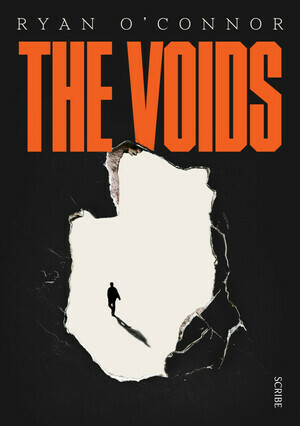
The Voids by Ryan O’Connor.
My rating: four stars.
If The Voids is anything to go by, Glasgow is fucking mental.
The novel takes place mainly within a high-rise apartment building that’s slated for demolition (acting as fairly obvious representation of how gentrification fucks over neighbourhoods) yet still populated by soft-shoeing, drug-dazzled or potentially murderous tenants, yet that’s not the most outlandish part.
I discovered that each one had its own musical composition. Like breath through an instrument, the passage of the wind was altered by what furniture and other remnants were inside each flat. Even wallpaper curling at its edge had an effect. Everything in them combined to produce different notes, tones, and cadences, and I’d move from door to door, listening to them. A multitude of requiems playing simultaneously in a huge, malfunctioning jukebox.
It’s the booze.
I mean, I know from Trainspotting that sinking piss and imbibing whatever drugs are on offer is par from the course, but the nameless narrator here takes it to a new level. He makes other journalists look like lightweights, and I’d remind you that this is a career with alumni including Hunter S. Thompson and Jeffrey Bernard. Nothing happens without libation, and the rate at which these accrue – as do the effects – is almost mythic. It was like I could smell the grog dripping from the words, and I read the fucker digitally.
(That said, O’Connor’s writing on addiction, on ecstatic, dayglo highs and brainpan-shattering hungover lows, is truly something to behold.)
I’m not sure when I started mixing alcohol with alchemy, conflating the one with the other. Where I got the idea that drinks are like magic potions. That certain drinks are better for certain tasks. Every addict knows that in the end it all does the same thing, leaves you whispering to ghosts and begging bone conjurers for redemption.
But the excess isn’t excess for excess’s sake. It serves to illuminate individuals using whatever tools they have to deal with life in a city, with the wrongs of the past. There’s a certain psychogeographic element – a redrawing of the maps according to the cleanliness of pub beer lines and the ability to be served after one clearly should’ve been cut off – that tries to present the bloody reality behind concrete and street signs, the accrued dreams and despair of a city’s inhabitants. It’s a bit Lanark and a bit Hawksmoor and yes, a bit High Rise, but something altogether different than that mix of titles would suggest.
In terms of a tale of a man trying to escape “my own private Guernica“, it’s compelling. The narrative goes from outlandish set-piece to outlandish set-piece, yet never lost me along the way. And this is a debut.
I can’t wait to see what comes next.
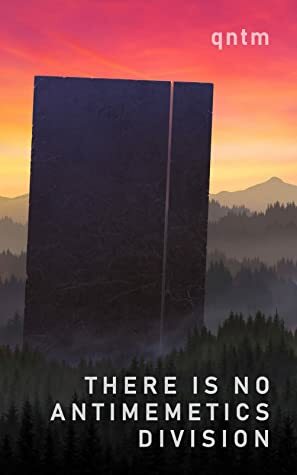
There is No Antimemetics Division by qntm.
My rating: five stars.
The author of this book is a salutary lesson in why you should choose a pretty good username for any online endeavours. (I say this as someone who has poked about the Internet as captainfez for more than two decades.) Granted, qntm is a pretty good alter ego for Sam Hughes, especially given that this is a weird science fiction story, but I’m wondering how much attention this would’ve had if it was listed as the work of KornFan83, say.
Anyway, the qntm-vs-Sam-Hughes thing is germane to this novel, as it first came into being on the back of the author’s contributions to the SCP Foundation wiki. It’s an incredible collaborative writing project (running since 2007) about a secret organisation established to examine weird phenomena and keep its existence hidden from regular schmoes like me.
Yes, it’s a bit like The X-Files. And yes, it influenced Control, which essentially a videogame where you work in the sort of office I imagine Dale Cooper hangs out in when not in Twin Peaks. (It’s hard for me to believe that this originated on goddamn 4chan, but here we are.)
Anyway, the things the SCP catalogues and attempts to protect includes this:
Description: SCP-055 is a “self-keeping secret” or “anti-meme”. Information about SCP-055’s physical appearance as well as its nature, behavior, and origins is self-classifying.
So it’s something that makes anyone examining it forget that it exists. That’s where the department of the title – the Antimemetics Division – comes in. Or doesn’t, depending on how close you’ve been to one of these things.
The story is a bit hard to explain, other than it’s what’d happen if you combined Memento with an HR onboarding manual. It plays with knowledge, with anti-ideas that eat knowledge, and the reader is left to fill in the gaps to figure out what the fuck is going on, and how the earlier actions of characters in the text might explain why they act the way they do: knowledge that those characters don’t necessarily have themselves.
The world that’s evoked is deep in detail and bland of surface, an office job that just happens to have access to drugs strong enough to stop mind-devouring objects of mundane appearance from eating your memories whole (for the most part). It’s the sort of thing that will delight you if you enjoy This Particular Kind of Science Fiction Bullshit and absolutely shit you to tears if you don’t.
I do, so I did. Or at least I think I did. I can’t remember.
(Caveat: I read this because I kept seeing covers of the new edition turning up on various social feeds, and I remembered that it had lain dormant on my Kindle for some time. Now that I’ve read this self-published 2021 version, I suspect I have to read the 2025 edition, because the author has revised the work, renamed some characters and elements (to deal with particular creative commons licence issues) and generally tightened things. I’m debating whether I should do this sooner or later, if at all: part of me is under the impression that knowing what the story does might be a bit you-can’t-go-back-again.)
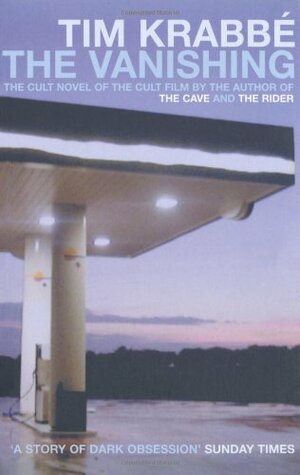
The Vanishing by Tim Krabbé (reread).
My rating: four stars.
Originally called The Golden Egg, I remember hunting down a copy of this book – it’s quite difficult (or expensive) to find now – after I caught the film adaptation on SBS late one night.
I’m glad I sought it out, and I’m particularly glad to have reread it. The story is fairly basic – a man’s girlfriend disappears while he’s fuelling their car on a holiday road trip – but there’s so much densely packed examination of the human soul that it punches well above its weight.
The book is obviously about loss: that’s a given. And while the concept of closure, of needing to know despite the mystery of the disappearance is important, the concept of motivation is what drives the book.
Hundreds of people could see him, did see him and didn’t know what they were seeing: a step towards a profoundly vile deed. He felt gleefully evil; as though he had drunk a potion of invisibility.
How do you deal with a story you might never know?
What makes people do horrible things?
Krabbé writes in a very plain, very straightforward way. We’re shown cause and effect on both sides of the mystery – the perpetrator and the victims – in such algebraic simplicity that it’s difficult to imagine motivation being any different. It’s horrific yet completely understandable.
After I’d read this (again) I decided to watch the twin adaptations of the film, both directed by George Sluizer. Spoorloos, the Dutch original, is taut and grim, spare horror. The remake, The Vanishing, is fucking terrible, and Jeff Bridges’ The Dude goes off piste performance lacks all the calculated menace of Bernard-Pierre Donnadieu’s killer. I can only assume money talked in terms of getting the director to remake something where the original is undeniably superior (see also Michael Haneke’s Funny Games films) but… man, I really had forgotten how much of a turkey the remake was.
Result? Book and first adaptation? Absolutely worth revisiting. The US remake? Yeah nah.
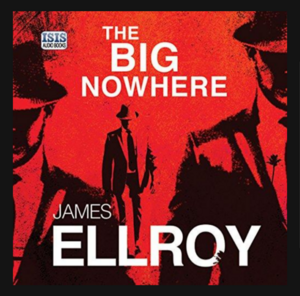
The Big Nowhere by James Ellroy (reread).
My rating: four stars.
The second of Ellroy’s L.A. Quartet, The Big Nowhere follows The Black Dahlia in plumbing the dark hearts of cats and kittens in 1940s Los Angeles.
This time, the action surrounds Red Scare investigations of communism in Hollywood, the Zoot Suit Riots and the Sleepy Lagoon murder case. real-life gangsters (Mickey Cohen) and a fictional factorum of Howard Hughes (Buzz Meeks). The factual setting provides a canvas that the author can project his points of interest – social strata, violent crime and violent sex crime – upon.
He picked up his badge and handcuffs and held them to himself; he unholstered his .45 revolver and aimed it at the world.
It’s easy to say that this is more of the same, because it obviously is. As ever, backroom and underhand dealings rule the day, but there’s much more … tenderness? … in the portrayal of men coming together to solve a dead colleague’s case. The prose hums, and it’s perfectly consumed as audio, which highlights the taut music behind the sentences. The investigation of what drives people to do truly heinous shit – nature, nurture or necessity – continues apace, and I have to say I’m enjoying it a lot more as an old fart.
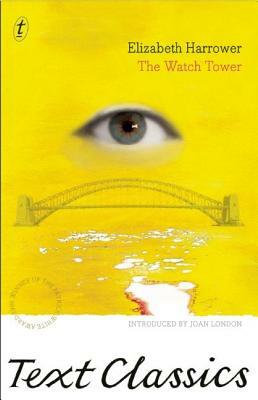
The Watch Tower by Elizabeth Harrower (reread).
My rating: three stars.
This was one of the first books I picked up from Text Publishing’s lineup of revived Australian classics, and it absolutely had an effect on me when I first read it a decade or so ago.
The review I wrote on my first read is linked here. I think what I said back then still holds true: this is still a book that I find it difficult to say I enjoyed. Some works aren’t meant to be fun, and the cloying, controlling nature of Harrower’s story of neglect in 1940s Sydney is certainly one of them.
I am glad I revisited this, however. It’s absolutely masterful at evoking a completely trapped life. I think it feels even more bleak this time around: dolors inescapable, even in the midst of mod cons and upward mobility.
She was twenty-three and life was a game she had rejected utterly. Nothing about her own situation or anyone else’s moved her in the least. A spectator distant from all turmoil and emotion, she took a theoretical interest in the play and in a sort of aside to herself registered very faintly the feeling that would have been natural to each situation had she and her fellows been real and alive and the universe of any import.
Like Naked, The Watch Tower is an unapologetic bummer, and it is an incredibly well-crafted piece of work. Be prepared for some fuckin’ hard going, though.

Satantango by László Krasznahorkai.
My rating: three stars.
In a red letter day for weird little book guys, László Krasznahorkai won 2025’s Nobel Prize for Literature. It was a pretty good day for me too, as it gave me even more of a reason to read some of the pile of books of his I’ve accumulated on my Kindle.
See, ole LK is one of those authors that book wankers like myself absolutely froth over. Why?
- Postmodern? ✓
- Difficult and demanding novels? ✓
- Dystopian settings? ✓
- Melancholic? ✓
- Fan of Kafka? (“When I am not reading Kafka I am thinking about Kafka. When I am not thinking about Kafka I miss thinking about him. Having missed thinking about him for a while, I take him out and read him again.”) ✓
- Hungarian? ✓
So it was with great this is what I was born for brio that I attacked Satantango, with Elizabeth (visit her shop) on board for a buddy read. It was to prove both confusing and compelling.
The book, structured in the form of a tango (six steps forward, six steps back, each step represented by a chapter comprising a long paragraph without line breaks) occurs in a town with no name, is heralded by bells and involves some kind of grifter who’s kinda like Jesus, if Jesus convinced people to hand over their cash and move to an abandoned house.
Where do you think you’re going?! Up your mother’s ass?!”
There’s a big dose of what the fuck is going on here? to swallow with the text, but I found I reached a point where the vibes of what was going on, the sheer village weirdo mentality on display was enough to keep pulling me forward. Bleak hilarity ensued.
Do I know what happened? Somewhat. Did I enjoy it? Absolutely. Of course, this means that next I need to dig out Béla Tarr’s seven-hour adaptation of the thing.
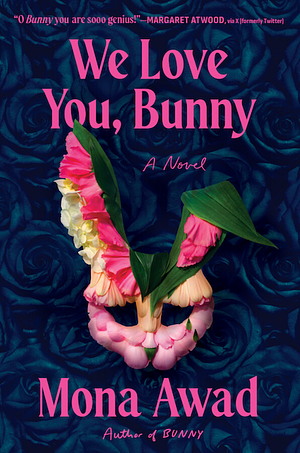
We Love You, Bunny by Mona Awad.
My rating: four stars.
Before you read this review, you should go and read a review of Mona Awad’s Bunny. Because you can’t read this novel without having read that one first.
Read that review? Good. We Love You, Bunny is a sequel to the Jesus-writers-are-fucking-infuriating horror funtime Bunny but it’s also a prequel. Parts of the first novel are explained in more depth, and even more writing school irritations are laid bare. Let’s just say it’s a pretty good stab at fleshing out the Bunnyverse.
I don’t normally notice men, married as I am to the Sea.
So. The premise for the book is that the main character of the previous novel has written a novel about what went on in that novel. And, during a book tour for her novel, has been abducted by the other main characters of that novel because of what she put in her novel, which was a lightly name-changed version of what went on in that novel.
What we get is each main character – plus Aerius, a new-but-old character – speaking their truth. It’s a salon of revelation, with different views of the same events, undercut by roiling Mean Girls-level bitchiness. The enmity between Fiction and Poetry cliques is more detailed, the experience of discovery that underpins one’s first years of university is highlighted through Aerius’ tales, and there’s More Embarrassing Faculty Bullshit than you can poke a stick at.
Go write a sestina about the sunset that no one will fucking ever read ever!”
I read this on a train and absolutely loved it. Is it more of the same? Yes. But just so happens that schlock-horror lit-school bullshittery is my jam.
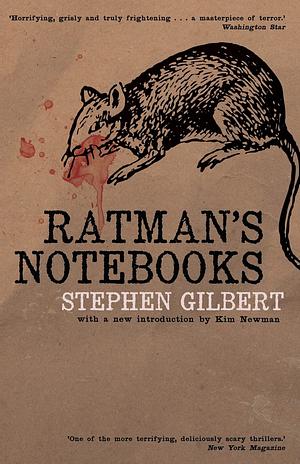
Ratman’s Notebooks by Stephen Gilbert.
My rating: three stars.
I’ve had to go into Sydney much more frequently for work over the past year. I had to head in about a fortnight ago, for a few days, and because I’m basically a hobbit, when I left work I’d end up watching something on the TV in my hotel room before hitting the sack.
The second night I was there, I caught Willard, a 1971 film with screwball comedy vibes that was billed as a horror, featuring Ernest Borgnine as a prick of a boss, a young Sondra Locke as a youthful office worker, and Bruce Davison as a loser who ends up exacting revenge on those who’ve wronged him. By rat.
ANYWAY, the movie is a cult classic. I didn’t think it was great, but the tone was so odd that I saw it through to the end. I realised, while watching the credits, that I had a copy of the book on my Kindle, thanks to compulsive purchase of pretty much anything that Valancourt puts out. So I decided to give it a spin and see how divergent it was from the strangely paced adaptation.
I’m the sort of person you’d think wouldn’t say ‘Boo’ to a goose, but you’d be wrong. I nearly always say ‘Boo’ to geese when I meet them, provided there’s no one else there of course.
Turns out, the book’s good fun. Not great, but certainly an entertaining piece horror. The introduction of the book gives some good positioning of the work, suggesting that it opened the way for the 1970s/80s horror publishing boom, influencing Carrie. I don’t know if that’s the case, but the vibes of the thing certainly sit well alongside early King.
It’s funny the pleasure it gave me telling these lies to Mother. They were so absolutely deliberate. I relished them. But Mother’s a dangerous person to lie to. You need to be very careful.
Gilbert’s story is set in the UK, not the US of the film, and there’s a greatly reduced cast of characters. The relationship with the rats is better explained than the movie’s Ralph Wiggum-coded “the rat looked at me and then I got POWERS OF COMMUNICATION” reasoning. Ratman’s Notebooks is presented as a collection of writings, not quite as rigid as Dracula‘s real-estate-with-teeth approach, but certainly convincing enough to convey the lonely scribblings of an angry loser. It reads a lot like something Luke Haines might put on an album, which IYKYK, frankly.
The upshot? It’s airport-read good, and makes me want to seek out more of this kind of thing.
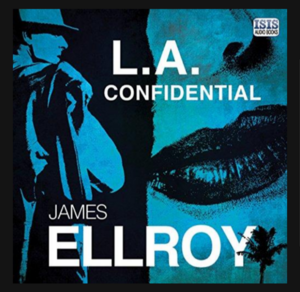
L.A. Confidential by James Ellroy (reread).
My rating: four stars.
So other than The Black Dahlia, if people know an Ellroy, L.A. Confidential is the one they know, largely because of the Oscar-winning film of the same name. Revisiting this novel reminded me that there’s so much more story in here than ever shows up in the film.
The third in the author’s L.A. Quartet (or the second in his Dudley Smith Trio, depending how you stack ’em), the book details a quagmire of 1950s corruption and murder. It weaves in prostitution, blackmail, drugs, organised crime, political influence and the acts of three men – straight-arrow Ed Exley, tough guy Bud White and celebrated Hollywood detective Jack Vincennes – in a massacre following a real-life “Bloody Christmas” scandal.
It’s a rapid-fire piece of work, full of violence and ruthless dedication and ambition. It’s very much Men Doing Men Things, but I’m not sure that’s a surprise given the genre. Sausagefest it may be, but it is an interlocking thing of bloody beauty.
Now I gotta revisit that film.
If you’re after some good bookish times, please check out my profile on TheStoryGraph.
If you’d like to buy me some books to review, there’s a wishlist over here.
 Yeah nah.