
As I continually reiterate, the plan here is that every five books I read, I review. Here. In a relatively timely manner.
Naturally, I’m behind because a) I’m disorganised and b) it’s December and my be doing with 2025 energy levels are surprisingly low.
All of this is to say here’s another load of reviews. Some will be shorter than usual, purely because of the number I have to push through. Let’s get on with it, boyeeeeeeeeeeeee.

The Zone of Interest by Martin Amis.
My rating: five stars.
I don’t think I’d read any Martin Amis before this, and hoo boy, it’s a doozy to be starting with. A romance set in a Nazi death camp? Distinctly on the nose, but the prose is so good that I chose to read it as a piece of wilful suspension of disbelief in the face of some absolute human horror. I mean, it’d have to be good to overcome the banality of ‘guy wants to fuck his boss’s wife’ when both men in the triangle are Nazis, and the setting is Auschwitz.
We took the simple step of illegalising all opposition. And the autobahn to autocracy lay clear.
The novel is a fictionalised portrait of Hannah and Rudolf Höss. The internal narrative of Rudolf, Angelus Thomsen (the lover) and Szmul Zacharias (a Jewish Sonderkommando or forced labourer) is what drives it. The quartet interlock in life-altering ways, presenting views of the same experience from wildly different perspectives. Thomsen, for example, seems to not be hugely fussed by the camp’s workings, while Szmul offers a stark examination of complicity and the nuts and bolts of atrocity.
The figures that held my attention were not the Kapos who screamed at the prisoners, nor the SS noncoms who screamed at the Kapos, nor the overalled company foremen who screamed at the SS noncoms. No. What held my eye were the figures in city business suits, designers, engineers, administrators from IG Farben plants in Frankfurt, Leverkusen, Ludwigshafen, with leather-bound notebooks and retractable yellow measuring tapes, daintily picking their way past the bodies of the wounded, the unconscious, and the dead.
Nobody in here, as expected, comes off well. It feels wrong to be considering things as simple as affairs in the context of orchestrated, industrial horror, and I think that sort of prurience is what Amis wants to make the reader examine in themselves here. Certainly, the power of desire is a key motivator of the narrative, almost as a game of chicken with morality: what’s the line? I don’t really know. File this one next to stuff like The Boys in that it’s technically brilliant, but it feels very, very wrong to admit to liking it.
After I finished this novel, I checked out the movie of the same name.
It does away with the tissue of separation: the couple in the film are the Höesses, and the triangle part is cleanly snipped away, so that what we have is a portrait of walled-off life in a death camp. It’s not so much an adaptation of the Amis story as it is a form of immersion in the setting; filmed at Auschwitz, the power of the location itself (coupled with the brilliant sound design) flows out of the screen. Watching this feels a bit like being stained: it’s a challenge. Again, I didn’t like it, but I found the achievement remarkable.

Serotonin by Michel Houellebecq.
My rating: four stars.
My second Houellebecq (fiction, at least) sees old mate’s misanthropy continue unabated, only this time there’s a soupçon of anti-EU policy to spice things up a bit.
(So, kind of like Vigdis Hjorth but with more dubious pornography?)
Anyway, what we have is – surprise! – a bummed agricultural scientist, Florent-Claude Labrouste, who ostensibly has nothing to complain about (hot Japanese girlfriend, snazzy flat, promotes cheese for a gig) who watches a documentary about people walking out of their lives and figures it might be a good thing to try.
I can’t hide the truth: I will end my life unhappy, cantankerous and alone, and I will have deserved it.”
Labrouste, ensconced in a new locale, is prescribed an antidepressant to help snap him out of his malaise, though this is made worse when he realises it negatively affects his sex drive. To avoid thinking of his failing dick, he takes a trip to met an old college friend and is eventually embroiled in a world of pissed-off locals, of gun fetishism, and of activism that, following the book’s publication, would be seen as a presentiment of the gilets jaunes movement. Things do not go according to plan, or well.
God is a mediocre scriptwriter
As seems the case with Houellebecq’s work, he manages to take the cynical inner voice of a middle-aged fuckwit decrying the fall of society and make it actually interesting in a way that op-eds by the right-wing commentariat rarely are. There’s a focus on the individual against the world that was interesting to me, even though I’m backing the world against this jerk. At least the character (and, I perhaps believe, the author) own their awfulness: there is no sense of pretending that either fits into a wider world. I guess your mileage will vary based on how much dudes navelgazing lights your lamp, enjoyment-wise. I thought it was clever, and a little shocking – but would absolutely avoid both author and subject in the pub.
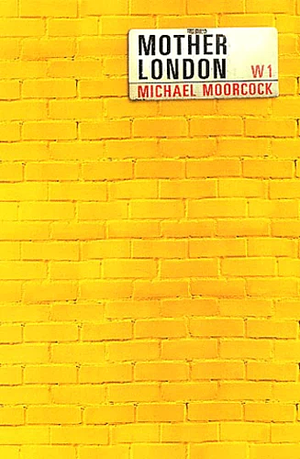
Mother London by Michael Moorcock.
My rating: four stars.
I have had this on my shelves since I was living in London which, as those who might be regulars might tell you, was more than two decades ago.
My desire to read this particular Moorcock tome (as opposed to one involving a sight more sword and sorcery action) was spurred by an interest in psychogeography that came of age in the UK: blame Barbelith for that.
Momentarily Mummery feels as if London’s population has been transformed into music, so sublime is his vision; the city’s inhabitants create an exquisitely complex geometry, a geography passing beyond the natural to become metaphysical, only describable in terms of music or abstract physics: nothing else makes sense of relationships between roads, rails, waterways, subways, sewers, tunnels, bridges, viaducts, aqueducts, cables, between every possible kind of intersection.
The book is an incredible weaving of experience through The Great Wen: characters contend to impart their little bit of London. There’s Kray-adjacent gangsters, musos of variable stylistic dedication and, at its core, a series of individuals with assorted mental illnesses that circle around appointments at a drop-in centre. This crew contains a number of flaneurs and flaneuses, somewhat shell-shocked from the Blitz (well, some of them) into a sort of psychic receptivity, picking up signals from the surrounding ether for their contribution to the patchwork portrait of the city.
Such stories are common amongst all ordinary Londoners though few are ever noted by the Press. By means of our myths and legends we maintain a sense of what we are worth and who we are. Without them we should undoubtedly go mad.
What comes across more than a story is a passion, a love of London in all its forms. The idea of it being a place of potential, of millions of souls flowing together to create the city is clearly conveyed, and it made me wish I was walking its streets.
I really should’ve read this when I was there.
(You’ll find this essay by fellow London psychogeographer Iain Sinclair far more insightful about this book (and King of the City, which I intend to read soon.))
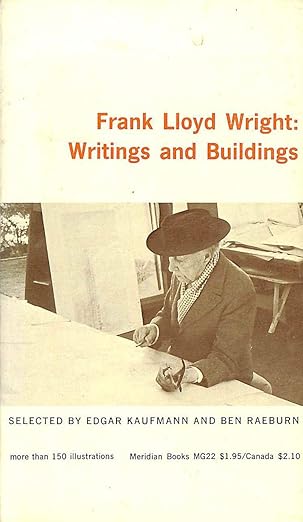
Frank Lloyd Wright: Writings and Buildings by Edgar Kaufman and Ben Raeburn (eds).
My rating: three stars.
I was surprised to find a copy of this in the wild. It’s a great little collection of writing from across Frank Lloyd Wright’s career, first published in 1960.
The book collects details of FLW’s architectural works, and more than 150 illustrations give a real sense of the drivers of Wright’s design obsessions. Even in the small scale necessitated by the pocketbook printing, the clean lines and pristine – yet human – spaces of his works sing.
The complete goal of the ideal of organic architecture is never reached. Nor need be. What worth while ideal is ever reached?
There’s a lot of writing about what makes good architecture, and a pretty good autobiographical picture of various parts of Wright’s life: in Japan, in Europe, and growing up. I was shocked that some of his designs, which still appear so modern and fresh, are now more than 100 years old. Obviously, I’ve a lot of gaps in my architectural knowledge, and while the book helped address some of those as far as Wright is concerned, it also gave me a primer in his ways of thinking – the reader is certainly left in no doubt as to importance of a pursuit of inspiration and the development of his approach to space.
To promote good work it is necessary to characterise bad work as bad.
Curious googling in the wake of reading this book has made me aware of the frankly (haw haw) ridiculous riches of The Wright Library, a site which provides an incredible amount of information on the architect and his work. It’s well worth a look as many of the writings in here appear over there – and you can see the houses described in much more fulsome detail than the book could provide.

The Dead Hand: The Untold Story of the Cold War Arms Race and its Dangerous Legacy by David E. Hoffman.
My rating: four stars.
This seemed to be a germane read given my inhalation this year of Tim Weiner’s two books about the history of the CIA. Those books highlighted the way the tension between the US and USSR was capitalised upon for the benefit of those running the CIA. This one discusses how that same tension was capitalised upon by manufacturers of chemical weapons – all with the knowledge of the Politburo and its ultimate leader.
It also highlights how close to fucked the world was in this period. Dead hand protocols? Yep. Runaway nuclear arms? Sure. Biological weapons that could wipe out cities? Why not? The catalogue of Grim Shit runs long, and the story of its development and destruction (or at least, sale in the wake of the collapsed Soviet empire) is told as entertainingly as something that details how humanity skated past death on the reg can be.
Of course, it doesn’t help that the intelligence world was in this quandary for the entire time:
The United States cannot predict Soviet behaviour because it has too little information about what goes on inside the Soviet Union; the Soviets cannot predict American behavior because they have too much information.
While I think Westad’s book The Cold War: A World History (read last year) was a better book as a history, this one is better if you are looking for a personal view of Reagan and Gorbachev. I think Hoffman is a bit too much of a Reagan fanboy, but there was a depth of characterisation here that I hadn’t expected: the pieces on the minuet of international summit discussions are a lot more thrilling and perceptive than they’ve a right to be.

Cibola Burn by James S.A. Corey.
My rating: four stars.
The fourth in the Expanse series. The fourth I’ve buddy read with Elizabeth. (Go buy some stationery!) And the fourth I’ve really enjoyed in a popcorn-slamming kind of way.
This entry sees our Rocinante crew roped into a stand-off between settlers and Insert Colonisation Jerks Here on the planet Ilus. A planet, it must be noted, that has murderous slugs, unpredictable weather and a high chance of plague. There’s space cookers, conspiracists and military jerkasses with a hard-on for solving unrest with high-velocity rounds. You know, the usual.
Right,” Holden said. “No coffee. This is a terrible, terrible planet.”
Without getting into characters that reappear from other instalments in a verging-on-fanservice way, this is the usual story I’ve come to expect from a Corey tome: high stakes, shitty choices, and some excellently drawn interpersonal relationships. Holden and Amos do a lot of the heavy lifting in the Ilus story, and their bond is treated really well throughout.
Later,” Amos said, “when you’re wishing we had this stuff, I am going to be merciless in my mockery. And then we’ll die.”
Of course, this wouldn’t be an Expanse story without a sense that there’s a bunch of stuff going on just outside our heroes’ problems. The larger political machinations (and the problems of sentient space goo) bubble under everything on Ilus, with the sense that things will get bad and soon.
How soon? I guess I gotta cue up the next buddy read to find out.
(This book is sometimes nominated as the worst in the Expanse series. As someone who’s reading them for the first time, I don’t see it. This either means they’re wrong, or else there’s some inhumanly good shit coming up.)
Lanny by Max Porter
My rating: five stars.
This is the second of Max Porter’s books I’ve read. I was impressed by the ambition of The Death of Francis Bacon, and that’s been topped by Lanny. This work is at once a meditation on childhood, on creativity (and the way we learn to channel it), set in a missing person mystery and a sort of folk horror story.
I don’t want to say too much about this book because it is one of those rare examples of a work that felt like holding lightning in a bottle for the time I was reading it. It’s a curious thing, almost an amalgam of poetry and oral epic and magical realism yet somehow free of the ick that can accompany those narrative modes if done badly.
What or who is supposed to manage and regulate Lanny and his gifts,” he asks. “Oh fuck, it’s us. Who can have children and not go completely mad?”
If you want to feel the darkness of the village, give this a go.
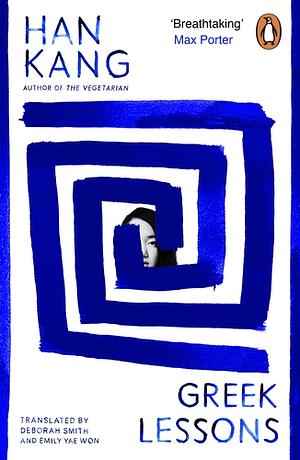
Greek Lessons by Han Kang.
My rating: three stars.
I have meant to read Han Kang’s work for some time. Greek Lessons caught my attention on a work trip: it was something I could easily read on one of the journey’s legs (it’s 160 pages) and the fact I knew nothing about it appealed to me.
What I read as I – well, sped isn’t exactly the term if you’ve ever been on a train in NSW’s Central West – meandered towards my destination, was a portrait of two characters experiencing loss. A man (in first person) and a woman (in third person) describe what’s happening to them. The man is losing his eyesight and his sense of belonging, while the woman is dealing with the aftermath of losing her mother, and custody of her child.
The titular Greek lessons are what – other than grief – unites them. She takes them, he teaches them.
The hatred that had boiled up in her a long time ago went on and the agony that used to surge in her remained swollen, a blister that wouldn’t burst.
Nothing healed.
Nothing ended.
The duo are not named. Nothing much happens. But there’s a real sense of disintegration throughout the work. Things falling apart, and yet the individual persists because that’s what is left when things are taken. I don’t know that this is a work you can enjoy on a narrative level; rather, you sort of bathe in it – its concerns spur thoughts of your own, beyond the page. The story, such as it is, is a prop to kick-start the reader’s grey matter. It’s a bold approach.
The world is an illusion, and living is dreaming,” I muttered. Yet blood runs and tears gush forth.”
When I closed the book, from my seat on train I watched dead trees pass by, ruminating on what might go.

The Hand that Signed the Paper by Helen Demidenko
My rating: two stars.
This is a book that sparked a shitfight. It’s a hoax, published as the work of Demidenko, a supposed Irish-Ukrainian writer drawing on family history and experiences as grist for the literary mill. Turns out it was the work of Darville (now Dale), a resolutely Australian bullshitter. It won the Miles Franklin and birthed a thousand thinkpieces, though in 1994 they were just called editorials.
The prose in the novel (ostensibly about war crimes trials and the experience of a Ukrainian, now-Australia-dwelling ex-Treblinka guard) is nothing especially flash. It reminded me a little of Pachinko inasmuch as there seemed to be similar authorial interest when describing researched content, while the characterisation remained either wooden or cartoonish.
(And that’s without getting to the antisemitism littered throughout the text; I honestly couldn’t believe that this was published, let alone won such a prestigious award. Sure, tack a “postmodern” descriptor to it and it makes it all ok? Come the fuck on.)
Look, the more I think about this book, the lower the rating I want to give. Content aside, Demidenko/Darville/Dale has, in years since this all blew up, been a sometime right-wing commentator, has advised David Leyonhjelm, and plagiarised Twitter posts, amongst other things.
Give it a miss, folks.
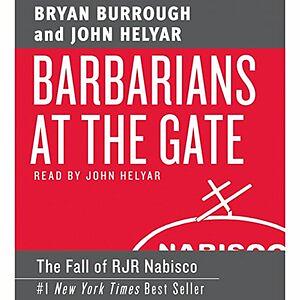
Barbarians at the Gate: The Fall of RJR Nabisco by Bryan Burrough and John Helyar.
My rating: three stars.
IN WHICH Burrough and Helyar’s writing for The Wall Street Journal on the leveraged buyout of RJR Nabisco is turned into a long paperback and a longer audiobook.
This is often referred to as one of the best business books of all time, and I can see why: it made me give a fuck about junk bonds, junk bond traders and the world of the LBO. This is no mean feat, given that my high school economics education exists only in the retention of the word stagflation.
The key to the book is the amount of attention given to the personalities of the dick-swinging principals. The description of RJR Nabisco head F. Ross Johnson and his opponents for control of the company move the narrative out of textbook drudgery and into Cool Guy Territory. (By which I mean they’re almost uniformly terrible and paid extortionately, but the fuck me the industry used to be like that? quotient is HIGH.) There’s a lot of balls in the air (figuratively, though who knows given the all-night drinking sessions?) but Burrough and Helyar never make the participants so odious that you’d stop reading.
(I don’t know that I’d shake hands with any of them, though: you’d probably have to count your fingers.)
A Regicide by Alain Robbe-Grillet.
My rating: three stars.
This novel – Robbe-Grillet’s first – was written in 1949 and rejected. The author then concentrated on other novels (and films, including Last Year at Marienbad) and the book lay fallow until it was finally published in France in 1978. This English translation of the work, by John Calder (who was Beckett’s first publisher in English) was released in 2015.
The story inside is a strange one: Boris, who lives in <insert country here because the book doesn’t>, a land ruled by a king, works in a factory as some kind of statistician. His work is constant and seemingly unimportant, but he decides for –reasons– that his true calling as that of assassin. He’s going to kill the king. And why not, indeed? I mean, it’s a way to pass the time, which in <insert country> seems to pass exceedingly slowly.
On the other hand, there’s an island. Another man (not Boris) lives there. It’s an incredible shithole. We hear stories about the island and its sleep-inducing insect life in between updates on Boris’s death-dealing plans. The two eventually become almost inseparable, causing the reader to wonder if the island is some kind of portrait of Boris’ inner life, or whether Boris is the island dweller’s tulpa.
DOES HE KILL THE KING?
You’ll have to read the book to find out. But don’t count on finding out.
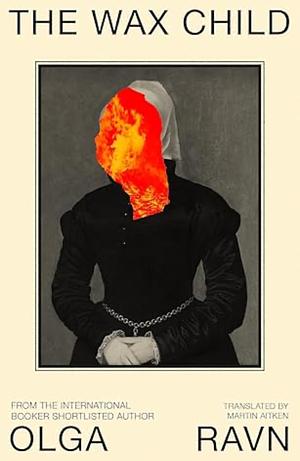
The Wax Child by Olga Ravn.
My rating: four stars.
This was very much my kind of thing, being as it was a tale narrated by a wax ritual doll, buried in the earth. The doll, made out of beeswax, was created for ill: its constitution features hair and fingernail parings taken from the person who is intended to suffer. It is “the size of a human forearm” and relates its story from a place deep in the earth, years later, for anyone with the ears to hear.
The doll’s tale is of witchcraft. The tale of witchcraft – and the pursuit of its practitioners – is true, more or less, rooted in Danish trials that took place in the late 1500s and early 1600s.
Children should be seen and not heard, as they say. But then I’ve already told you, I am not a child, only something that looks like one.
The text, which originated in a Royal Danish Theatre production called HEX, is a gnomic wonder. The doll’s phrasing is otherworldly, conveying sights, sounds and social upheaval that it cannot see but can sense from afar. Christian IV, king of Denmark and Norway, smells of hidden blood. There’s the scent of burning. Forgiveness is absent. Terror and the hope of protection through station run through a series of investigations, trials, and attempts to foster bonds.
This is a work that feels both unearthly and legitimate at once. It is a curious wonder.
The Director by Daniel Kehlmann
My rating: five stars.
Another novel based in reality. This time, it’s Daniel Kehlmann’s imagined description of the Second World War life of G.W. Pabst, Austrian director.
(Pabst famously directed Lotte Lenya in a film of The Threepenny Opera, and Leni Riefenstahl in The White Hell of Pitz Palu. He discovered Louise Brooks and was instrumental in the rise of Greta Garbo, both of who feature here. (As does Riefenstahl.))
Well, let’s take a step back. It begins with a former coworker of his, Franz Wilzek, being driven from an aged care home to appear on a daytime television show to talk about Pabst. What emerges is a story of The Molander Case, Pabst’s lost film, and the wartime experience that led to it.
Director was, all in all, a strange profession. One was an artist, but created nothing, instead directing those who created something, arranging the work of others who, viewed in the cold light of day, were more capable than oneself.
In real life (as in the book) Pabst fled Germany in 1933 when Hitler rose to power, bearing the nickname ‘Red Pabst’ for his radical leanings. He was less successful in the USA than other German emigres, and made the mistake of returning to Austria to visit his sick mother – a visit that saw him ensconced in the Third Reich until the end of the war, persuaded to make films for Joseph Goebbels.
(On the plus side, he does get to see Metropolis‘s premiere, which must’ve been something.)
Metropolis is the best film ever made,” said Pabst. “I know,” said Lang. Both were silent.
Kehlmann’s book is excellently researched and feels very true to the period. Practically nothing is known of the circumstances surrounding The Molander Case, so the narrative around its creation is theoretical, but rings true – particularly in the delicate matter of sourcing extras in the middle of a war. It’s an exceptional fictionalised biography, though to call it that feels like a reduction: it’s an examination of how our memories of events can dictate the morality of what we experienced. How the stories we tell ourselves – each of us our own unreliable narrator (just like Kehlmann) – reinforce our rectitude in the streams of life. The experience of the expat, the love of family, the struggles of an artist to produce in a hostile environment and the difficulty of everyday life under a fascist regime are all examined in a way I found endlessly grim but completely fascinating.
True, liberties are taken – Wilzek never existed, and Pabst never had a son named Jakob – but the emotional heft of the work is not diminished by these embellishments. Rather, they help position the narrative to allow its emotional resonance to crash down more devastatingly.
Times are always strange. Art is always out of place. Always unnecessary when it’s made. And later, when you look back, it’s the only thing that mattered.”
If you read ONE book about an Austrian director trapped in a moral hell in pursuit of creativity, then… you know how it goes.
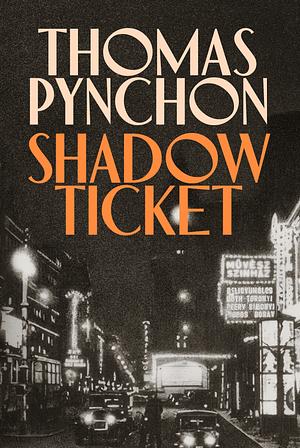
Shadow Ticket by Thomas Pynchon.
My rating: four stars.
Thomas Pynchon? New novel? Not a doorstop? Set in the prohibition era with a cheese heiress featured? Of course I was gonna read this.
There’s undoubtedly a lot of very well researched takes on this book – let’s face it, old TP is a luminary of the wanky literary scene of which I partake – that you can find if you want more beef on your review. There’s sites dedicated to sifting through the text to find nuggets in the wordplay and to making red-string networks of connections between this work (his first in twelve years) and the rest of his output. And they’re all well and good, but here?
I dug it.
All normal as club soda, yet somehow … too normal, yes something is making a chill creep across Hicks’s scalp, the Sombrero of Uneasiness, as it’s known in the racket. Something here is off.
I dug it because honestly, the dude is 88. I figured that we mightn’t have seen another work from him, let alone one that is a brief, pointed dimestore pulp novel with his usual encyclopaedic brio. Shadow Ticket is the story of Hicks McTaggart, a mediocre man and solid detective agent who is engaged to locate a missing heiress. A cheese heiress.
Cheese—wait, cheese … has feelings, you say? You mean like … emotions?”
“Long-time spiritual truth in Wisconsin. Thousands of secretly devout cheezatarians …”
Hijinks ensue. These involve Nazis, mysterious submarines, bands playing dubious venues, coke-huffing Eurocops, autogyros, asports and apports, a military organisation called SMEGMA, The Gumshoe’s Manual, Transylvanian bikers and copies of Hep Debutante magazine. It’s world-spanning and intensely silly, especially given that age has not wearied Pynchon’s desire to shoehorn made-up song lyrics into the fray whenever he can. (Seriously, if you don’t know about Pynchonian music, take a gander over here.)
What about lamps that aren’t tasteless?”
The story doesn’t make a lot of sense, but if you’re looking for sense (other than of a conspiratorial nature, maybe) in a Pynchon work you’re barking up the wrong V2. Is this as solid and lasting a work as Mason & Dixon or Gravity’s Rainbow? Possibly not, but give it time: people will unpick the facts within and create whole new narratives, awarding TP some kind of eerie presentiment or genre-defining ability to capture the zeitgeist like a pinned butterfly – again! – and it’ll rise in estimation.
Until then, it’s a fun time with a dame that was loaded. With cheese.
I still love that he voiced this himself. I really hope he showed up to the studio with a bag on his head. Even if he didn’t, that’s how I choose to imagine it, so that’s HOW IT WAS.
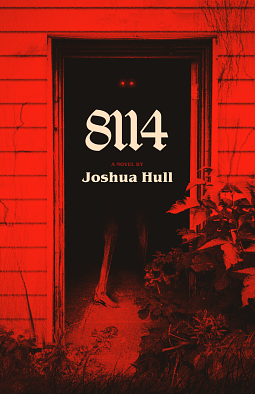
8114 by Joshua Hull.
My rating: four stars.
So this was cheap on Kindle, and I enjoyed the blurb. That’s about all you need to know about why I decided to read this.
I wasn’t expecting much – I do find that cheap horror is very much a suck-it-and-see proposition, with many results being subpar at best – but what was delivered was a surprisingly creepy tale that examines what happens when podcasters stick their noses in where they’re not wanted.
Rumour has it, that by doing this podcast, I have put Adam and his mother’s peaceful and quiet life in jeopardy. Which… was never my intent. My only goal with this show was to try and find a missing classmate. And instead, I have… well, to put it plainly, fucked up.
I’ve seen some reviewers tear Hull a new arsehole for 8114 and while I don’t think it’s a perfect text – it feels a little in love with its own phrasing at times – I did find it a solid small-town-revisited story. The tale is obsessed with rot, with the way decay leaches into places and people, disrupting and corrupting what’s there. There’s very strong Stephen King vibes in some sections, but I think that’s hard to avoid given King’s shadow has loomed over every fucked-up literary town since the 1970s.
8114 costs a few bucks, offers a propulsive and creepy tale of bad shit from the past fucking up the present, and is down on podcasters in a way that is more gruesome than usual, but still remarkably apt. If you like horror-of-place, infectious-past stuff, you’ll probably like this.
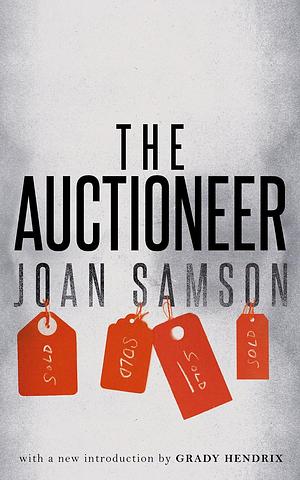
The Auctioneer by Joan Samson.
My rating: four stars.
Another Valancourt-resurrected novel, this is the only novel Joan Samson wrote. Her 1976 death of brain cancer robbed the world of another Shirley Jackson, at least if The Auctioneer is any indication.
This brief novel is an excellent example of horror perceived rather than seen. It’s not gory, and not a lot occurs, but the stakes are as high as novels with far more propulsive action. Again, it’s set in a small town, and the evil that’s unleashed does come from that town – but it hangs on an outsider, much as in Stephen King’s Needful Things, say.
That outsider is the titular auctioneer, Perly Dunsmore. He comes to the town of Harlowe, New Hampshire, and begins running a series of auctions, ostensibly to raise money to assist the town’s police force. The locals, including the focal Moore family (John, Mim, their daughter Hildie and John’s mother) donate happily enough in the beginning.
But the auctions continue.
What follows is more of a creeper than a horror, and a thoughtful critique of capitalism and the development of rural areas for cosmopolitan purchasers. It’s about power and about how people will (or won’t) go along with the flow.
This isn’t a long one, and it’s well worth seeking out. The horror below the surface is finely wrought, especially if, like me, you live in a rural area.
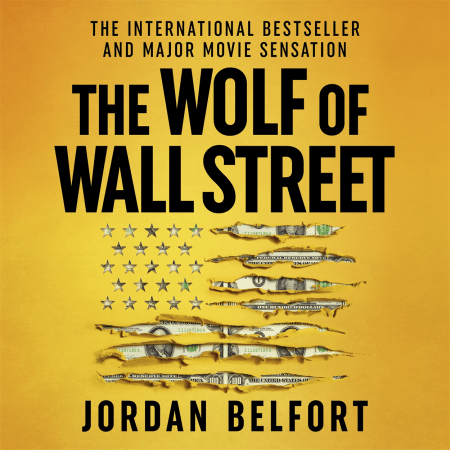
The Wolf of Wall Street by Jordan Belfort.
My rating: three stars.
Look, I’ve yet to see the movie. I’ll get around to it. First, though, the book.
This might well be the shortest review of this clutch.
This book is basically what happens if Tucker Max had more money and was (slightly) less punchable. I enjoyed it, but felt vaguely bad about it, if that helps. But it does what it does with aplomb.
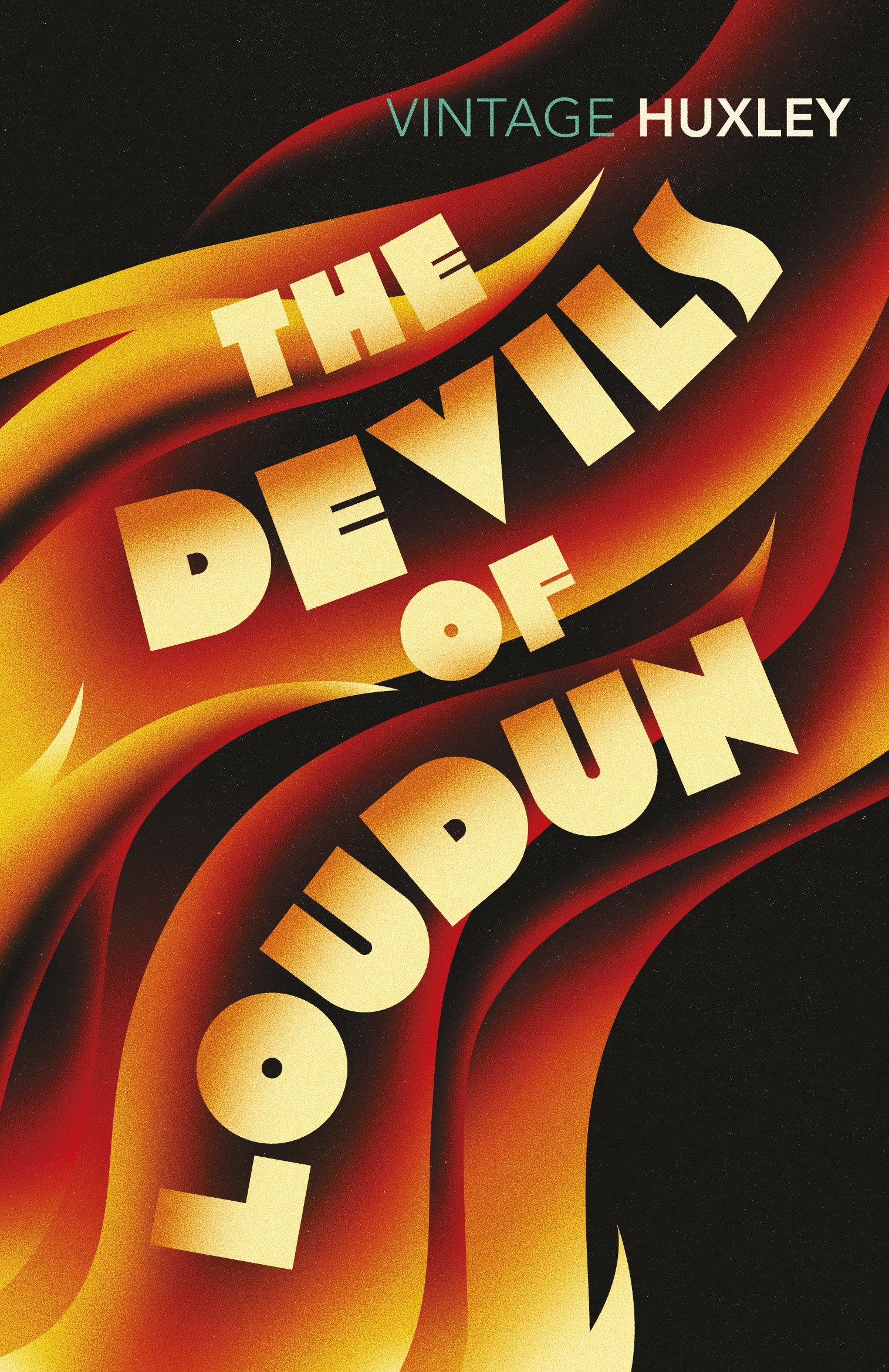
The Devils of Loudun by Aldous Huxley.
My rating: three stars.
This is the first Aldous Huxley I’ve read. I had expected it to be dry, based on its subject matter – 17th century exorcisms, trials and executions in the French town of Loudun. I figured that I’d get a fairly stuffy history, with a reasonable amount of quotation and pontification.
I’m an idiot, because this was great.
What I got instead was a bitchy, non-fiction recounting of what went on between Urbain Grandier, a priest burned at the stake in 1634, and a convent of Ursuline nuns.
To post-Faustian eyes his portrait suggests a fleshier, not unamiable and only slightly less intelligent Mephistopheles in clerical fancy dress.
Yes, the book dives deep into hysteria, mania and religious conviction in a very highfalutin’ way, but throughout Huxley humanises his subject to the point that though you know Grandier’s end is going to be bad, you don’t feel bad that he’ll end up that way because he seems to be a man incapable of tripping over his own dick – in terms of keeping it out of his parishioners AND in terms of swinging it towards his enemies. Truly, hoist by his own petard was written for this mustachioed motherfucker.
(Well, not motherfucker as it turns out: common view is that some of his difficulties were brought on by spurning a mother superior’s desires.)
After all, it is rating one’s conjectures at a very high price to roast a man alive on the strength of them.”
I will make no bones about it: I came to this book after I’d seen The Devils, a Ken Russell film adaptation. It features Oliver Reed and Vanessa Redgrave (with music by Peter Maxwell Davies and production design by DEREK JARMAN!) is unremittingly bonkers, and can be watched here. It is miraculous that a 1970s Warner Brothers financed the thing, and it’s as far from the thoughtfulness of Huxley’s text as you can get… but you know, Oliver Reed with a waxed mo forgives a lot of sins.
First Huxley, not the last.
The Black Dahlia by James Ellroy (reread).
My rating: four stars.
Around the time that The Cold Six Thousand came out, I went through a big James Ellroy jag. I hadn’t read any of his work. and then within a couple of months I’d read most of it – or what has been released at that time. I then was sort of hep-catted out, and realised that if I saw another reference to a Hughes fuck-pad I’d scream, so I put them down.
Until now. I’d an audiobook of The Black Dahlia saved, and it turned out to be great to ride a ridiculously yellow zero-turn mower to, and for distraction while moving bookshelves around the joint. What’s incongruous is that I carried out all these chores while listening to a book based on a hideous murder; a book that posits a solution to a still-unsolved crime.
Cherchez la femme, Bucky. Remember that.”
The writing is as frenetic as ever. If you’ve not read Ellroy, it’s a bit like licking a nine-volt battery to see if there’s a charge: that kind of zap, a telegraph of meaning. There’s information dumped on you from the viewpoint of Bucky Bleichert, a cop, with the speed of the synapse: everything crackles and the portrait of Los Angeles – racist, sexist and drowning in acceptable day-drinking – reeks of well-researched reality. It’s propulsive. (And wikipedia could only find two anachronisms, which is a pretty good guarantee.)
Pulling away, I realised I had no place to go and nothing I wanted to do except satisfy my curiosity about a woman who was coming on like gangbusters and a big load of grief.”
While it’d be easy to write this off as neo-pulp, there’s a certain caustically self-examining heart at it that pushes it beyond a simple piece of genre fiction. There’s contending ideas of duty and belonging, consideration of money and social stratum and the licence this offers people in a time where certain elements of life were tightly controlled. This is, naturally, offset by some incredible writing about boxing ,and some near-necrophile obsessions.
You know, the good stuff. This is a picture of depravity and desire, and it’s ugly and fearsome and great. I did, of course, forget that this is the first of a quartet. So I guess it’d be rude not to continue along this path in the coming weeks. It’ll give me a good excuse to pull out L.A. Confidential again.

Sun and Steel by Yukio Mishima.
My rating: three stars.
Couple of brief thoughts for a brief book: what a conflicted little boy.
What an incredible gym queen.
Jesus, just say you like masochism.
And finally, NOW I properly understand Mishima: A Life in Four Chapters, thanks largely to the bit about the jet, decompression and the flash.
Basically, if you liked Henry Rollins’ ‘Iron and the Soul’ but thought it needed a bit more death drive and fascist love of uniforms and motivational face, then this is for you.
(There’s a copy of this available on YouTube if you’d like to listen.)
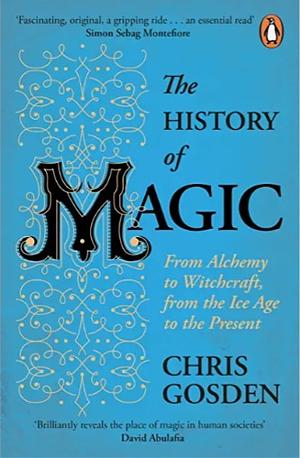
The History of Magic by Chris Gosden.
My rating: four stars.
I have been reading this book on and off since the first week of the year.
It has taken me until the last week of the year to get through it.
This is not a reflection on the quality of the book: it’s well researched and considers magic across the globe and through the stretch of human experience. Something about it, though, isn’t conducive to dipping in and out, even though I’m extremely interested in the subjects at hand: magic, religion and science, woven together in Gosden’s much-repeated “triple helix” framing.
The point here is that a belief in magic does not make people irrational, and that the contrast between magic and science is not between irrationality and rationality; rather, people work with various forms of logic that are argued from radically different premises.
The book gives a good – and often funny – potted history of various societies’ use and tamping down of magic. I think the tone is not quite right for the book: it wants to be a sort of populist take, but Gosden can’t quite shake off the dust of the college library. The phrasing sometimes seems weird, but I suppose part of that could be from my wanting a bit more granular beef in the copy, which isn’t really the book’s purpose.
My definition of magic emphasises human connections with the universe, so that people are open to the workings of the universe and the universe is responsive to us.
That said, this is an accessible and considered explanation of how magic has risen and fallen in importance over human existence, and provides an excellent entry point for someone without much knowledge. It covers ancient human rituals up to chaos magic, and is underpinned by a bracingly animist drive: that we can look at things differently than our mechanistic world would have us do, and perhaps we’ll discover something bold along the way. Which, let’s face it, is a reasonably good reason to reconsider it.
This takes us up to a total of 86 books read/heard this year. That’s a pretty good tally. I’d like to add some more to it, and hopefully will, but this working year has been a punisher and I may well find my brain leaking out my ears by NYE. We’ll see what happens.
If you’re after some good bookish times, please check out my profile on TheStoryGraph.
If you’d like to buy me some books to review, there’s a wishlist over here.
 Yeah nah.
[…] second of Ellroy’s L.A. Quartet, The Big Nowhere follows The Black Dahlia in plumbing the dark hearts of cats and kittens in 1940s Los […]