
Well well well. It appears that the whole keep-up-to-date-with-reviews intention is something that withers in the overwhelming heat of oh-shit-work-deadlines and oh-shit-spring-gardening.
Consequently, it’s been a while since I’ve written. The good news (for me!) is that I’ve not stopped reading, and so have a raft of things to pontificate about now that I’ve finally got some time to get thoughts down.
(I was considering some kind of Droste effect of a photograph of me editing this post editing this post editing this post but I realised that I lack the technical elan to carry this out without using AI, and given that the world already looks like the image above due to people using this fucked tech to accelerate the Rule 34 singularity, that you could use your brain to picture it instead. I dunno, maybe your version is more handsome or charming or something. We live in hope.)
(Also, did you know that Microsoft once had an OS called ‘Singularity‘? I assume ‘Torment Nexus‘ was taken.)

Rave by Rainald Goetz.
My rating: three stars.
There are two things to know about my inhalation of this book: one, I’ve never read any other work by Rainald Goetz, and two, I’ve never been to a rave.
Well, that isn’t exactly true. In the late 1990s I went to a dance party (I can hear the electroheads screaming that they’re not the same thing, but I’m a normie unless terrible experimental music is involved so please shut the fuck up) in a revived RSL in Newtown. I was not on drugs (because at this point I was petrified that drugs or booze would Jekyll/Hyde me into the horrible person I undoubtedly really was) and so I did not ascertain until much later that someone dancing near to my selfconscious shuffling was… flirting with me? End result of the night was that while my friends were having altered, great experiences, I was a poorly-jiving Morrissey lyric who drove himself home, alone, at 3AM.
Meet girls. Take drugs. Listen to music. That was the plan. We even made a wager. Isn’t that right, Pascal?
(I think I stopped for a Grilla-dog, but am unsure if this adds or subtracts bathos to the event.)
All this is to say that the contents of this book were a mystery to me, and so I cannot be completely sure of their veracity. However, they seem to ring true to me, with the limited experiences I have under my belt (and their relative distance now because lol, am old.)
From what I can gather, reviews of Rave have been mixed, with lots of people shelving it unfinished. I can understand – it is (like much in the Fitzcarraldo Editions line) a bit experimental and weird. (This is why I’m up for practically anything in those blue covers, but I’m not normal.)
From the margins came legs and light, feet, flashes, paces and bass, surfaces and murmurs, equivalencies and functions of a higher mathematics. He himself was the music.
What I’m trying to say is that if you approach this book as a straight narrative, you’ll probably have a bad time. There’s a narrative, sure, but it basically is about going to various places to listen to music while off your face.
However, there is something to the idea of Goetz trying to convey a feeling of a moment, of what he refers to at some point as ‘the heavenliness of youth’ – a place that you can’t appreciate at the time, only look back upon. (In the author’s case, following some worrying signs of mortality that suggest easing off the throttle might be the go.)
If you were a raver, you’ll probably find a lot to like here. I liked it just fine. Though I didn’t speak the language, I appreciated the striving.

The Fern Tattoo by David Brooks.
My rating: four stars.
This was one I remember picking up because I liked the blurb. When I came to read it, the blurb was something I’d forgotten, so I plunged ahead, blind, into the story, set in locales with which I’m passingly familiar (the Hawkesbury, the Blue Mountains, some parts of Sydney).
What results is a novel that seems fairly cryptic until at least three-quarters of the way through. It’s an interlocking work that rewards the diligent reader, the sort who keeps notes on the characters of the text on some kind of red-string pinboard, eyes widening as the links between he and she become more clearly delineated, another curve of impracticality removed.
They were not necessarily ghosts. People, she had learned, often carry others about with them quite unaware, and it is not always the case that these others are the dead.
The book is not interested, it seems, in casual readers. It’s written for book snobs, refusing to give up its meaning until you’ve chipped away at enough pages to start to sense pattern and colour. It’s suitable that a lot of what’s written is the retelling of a story via the memories of another, of receiving moments of potential clarity of message in the midst of old-age woolgathering.
What had it been? A visitation? A stroke?
Looking back on it, that quote could reflect my experience with the book. I admired its construction, and its dedication to The Bit: the tangled skein that forms family histories, the sort of knots that can bring someone unpicking it to a world of grief. But I don’t think I liked it very much.

The Mission: The CIA in the 21st Century by Tim Weiner
My rating: four stars.
So, the post-9/11 follow-up to Weiner’s earlier work, Legacy of Ashes. (The review for that one is here, if you want a refresher.) Is it a cheerier read?
Ha ha ha ha no.
Essentially, all the holy fuck apprehension of the previous book recur. I don’t mean that the stories are told again (though some are repeated, true) but that the overwhelming sense of what the fuck is going on? and how can these people work like this? and who signed off on this? circle around again, except this time the examples of cack-handed democracy fucking refer to things that I’ve been alive to see.
He wanted me to understand that the agency hadn’t dreamed up the idea of overthrowing Iran or killing Fidel Castro. Every president since Truman had commanded the CIA to intervene with guns and money to control the fate of nations when sending in the Marines was not an option. Its officers did what they were ordered to do. They were executing the foreign policy of the United States. They drew their power directly from the commander in chief.
Again, this is a work of incredible bravery: all the quotes are verified, either from FOIA documents or, largely, from direct quotations sourced from Weiner’s interviews. Some enormously high-level people have spoken for this book, and it is a wild ride if you’ve even a fig leaf of positive belief about the intentions of Presidents for the past few decades.
It’s also incredible how many times they had a chance to make a dent in the 9/11 plans… and that Bush kept insisting that Saddam might’ve done the atrocity, even in the face of analysis. Just wild.
In truth, the CIA’s leaders had sounded the loudest and longest-lasting alarm in its history, but that was not enough. They had to make sure Bush and his brain trust heard it, and they hadn’t.
(There’s also some bitchy digs at McKinsey, which is about as close as this book comes to levity.)
The author makes no bones about the fact that the CIA being used as the secret weapon of the US government – that it basically did its boss’s bidding – takes on a more urgent tone with this book. While some presidents (yep, even the ‘good’ ones) used it for arm’s-length activity, Weiner certainly isn’t hiding the danger he feels his country is in .
The Mission is being published in a time of great peril. The United States is governed by a man who admires dictators and despots, aspires to rule as an autocrat, despises civil liberties, and threatens to imprison his opponents. Now that the Supreme Court has ruled that presidents cannot be prosecuted for crimes committed in office, they can abuse their power freely. They can instruct the CIA to spy on Americans, to subvert their domestic enemies, to conduct political assassinations with impunity, to start a war in secret.
The history this book reveals, like all histories, is a warning to heed the lessons of the past. There’s a whole lot of hoist by his own petard going on, a lot of ignoring the screaming warning signs, and basically a lot of this:
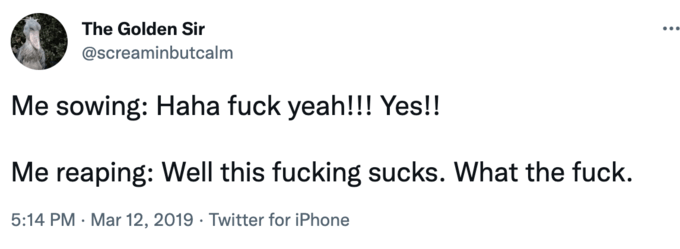
But the thing that really communicates the whole vibe of the place, the I coulda been a contender! nature of it all hearkens back to the Agency’s true one that got away:
It was easy, once upon a time, for CIA to be unique and mystical,” said the last chief of the Soviet division of the clandestine service, Milt Bearden. “It was not an institution. It was a mission. And the mission was a crusade. Then you took the Soviet Union away from us and there wasn’t anything else. We don’t have a history. We don’t have a hero. Even our medals are secret. And now the mission is over. Fini.
It feels strange for the tale of covert power to be the story of a lost love, but that’s what it is. You’ll learn a lot about geopolitical shitfights in here, but you’ll also learn a lot about purpose, and what the lack of it can do to an organisation without accountability, but with a timeline for results.

Gringos by Charles Portis.
My rating: four stars.
There’s no way around it: Gringos is a delight. It’s the first Portis I’ve read, and I am gagging to read another, because it’s incredibly good. It’s the sort of thing you can see being made into one of those great Shane Black movies that never seem to get a sequel despite being fucking great. (Why yes, this is a reminder that you should watch The Nice Guys again.)
ANYWAY. Gringos tells the story of Jimmy Burns, an American living in Mexico with a good line in vaguely dubious (and vaguely legal) gigs. Need something shifted? He’s your guy. The world he inhabits is transitory but also curiously permanent: though he undoubtedly never fits into his adopted home, he’s part of the furniture to a cadre of companions.
Historically, Jimmy has tried his hand at shifting archeological relics, and while that’s not what he’s into at present, he does know his way around various sites. And here’s where the story comes in: there’s cultists, UFOlogists, disgruntled archeologists and historians, hitchhiking flower children and some general scuzzbags. And they all could use some Jimmy assistance, one way or another.
Being a facetious person I got no credit for any depth of feeling.
I don’t want to say too much more on the story. It’s kind of like a gumshoe retelling of a Pynchonian western. It’s whip-smart, and the portraiture is sparsely descriptive in the best manner. Is there a certain element of shaggy dog going on? Undoubtedly, but the trip itself, the minutiae observed – that is where the joy is in this thing.
I really, really dug it. It’s very silly and completely serious. So good.

Undead Uprising: Haiti, Horror and the Zombie Complex by John Cussons.
My rating: four stars.
From the excellent Strange Attractor or MIT presses (depending on which version you get, I think) comes this rather splendid book on the zombie menace: both in terms of the populist living dead monster so beloved of The Walking Dead and its thousand televisual offspring, but – more interestingly – in terms of its genesis.
A chunk of the book is dedicated to the history of the zombie as a piece of Haiti, as woven into its story as its dictators and its revolutionaries. It’s also interested in the way that the zombie, as a representative of Haiti, has acted as a mirror, influencing how Haitians see themselves, and how the accoutrements of the creature can be leveraged in pursuit of power. (Hello, Papa Doc.)
The thrust of the book is pretty easy to understand: we cannot discuss the popularity of the zombie figure without understanding where it has come from, and without plunging into the thickets of theory, without looking into racism, colonialism, cultural tourism and especially without considering the cultural, political and religious – vodou – influences on the circumstances of its birth?
It’s not light reading. The Zombie Complex of the subtitle is a melange of ideas about consciousness, violence, morality and the conditions that have made now so ripe a time for zombie media. What are the drivers? And how much of this caricature do we recognise?
I’d read a few books on vodou, and knew a little of Haiti’s history – though not as much as I’d like – so I was engrossed with Cussans’ book, which blended my interests in esoterica, history and schlock horror delightfully. But it can be hard going if you’re not a bit of a theorybitch. Check out this sample quote to see whether it’s your cup of tea: it was mine, but then I’m not you.
From this perspective the apocalyptic flesh-eating zombie represents a kind of zero-degree race figure, the ultimate expression of the race which-is-not-one, an “undivided” and literally inhuman race that must be eradicated before it contaminates and annihilates the very foundation of the body-politic (i.e. “us” living humans). As such it clearly has characteristics in common with the depiction of the revolting slaves of Saint-Domingue, who, within the dominant reasoning of 18th century European race theory, were hereditarily predisposed to subhuman savagery and consequently, to reasoned, colonial domination.
If you like that, you’re in for a good time.
Now, while this has no Haitian import per se (it’s a critique of Nigerian military murders, though Yoruba history did contribute to what became Haitian vodou thanks to the slave trade) it would be remiss of me to leave this tune out, because it is a) the best song of this title and b) a fuckin’ banger.

The Comedians by Graham Greene.
My rating: four stars.
A read inspired by the preceding one: this is the third Greene I’ve read (after his story for The Third Man and Brighton Rock, both some time ago) and so far it’s my favourite.
What we get is a story of languor in Haiti, under the shadow of Duvalier and his secret police, the Tontons Macoutes. The country is Not Doing Well, and neither is its narrator, a failed hotelier named Mr Brown, who has returned by steamer from an unsuccessful trip to the US to offload his unsuccessful hotel.
The first colours touched the garden, deep green and then deep red – transience was my pigmentation; my roots would never go deep enough anywhere to make me a home or make me secure with love.
Like a punchline set-up, the novel begins aboard ship, with Brown running into Smith and Jones, a vegetarian former US Presidential candidate and a dubious character, respectively. They don’t walk into a bar (at least, not all together) but there is a lot of drinking, and quite a lot of pontificating.
The Haiti that’s presented is at once a tin-pot, clockwork sort of place, and a place of fierce horrors. Fascist thugs patrol the streets, sunglasses hiding their eyes, while in hotels and embassies, the upper crust attempt to pretend that everything isn’t going to hell and that guerrilla warfare isn’t occurring mere kilometres away. It’s a curiously keep-calm-and-carry-on vibe, the result of the colonial world running into the brick wall of modernity.
So how to distract from such things? With an affair!
Like some wines our love could neither mature nor travel.
Why not, indeed. The affair allows Brown to speculate on his ability to love, to be honourable, and what it might take to be happy. But, it seems, the shadows cast by the paramilitary fist of the US-funded dictator work their way into all aspects of life: the seeping of failure into everything here is so difficult to resist.
It’s not a happy work, no, but it’s compelling in its portrayal of how people will act to benefit themselves, even in the face of horrendous circumstances.
There was a film made of the book. By all accounts it’s terrible: Elizabeth Taylor and Richard Burton feature (alongside Lillian Gish and Alec Guinness!) so a story of political intrigue foremost (with a bit of rooting for some secondary prurience) is turned into a Love Story For The Ages.
It’s five bucks on Amazon, but I’m not sure I’ll pull the trigger. You could grab two secondhand copies of Greene’s book and be ahead on the deal.

Bleak House by Charles Dickens.
My rating: four stars.
You’ve read some Dickens, right? Then you know what you’re up for here; a very long (initially serialised) story that contains a multitude of finely-sculpted characters, indicative of a certain element of British society at a certain time. There’ll be triple-syllable names, toffs, rotters and the pure-hearted. Rich and poor, the stupidly intelligent and the all-knowing uneducated.
You know, something for everyone.
Bleak House is no different. It is different in that it’s more Gothic literature than any other Dickens I’ve read (though you’ve gotta admit, Miss Havisham is about as goth as you’d get outside a Sisters of Mercy cover band) and is apparently the novel that introduced the use of London fog as a creeping indicator of gloom, for which T.S. Eliot is eternally grateful.
The story involves a suit in Chancery, Jarndyce v Jarndyce which revolves around variant wills and would give old mate Kafka a run for his money:
Jarndyce and Jarndyce drones on. This scarecrow of a suit has, over the course of time, become so complicated, that no man alive knows what it means. The parties to it understand it least; but it has been observed that no two Chancery lawyers can talk about it for five minutes without coming to a total disagreement as to all the premises. Innumerable children have been born into the cause; innumerable young people have married into it; innumerable old people have died out of it. Scores of persons have deliriously found themselves made parties in Jarndyce and Jarndyce without knowing how or why; whole families have inherited legendary hatreds with the suit. The little plaintiff or defendant, who was promised a new rocking-horse when Jarndyce and Jarndyce should be settled, has grown up, possessed himself of a real horse, and trotted away into the other world. Fair wards of court have faded into mothers and grandmothers; a long procession of Chancellors has come in and gone out.
The suit is the frame upon which Dickens hangs a living simulacrum of London, the slumdwellers and the do-gooders. It’s a vibrant evocation of pockets of the metropolis (and some fancier houses out of town) and I was fully immersed. The story features chases, moral reckonings, hidden knowledge and TERRIBLE SECRETS, and you can be satisfied that while you’re consuming peak literature, you’re also enjoying some verbose popcorn.
One thing that’s in plentiful supply here are sick – yet droll – burns. Regard:
Sir Leicester is generally in a complacent state, and rarely bored. When he has nothing else to do, he can always contemplate his own greatness. It is a considerable advantage to a man to have so inexhaustible a subject.
He is of what is called the old school – a phrase generally meaning any school that seems never to have been young.
Why, Mrs. Piper has a good deal to say, chiefly in parentheses and without punctuation, but not much to tell.
Lady Dedlock is always the same exhausted deity, surrounded by worshippers, and terribly liable to be bored to death, even while presiding at her own shrine.
Everything that Mr Smallweed’s grandfather ever put away in his mind was a grub at first, and is a grub at last. In all his life he has never bred a single butterfly.
The people-watching in this book is excellent. The main character, Esther Summerson, is a bit too all-things-good for my liking, but this is outweighed by the number of ragamuffins and oh-wot-old-boy types. There’s particular bile saved up for lawyers – one feels Chancery was a particular bugbear of Dickens, who must have enjoyed the book’s role in advancing court reforms – who are not portrayed in a very flattering light, deservedly. (I must admit that a new one-man black metal project will ABSOLUTELY be called VHOLES, after the creepiest version to appear in here.)
It seems Morrissey also makes an appearance:
My birthday was the most melancholy day at home, in the whole year.
OK, so the story itself is great, but I have to exhort you in the strongest possible terms to listen to the audiobook version. Specifically, the version narrated by Miriam Margolyes. The reason is simple: it is this image made flesh:

Her reading is impeccable. And the experience she creates with her creation of the different characters (from the knees-up-muvver-brahn street urchins to the so, so tired Lady Dedlok, to the gruffly judicial gentry, to querulous geriatrics is absolutely engrossing.
I am serious when I say this has become one of my favourite listening experiences of all time. As the hackneyed classics go, I laughed, I cried, and I loved it. I cannot exhort you enough to give this one a go, even if you’ve never tried a Dickens in your life.

253 by Geoff Ryman.
My rating: five stars.
As I’m a literature dork, it’s worth recounting that I’m particularly drawn to books that’ve been created under strictures, under a series of rules. Oulipo, Fluxus, that sort of thing. Diaries, letters, constrained narratives. Amazon reviews. The idea of a story making itself known around the restrictive bands of rulesets appeals to me, and Ryman’s book is precisely my thing.
I remember hearing about the book when I lived in the UK, a quarter of a century ago. It wasn’t a book then: it was a website. (And it still is – you can read it here.)
The website was an example of hypertext fiction: the story it contained could be read in any order, following any reader’s whim. A sort of eyeball’s dérive. What it held was a portrait, a snapshot of a London tube train in the minutes before a crash.
So far, so cheery.
253 presents moments frozen. Each entry describes each of the train’s passengers (including the driver and a pigeon) in a uniform manner. There’s 253 entries, broken into train cars. Each entry describes the external appearance and internal life of its subject, each in 253 words. It’s a conceit, but it’s thrilling: the sense of omniscience, the links between passengers, the impending doom and the fake advertisements (you too can not earn £££ as a writer!) mimicking the rectangular exhortations to buy that festoon carriages… it richly brought me back to days where I’d watch my fellow travellers and wonder what they were thinking.
What’s impressive now is the amount of internal narrative each character has. Because the setting of the book is pre-internet profusion: chunky Nokias were the go, and there was fuck-all signal in the subterranean tunnels. Doomscrolling was not yet a thing, so the gaze fell either on books or other commuters in order to forget the horrifying reality of being stuck in a bricked pipe multiple feet below the surface. It’s an excellent evocation of that time, and offered this sometime Underground-rider a chance to flit in and out of others’ brains in an excellent recreation of a defined moment in time.
I read the hardcopy, printed version of the work, so my path through it was a little more circumscribed. I went like a security guard, from carriage to carriage in order. You could always treat the book like a tool for bibliomancy, though: flip it open at any page and see what knowledge is imparted. My way of reading doesn’t have to be yours, and the way the book infers you should read it (by its front-to-back order) is likely different to Ryman’s initial imagining of how you’d pass through.
But you really should buy a ticket. It’s worth the ride.

Long Live the Post Horn! by Vigdis Hjorth (translated by Charlotte Barslund).
My rating: four stars.
I listened to this on the drive down to Sydney for work. It’s the only of Hjorth’s works I’ve consumed, and I must admit that the title (including its !) is a large part of why I picked it out.
The book describes the life of Ellinor, a thirtysomething media consultant who lives a life she finds particularly average. Her diary contains nothing of interest, and she feels as if nothing much matters (which I understand is fairly common in the world of PR) – so far, so standard midlife crisis.
Two things spark change in Ellinor: a coworker, Dag, the third leg of the business she’s a part of, disappears. And she’s given the job he was working on: to help the Norwegian Postal Workers’ Union defeat an EU directive that would rout the postal service.
What do we do with our despair if our lives are too small to contain it?
The endeavour becomes a touchstone for Ellinor: encountering the emotional investment of postal workers in their letter-carrying jobs, she seems to crack, and emotion to begin making itself known. She interrogates herself, clambering out of a hole of disinterest, trying to align her feelings with her life. All of this occurs with the smell of dead letters and half-melted snow: satchels and skis.
The tone of the novel is impressively even. It’s dispassionate, a kind of observational checklist, which reduces encounters down to their nut graf. No florid pants-action here: Ellinor “had sex” in each of her encounters. It’s impressively neutral, which is why the novel’s inevitable flowering of emotion comes as such a delight.
The best postal novel since The Crying of Lot 49? Could well be.

Bright Lights, Big City by Jay MacInerney.
My rating: four stars.
I listened to this on a drive back from Sydney from work, and found myself smiling a lot. I’d long wanted to know what the book was about, as it’s often held up with the works of Bret Easton Ellis as the descriptor of a certain type of life in New York in the ’80s.
(For what it’s worth, I think MacInerney is a wittier writer (and perhaps less of a knob?) than Ellis, though I need to read more of both to have a properly informed take.)
You feel that if only you could make yourself sit down at a typewriter you could give shape to what seems merely a chain reaction of pointless disasters.
We’re presented with the life of a 24-year-old fact-checker for a highbrow NY magazine. He was married to a model. Well, presumably he is, but she hasn’t come back from a Parisian engagement, and he is tailspinning the fuck out.
You see, his wife isn’t the only thing that’s going wrong. He has visions of writing that he can never make quite happen. He is working to check others’ writing but is detested by his boss. His septum is on its last legs. And there’s something else in the background that the continual partying just can’t seem to keep in its box.
The night has already turned on that imperceptible pivot where two A.M. changes to six A.M. You know this moment has come and gone, but you are not yet willing to concede that you have crossed the line beyond which all is gratuitous damage and the palsy of unraveled nerve endings. Somewhere back there you could have cut your losses, but your rode past that moment on a comet trail of white powder and now you are trying to hang on to the rush.
The book’s story is direct, and surprisingly touching by the end. The narrator is a massive dick, yes, though he seems much less of one compared to some of his friends. There’s plenty of wry observation (particularly if you’ve ever worked on a magazine) and some very sweet interactions between coworkers, and some adroit capture of what it feels like to have those first flutterings of attraction.
MacInerney wrote a script for the film adaptation of Bright Lights, Big City which was released in 1988. I had it confused with The Secret of My Success (1987) for the longest time, though it’s probably the inverse of that film. The casting of Kiefer Sutherland as snorter-around-town Tad Allegash is inspired, though the film is not great, unless you get a thrill out of Alex P. Keaton hoovering lines of blow.
Still, it’s not the worst adaptation I’ve seen (or that features in this post): if nothing else, it’s a somehow more innocent portrait of the Big Apple than I had expected, with more hope hiding there than I’d imagined. (Also, Swoosie Kurtz!)
In the end, this is probably something my mate Elizabeth would refer to as guys doing guy things and yes, it’s true. It is. But I felt a lot in this story (ok, not the copious amounts of coke, nor the being married to a catwalk model) that felt very applicable to me, or perhaps to anyone that has visions of writing success bobbing away on the horizon.
There is a shabby nobility in failing all by yourself.
It feels like a relic of a close, yet curiously distant past, a sweet note atop a waft of bin juice.
I don’t think I’ll crack 100 books by the end of the year: the enni is large at this point in time. But I’ll keep reading, because if I can have as many enjoyable books in the remaining months of the year as appeared here, I’ll be pretty happy.
If you’re after some good bookish times, please check out my profile on TheStoryGraph.
If you’d like to buy me some books to review, there’s a wishlist over here.
 Yeah nah.
[…] kind of like Vigdis Hjorth but with more dubious […]