Howdy howdy. I’m continuing to read more and to leave my reviewing until much later than I should. Find following a couple of reviews of recently inhaled tomes, with more to come soonish (I hope).
(Also, is anyone finding this year exhausting? Just me? OK, on we go.)
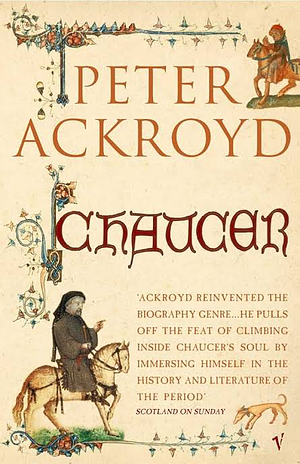
Chaucer by Peter Ackroyd.
My rating: three stars.
(Yes, I know, this should’ve been in the previous bunch of reviews.)
After reading Karen Brooks’ The Good Wife of Bath I figured I should check out the real life of Geoffrey Chaucer to see how it stacked up with the fictionalised version. And this, one of Peter Ackroyd’s short biographies, proved to be a pretty good place to get a direct handle on things, particularly given that it contributed to Brooks’ research on the poet.
I think the thing about Ackroyd is that you’re either a fan of his nonfiction loquaciousness or you’re not. He’s a bit like the incredibly knowledgeable lecturer that, despite the best of intentions, might send half a lecture hall to sleep. The information contained within – and, given the gaps in the official record, the assumptions made – are scrupulously researched and explained. But there’s an element of glazed-over eyes that seemed to accompany Chaucer’s story that I just couldn’t shake.
I guess it’s made the more difficult in that the poet is a figure of somewhat mythical stature. I almost don’t want to know how different he is from the version presented in The Canterbury Tales because he’s a character rather than a person, at least in terms of how he’s perceived by society at large.
What I’m saying is that this was perfectly fine, and gave me some insight into both the times and the man himself, but not much more than Brooks’ fictional retelling did. Again, I really like Ackroyd’s fiction, but this one… a swing and a miss, think .
(My reading of Chaucer’s works – hello, The Riverside Chaucer – continues, but I don’t expect it’ll be completed soon if you catch my drift. It’s dense.)

Abaddon’s Gate by James S. A. Corey.
My rating: four stars.
Space popcorn time! This is the third book in The Expanse, a sci-fi opera told in bite-size chapters. Once more, I read this as a buddy read with Elizabeth over at TheStoryGraph, and once more I was sucked into a world of Mars v. Earth grousing, rich kids with revenge on their minds, and a piece of sentient alien technology that seems to be able to Fuck Up Everything Pretty Comprehensively.
Once again, we’re in the crapsack world of space truckers pulled into geopolitical (galactipolitical?) manoeuvrings around Alien Tech And How To Monetise It, Even If It Turns Out To Be God. Our gormless returning hero James Holden proves unable to avoid widely-broadcast trouble, much to the chagrin of his long-suffering shipmates. (Unless there’s some violence involved, in which case they’re all in.)
When Holden pointed out that the Roci was already capable of accelerating fast enough to kill her crew and asked why they’d need to upgrade her, Amos had replied, “Because this shit is awesome.” Holden had just nodded and smiled and paid the bill.
As ever, there’s a load of instant-fave characters throughout the book that either turn up momentarily or stick around for the ride. Carlos ‘Bull’ de Baca, a tough-ass 3IC on an enormous ship? Thumbs way up. Kickass pastor Anna Volovodov? Hell yeah. Others who I can’t name for SPOILER REASONS? Excellent.
None of her attacks were conscious or intentional. The movements came flowing out of a hindbrain that had been freed of restraint and given the time to plan its mayhem. It was no more a martial art than a crocodile taking down a water buffalo was; just speed, strength, and a couple billion years of survival instinct unleashed.
Oh, and there’s also ghosts. SPACE GHOSTS. Without capes, but still. Space ghosts. Is this whole series fanservice? Could be. Do I give a fuck? Hell no, it’s too much fun.
Wear down the façade with too much work or fear or both, and whoever was waiting underneath came out.
We all know I’m going to see this thing through to the end, right? Corey’s skill at world building is really why I’ll stick around. The pew pew bits are fun, sure, and I enjoy a bit of hoo-rah! as much as anyone, but the quieter moments, where we’re given a look at the relationships between people (who may be light-years apart), or at the difference between growing up under constant gravity and not… they’re what I read these things for. The way we’re shown the hidden, true parts of people in these worlds really appeals to me, and it continues to draw me in.
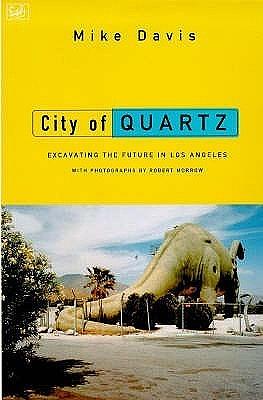
City of Quartz: Excavating the Future in Los Angeles by Mike Davis.
My rating: three stars.
I’d wanted a copy of City of Quartz for years. I’d read about it on bulletin boards discussing psychogeography, the politicisation of space and the sticky fingerprints money leaves on a metropolis. I’d always kept my eye out for it, but it wasn’t until last year that I stumbled across a copy in a bookshop in Adelaide.
(In keeping with my general disorganised nature, I’d had it home for a year before I actually started to read the thing.)
This book (which feels like a series of essays looped together) provides an overview of Los Angeles up to the point of the 1990s, at least partially. It begins with the description of a socialist project town, Llano, before moving on to discuss different presentations of the city: as a home for real estate development, through the lens of noir literature, as hideaway for rocket-driven intelligentsia, as somewhere for Asian investment capital to roost.
Compared to other great cities, Los Angeles may be planned or designed in a very fragmentary sense (primarily at the level of its infrastructure) but it is infinitely envisioned.
The book is illustrated throughout with Robert Morrow’s photographs that capture suitably strange, mostly human-free snippets of LA life. These add to the otherworldly vibe that’s conveyed through the text.
Davis holds an especial ire for the LAPD and those who take advantage of would-be homeowners (or who are affected by those with much more money). This is a book about both class and race, and from the beginning through to its fucked-economy ending (a retelling of the decline of Fontana, a steel town on the outskirts of the metropolis) there’s a distinct sympathy for those ground under the heel of capital, cops and the rising tide of private prisons .
Setting aside an apocalyptic awakening of the neighboring San Andreas Fault, it is all too easy to envision Los Angeles reproducing itself endlessly across the desert with the assistance of pilfered water, cheap immigrant labor, Asian capital and desperate homebuyers willing to trade lifetimes on the freeway in exchange for $500,000 ‘dream homes’ in the middle of Death Valley.
Is this the worldhistoric victory of Capitalism that everyone is talking about?
This is the sort of book that begs for an update, though that’s something that isn’t going to happen – at least without another author taking up the slack – as Mike Davis died in 2022. Supposedly the 2006 edition contains more information about the city as it had changed from the time of first publication, but I’ve yet to come across one of those.
Maybe on my next trip to Adelaide, hey?
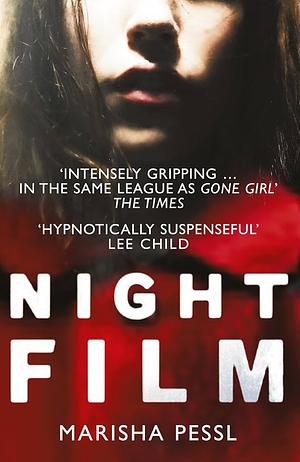
Night Film by Marisha Pessl.
My rating: four stars.
This is my kind of book: a thriller about reclusive film director Cordova (shades of Kubrick via Argento) whose wunderkind daughter Ashley commits suicide. A disgraced journalist (Scott McGrath, who ran afoul of the director earlier in his career) is drawn into these twinned mysteries of absence and death with the help of sidekicks including a junky and a terrible would-be actress. Along the way they encounter crime scenes, BSDM-tinged sex clubs, Rich People Bullshit, decrepit mental hospitals, fantastic film sets, satanic cults, voodoo specialists and intensely creepy antique shops.
There’s cops that pass on case files, stories from McGrath’s journo life, potential phantoms and a series of people who seem somehow prevented from sharing what they know. All of this is conveyed in both straight text and doctored photographs, documents, transcripts and news reports. While some of the photographs are awfully photoshopped, the extra material tends to bolster the story rather than hinder it. At the time of publication, this book had a collection of ephemera one could view through use of an app: additional documents, audio recordings and the like. The links in the book no longer work, and while these items were archived on Pessl’s website for a time, they’re no longer there. I’m irritated that I can’t see these (only some of the PDF files are available on archive.org), but I’m not sure that they’d shed much more light on the narrative.
When a pianist memorizes a piece, he or she gets to know the dead man intimately—giving rise to all the pleasures and difficulties such an intense relationship implies. You learn Mozart’s trickery, his ADD attention span. Bach’s yearning for acceptance, his intolerance for shortcuts. Liszt’s explosive temper. Chopin’s insecurity. And thus when you set out to make their music come alive in concert, on stage, in front of thousands, you very much need the dead man on your side. Because you’re bringing him back to life. It’s a bit like Frankenstein resuscitating his monster, you understand? It can be an astonishing miracle. Or it can all go horribly wrong.”
The writing in the book reminds me of Eric McCormack’s writing at times: there’s a strangeness throughout that is deeply appealing. Where it differs, however, is that there’s a certain embrace of genre fiction, of over-the-top implausibility, of airport literature readability intermingled with a Lynchian lack of commitment to a definite, set-in-stone ending.
Why doesn’t anyone talk about Cordova?” I asked. “They’re terrified. They ascribe a power to him, real or imagined, I don’t know. What I do know is that within that family’s history there are atrocious acts. I’m certain of it.”
Is it frustrating? Potentially. Certainly, the characters are more ideas than they are fully realised people. But the fun of the whole thing kept pulling me onwards. I’m not sure if Night Film is indicative of Pessl’s other work, but I’ve a copy of Special Topics In Calamity Physics sitting somewhere on my shelves that I think I’ll need to dive into.

The Five Great Novels of James M. Cain by James M. Cain.
My rating: four stars.
A five-for-the-price-of-one book I can used to fudge my numbers if I start feeling that I haven’t read enough books? That’s the stuff.
Cain, as you’d likely be able to judge by the Weegee–shot (no, not like that) corpse on the front cover, was one of the titans of hard-boiled crime fiction (though he hated the label), and the novels contained within are a pretty good overview of his work. Included here are The Postman Always Rings Twice, The Butterfly, Serenade, Mildred Pierce and Double Indemnity. That’s not the order in which they appear, but that’s the way the cookie crumbles, toots.
The hand that holds the money cracks the whip.”
I’d read this collection a couple of decades ago, and I didn’t really remember anything about it. Revisiting the seamier streets of Los Angeles certainly seemed a bit more interesting now: there’s a certain element of attempting to gain an advantage, to get to a point where life’s not so hardscrabble that fuels these stories. This is particularly evident in the drifter’s tale of The Postman Always Rings Twice and the get-rich-quick-for-love scheming of Double Indemnity. Humanity and dreams come to be compromised and die on the outskirts of the desert.
Three years ago. I won a beauty contest. I won a high school beauty contest, in Des Moines. That’s where I lived. The prize was a trip to Hollywood. I got off the Chief with fifteen guys taking my picture, and two weeks later I was in the hash house.”
(I hadn’t known that Camus’s The Stranger was inspired by Postman, but it absolutely makes sense.)
As Nick Cave might say, Cain’s people Just Ain’t No Good. Indeed, practically everyone in these stories is blinded by either greed or passion, and willing to sacrifice their humanity for either. Mildred Pierce is a good example: a woman with absolutely abysmal taste in men who achieves the world, but can’t hold on because of inherent weaknesses.
There’s a lot of terrible parts of life in these stories: murder, incest, rape, embezzlement, dissolution, and neglect. But there’s also a strange, hard beauty in here. Not just in the prose, though that is diamond sharp, but in Cain’s eye for scenery, and his ear for music. Both Serenade and Mildred Pierce feature a lot of musical knowledge that’s surprising for the genre – including an in-depth knowledge of coloratura profanity – but curiously delightful.
You can talk about your fiddle, your piano, and your orchestra, and I’ve got nothing to say against them. But a guitar has moonlight in it.
This is a rough part of the world, but there’s some good in it. I’m glad I revisited, and I suspect this is going to be the start of a whole Hammett/Chandler/Thompson/Ellroy jag, somehow…
If you’re after some good bookish times, please check out my profile on TheStoryGraph.
If you’d like to buy me some books to review, there’s a wishlist over here.
 Yeah nah.