
The year keeps rocketing towards its end. I keep trying to read more and get bogged down in the whole rocketing-towards-the-endness of things at present. You know how it is – everyone is busy at this point, and things don’t seem to get less hectic. I’m continuing to read Miss Macintosh, My Darling and Finnegans Wake and I’m hoping to have both of those finished before the end of the year, though the chances of the latter actually getting done diminishes with each day. Largely because I’m increasingly feeling like I ain’t got time for Jimmy Joyce’s bullshit on this one.
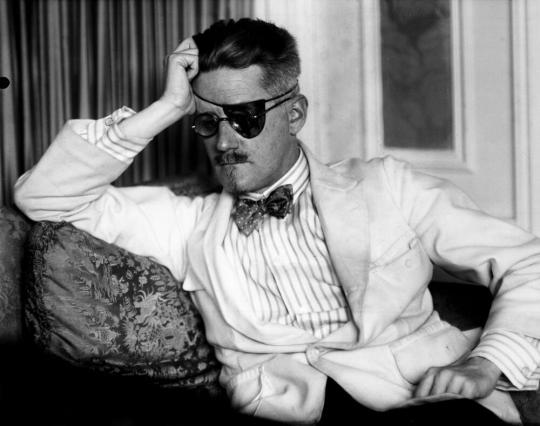
Happily for my TBR list, I’ve been out of town for business and so have had a bit of time to read – hello, four-hour layover – during travel. So here’s another few reviews of what I’ve been working through.
(I seem to be continuing my exploration of both the built environment (and its fuck-ups), so it’s nice to know there’s some kind of theme at work.)
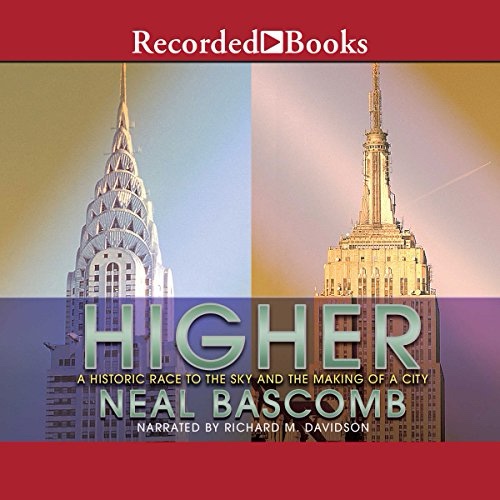
Higher: A Historic Race to the Sky and the Making of a City by Neal Bascomb (read by Richard M. Davidson).
My rating: three stars.
I was at a loss for what to listen to after I finished The Power Broker and its story of parks-and-roads domination. It turns out Bascomb’s book about skyscraper rivalry was just the ticket. What’s described is the race to build the world’s tallest building – a three-way battle of architecture (the Chrysler Building, 40 Wall Street and the Empire State Building) and a two-way battle of architects (former partners William van Alen and H. Craig Severance).
The story is told in a fairly serviceable manner. It’s a generalist work (rather than a specifically architectural one) and it provides an outline of a period where steel-framed construction unlocked greater building height potentials. There’s a lot of characters who appeared in The Power Broker in here, which is understandable given the fact that they took place in the same period. The personalities are pretty well delineated, and there’s a good sense of the period of construction achievement coupled with economic downturn and stock market crashes.
Higher humanises three notable buildings (one of ’em now a Trump establishment) and gives context for the then-burgeoning skyline of a city in the throes of modern expansion. It’s not a world-beater, but it’s an excellent diversion.

Atomised by Michel Houellebecq (translated by Frank Wynne).
My rating: four stars.
Jason, a friend I’ve known since literally the first tutorial I attended at university in 1994, now lives in Marseille. We share a certain streak of curmudgeonliness, particularly in terms of what appeals in literature. My copy of Atomised was a present from him, bought at a book sale while he and his wife Gillian are back in Australia on a sabbatical. Jason is very keen on Houellebecq’s works, because of his undiluted cuntiness. (The author, that is.) He’s resolutely misanthropic, to the point of unacceptability, but there’s a skein of beauty running through his rather grim tales that is both surprising and undeniable.

This wasn’t the first thing by the author I’ve read: his book H.P. Lovecraft: Against the World, Against Life was a pretty insightful look into the mind of the horror author, and the ideological basis for his feelings of ick-is-other-people misanthropy. It was, however, the first fiction I’ve read, and it definitely put me in the mood to read a bunch more.
When we think about the present, we veer wildly between the belief in chance and the evidence in favour of determinism. When we think about the past, however, it seems obvious that everything happened in the way that it was intended.
Atomised (originally titled The Elementary Particles) focuses mostly on two half-brothers. Ultimately, the book discusses how people attempt to deal with the modern world’s inherent emptiness once elements such as religion or fraternity or love are stripped away. Part of the novel takes place in 1999, part of it takes place in the future, but there’s an overwhelming sense of meaninglessness within it that’s hard to ignore.
Irony won’t save you from anything; humour doesn’t do anything at all. You can look at life ironically for years, maybe decades; there are people who seem to go through most of their lives seeing the funny side, but in the end, life always breaks your heart.
The thing about the book, though, is that there’s a sort of grudging beauty found in the face of such awfulness. People lose themselves in booze and sex (clubs) but there’s transcendental shards of experience described in a way that I found deeply touching. Ultimately it’s an awful portrait shot through with a sense of almost wonder at some of the experiences one can have in the depths of despair.
Pretty French, hey?
(Another friend said that a mate of his pronounces the author’s name as “wheelie-beck” and now I can’t see it any other way. I don’t think this is a bad thing.)
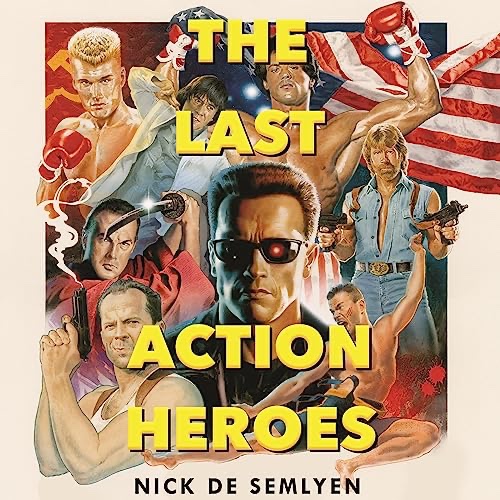
The Last Action Heroes: The Triumphs, Flops, and Feuds of Hollywood’s Kings of Carnage by Nick de Semlyen (read by Bronson Pinchot).
My rating: four stars.
Look. You’ve watched some action films, right? It’s coming up to Christmas, so there’s a good chance that you’ll be watching Die Hard at some point in the coming weeks, right? Then you 100 per cent need to read de Semlyen’s history of action dudes.
The book covers the rise (and fall, and rise again in some cases) of some of the biggest names from Hollywood’s golden age of roided-out gun porn: Sylvester Stallone, Arnold Schwarzenegger, Dolph Lundgren, Bruce Willis, Chuck Norris, Jean-Claude Van Damme, Jackie Chan and Steven Seagal. It’s roughly chronological and covers all of the films you’d expect: the Rocky series, Commando, Predator, Under Siege, Rambo, the Terminator flicks, Conan the Barbarian… the list goes on.
It’s testosterone-heavy, certainly: though women are heard from, they’re the co-stars and the wives in the story. It’s not ideal, but it’s very much in keeping with the fact that this period of filmmaking – and these types of films – were absolute sausage factories. But the sheer blokeyness of it makes the incredible indulgences (witness Sly’s fur coats and incredible self regard) and comeuppances (Seagal’s shit-talking resulting in pants-shittery) more guiltily enjoyable. These are who believe they deserve everything (often with no visible basis for that belief) who, for a brief moment, ruled the entertainment world.
There’s a guilty joy to a book like this, and I enjoyed all the anecdotes and the examination of Manifest Destiny as portrayed by Arnold fighting an alien. It you have a soft spot for dumb himbo flicks, then this will scratch a particular itch for you too, I’m sure.
(Special points added on for Bronson Pinchot’s narration: he manages to add in the correct level of sotto voce in the bitchiest parts of the narrative.)

Midnight in Chernobyl: The Untold Story of the World’s Greatest Nuclear Disaster by Adam Higginbotham.
My rating: five stars.
Earlier in the year I read Adam Higginbotham’s most recent book, the excellent Challenger, which covered the space shuttle disaster in merciless detail. Midnight in Chernobyl is an earlier work, but it’s very much cut from the same cloth: an examination of a catastrophe that’s the result of a combination of bad luck, corner-cutting processes and institutional incompetence.
The book, as you’d expect, covers the destruction of a reactor in Chernobyl Nuclear Power Plant in 1986 – the same year as the Challenger disaster. It’s a well researched book that explains everything that happened in a way that’s understandable by non-physicist types (i.e., me). What’s explained, though, is an object lesson in it just keeps getting worse.
Seriously. No matter what you know of this story – I was ten when the plant blew and the world was trying to figure out what the fuck was going on – I guarantee there’s elements of it that you don’t know, and that will shock you upon discovery. Higginbotham draws a good line between the disaster and the eventual collapse of the USSR, and I had to remind myself of how different communications and access to information were during the Cold War. It seems horrible to read about people being sent to their deaths – sometimes within weeks, sometimes within years, but almost entirely guaranteed, given the exposure – because technology failed. Human bulldozers? Sure, why not? It’s your patriotic duty, after all. How about all the vodka you can drink and some extra roubles?
The book scratches an excellent itch: I’ve been intrigued by the idea of the Exclusion Zone, tempted by film and games. The town of Pripyat and the surrounding area are vividly described. I no longer want to go there – the fact that it’s in an active war zone is another reason, true – but it feels like I’ve been there. It’s a place where science and stupidity collided, with catastrophic results. The fact this story ever came out is remarkable, and it’s astonishing to think that there’s likely still more information that’s yet to be revealed.
I was scared of radiation when I was a kid, but I think I’m more scared it now. The magnitude of the disaster, so ungraspable then, seems almost unbelievable with a bit of age. This is primo what the fuck reading, and it’s absolutely worth your time.
(I watched the HBO series Chernobyl after I’d read this one. It’s an exceptional piece of filmmaking, even if liberties are taken with the truth. I’m currently reading Serhii Plokhy’s version of the story, which was written after Higginbotham’s book. I’ll be interested to see how it compares, and will undoubtedly let you know when I’m done.)
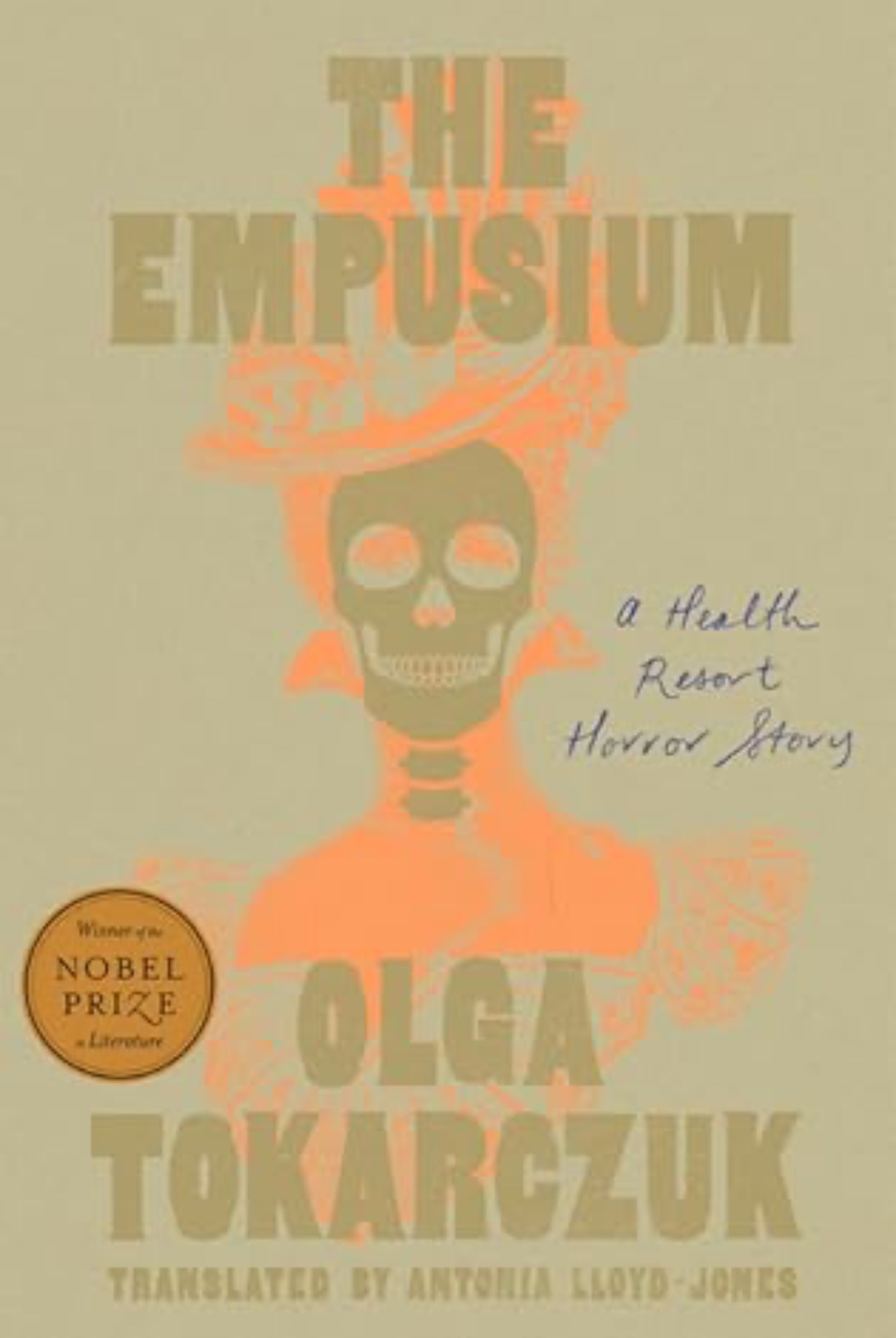
The Empusium: A Health Resort Horror Story by Olga Tokarczuk (translated by Antonia Lloyd-Jones).
My rating: four stars.
I’d been waiting for this to come out. I’ve read some other Tokarczuk books and really enjoyed them. And when I heard that this was the author’s version of Thomas Mann’s The Magic Mountain (which I read earlier this year in preparation) I was very excited.
What we get is much shorter than Mann’s epic, and without the enormous sweep. Tokarczuk chops down a lot of The Magic Mountain‘s characters while keeping the homoeroticism, the sense of a world on a point of great change, and – most importantly – the odd valley vibe.
“Our senses impose on us a particular kind of knowledge of the world. And they are limited, aren’t they? But what if the world around us is entirely different than our imperfect senses try to convince us?”
The world of the sanatorium is a strange one, and there’s just as many strange characters here as there are in Mann’s world. Everyone has something they’re trying to hide. There’s hallucinogenic aperitifs. People keep dying in the nearby forest. The narrator is curiously irritating. Women are treated as distinctly secondary. (Though there is a point to this last bit.)
“Do you know what is the most common mistake people make when they’re in danger? Each one thinks their life is unique, and that death doesn’t affect them. No one believes in their own death. Do you think I believe in my own death?”
The Road to Wellville this is not. Instead, this is a sort of feminist horror story, a portrait of pre-war European ill-health, and a reminder that the earth is always watching. It’s a book where the vibes are distinctly off, but the vibes are what make it work. Inasmuch as it works, that is: I didn’t feel that the story was entirely successful, though its investigation of identity was compelling. But the vibes kept me entranced, even if they were hanging off Mann’s scaffolding
So: story, not so great. Creepy vibes? Excellent.
(I’m still gonna read more of Olga’s work, though.)
If you’re after some good bookish times, please check out my profile on TheStoryGraph.
If you’d like to buy me some books to review, there’s a wishlist over here.
 Yeah nah.