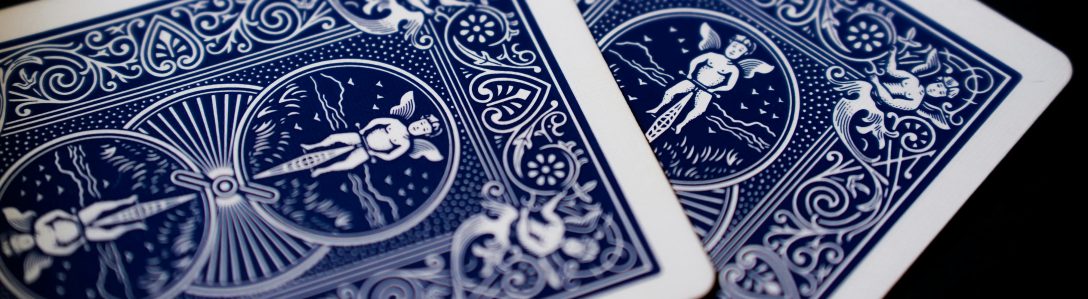
I’m back. Not from outer space, but from the other side of the world where a nice holiday was had, and I purchased some eau de toilette that smells like a David Lynch movie or a murder weekend:
A calm yet confrontational scent that traces your neck like a sharp cold blade with buchu sulfur, metallic bloody notes and cold aldehydes. There is a feeling that something is going to happen with burnt rubber, cold cedar notes creating a concrete effect, combined with birch tar, leather and bay oil. Dying out on a cold, damp cellar smell with cedar atlas, dark musk and moss.

I also bought two dozen-odd books from across the UK, lest you think I would be caught slacking on the purchasing front. In particular, I must laud Halcyon Books in Lewisham (£2 per book! Any book!) and Criminally Good Books in York (a murderer’s delight).
In addition I can recommend staying in the Bram Stoker-themed room at La Rosa in Whitby, close to the spot where old mate came up with Dracula. (It’s suitably atmospheric, and the proprietors are lovely.)
On with the reviews!

The Guests by Agnes Ravatn (tr. Rosie Hedger).
My rating: three stars.
I finished this Scandi-thriller-but-not while I was technically on holiday. I’m counting it, though: I was sitting in a hotel across from the airport, observing the planes that’d take us away the next morning. It just scrapes in to the category of ‘holiday read’, as it was something I picked that could be read relatively quickly (I’d just finished some weightier stuff, and wanted a little break before I hit another soak-up-the-hours plane read.
The story is a simple one: a couple stay at the country cabin of an obnoxious acquaintance. Due to insecurity, however, one of the couple decides that pretending to be a completely different couple for the cabin’s neighbours is The Thing To Do, particularly when it’s discovered that the neighbours are famous writers.
I felt dirty. Dirty from standing there, scratching at the door of a stranger, yearning to get in, just to see, not to partake, but to see, to observe their lives.
There’s a bit more to the story – school-era awkwardness festering into adult loathing – and Ravatn definitely makes some hay from the main character’s feelings of being unfairly average in the face of an apparently remarkable individual.
Vibes are definitely off throughout: I spent a lot of time waiting for someone to flip out and paint the walls red with laureate blood, and the tension that something like this is on the cards is high. However, the ending isn’t quite as grotesque as I’d expected (or hoped?) and I was left a little disappointed.
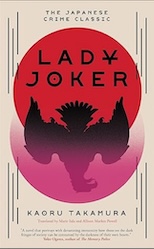

Lady Joker volumes 1 and 2 by Kaoru Takamura (tr. Allison Markin Powell and Marie Iida).
My rating: four stars.
As soon as I learned of the existence of Takamura’s Lady Joker – a year before the second volume was released in English – I felt that I had to read the book when it was finally released in full. Japan has excellent form when it comes to crime novels (be they locked room, true stories or bugfuck murder spree recountings) and the fact that this behemoth was both a best-selling work and based on a true story meant it was right up my alley.
The story involves a group of horse-racing enthusiasts who also feel they’ve been left behind by an increasingly corporatised post-war Japan. It’s 1995, and the team of unusual suspects decide upon kidnapping and extortion as a relatively painless way of clawing back a little something for them.
What follows is an intricate tale of Getting Away With It (maybe?) against a beer company with a discriminatory history. We’re shown the crime from the perspective of those carrying it out, of those it affects, of those investigating it, and of those tasked with reporting it. There’s a lot to keep track of, but Takamura is never anything but clear, at least with factual matters. (What it all means can be a little more opaque, but there is certainly an element of cultural reckoning at play that may be a little less immediately apparent to the non-Japanese reader.)
Could the story have been told with more brevity? Well, yes, but I think chopping it into more propulsive chunks probably would rob the experience of some of its joy. There’s an unhurried pleasure found in reading Takamura’s work, particularly when considering the breadth of its knowledge. Reading Lady Joker is a delight from a research point of view: there’s incredibly detailed (and, based on my knowledge of the media, correct to the level of minutiae) descriptions of corporate life, beer brewing and marketing, newspaper production, criminal investigation, kidnapping, gambling and funerals. It’s a bit bloated in places, but this novel is an incredible work that proceeds with a smoothness that kept me intrigued despite my increasingly numb Economy-seated arse.
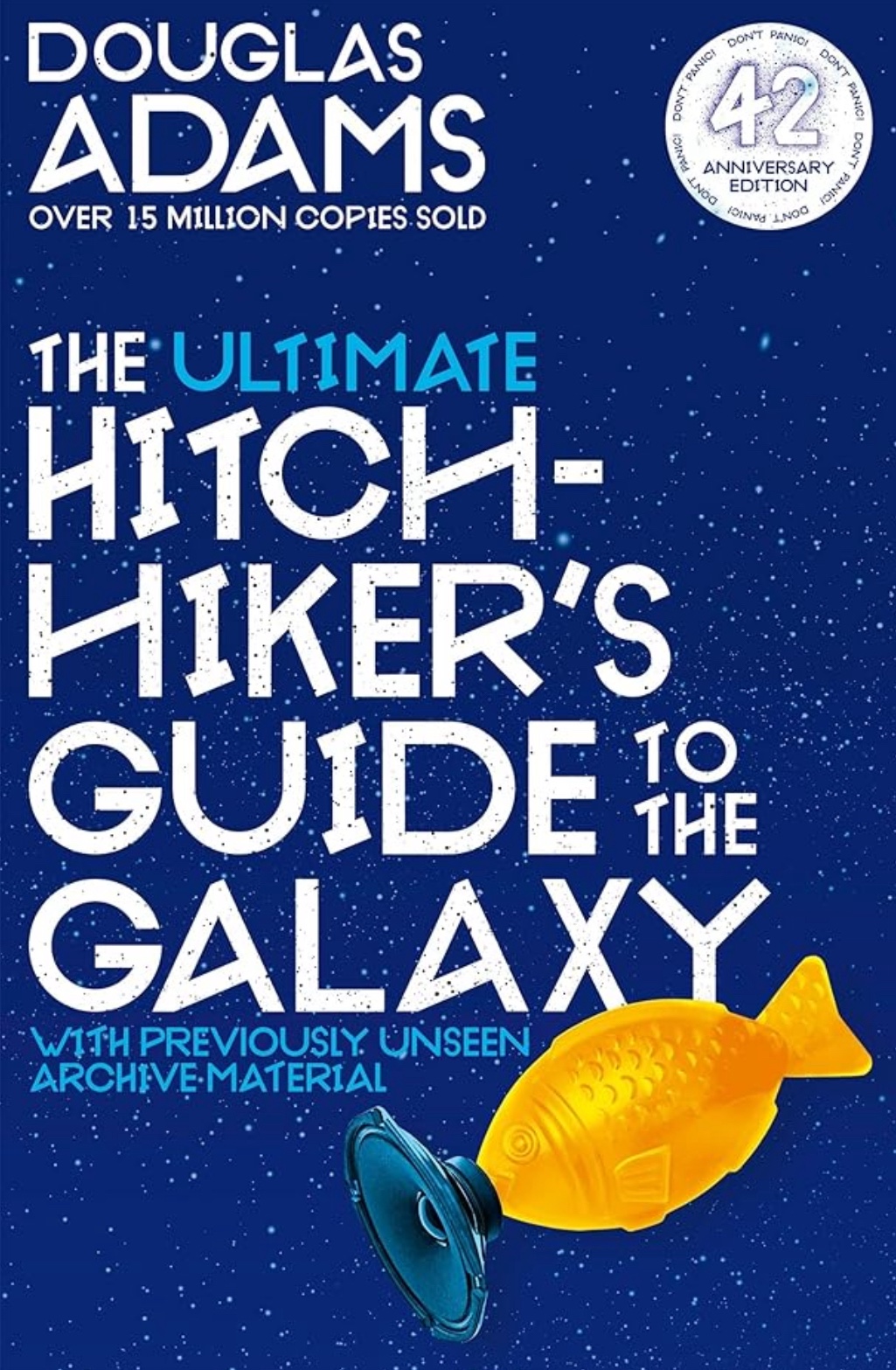
The Ultimate Hitch-hiker’s Guide to the Galaxy by Douglas Adams.
My rating: three stars.
It’s my own fault.
I was a kid when Adams’ books (and their television series) were big and I remember having (and reading) the first three books while in primary school. I remember loving them, and thinking them very funny, even if I – obviously – did not understand a lot of the jokes within. I remember perhaps loving the idea of the books even more than the stories themselves: the neon lights in the second book, the pregnant possibilities of the titular Guide. It seemed big and exciting to a dorky kid.
I probably should have left the books there.
The history of every major Galactic civilisation tends to pass through three distinct and recognisable phases, those of Survival, Enquiry and Sophistication, otherwise known as the How, Why and Where phases. For instance, the first phase is characterised by the question How can we eat?, the second by the question Why do we eat?, and the third by the question Where shall we have lunch?
As Adams continued the series, I never seemed to get around to reading the new instalments. I read one of his Dirk Gently novels and wasn’t really enthralled enough to follow it up. I’m not sure why I finally decided to read the HHGTTG books at this point, but I thought perhaps it’d be light holiday fare that would remind me of things I thought were neat as a kid.
This was not the result, unfortunately. I think it’s the sort of thing that is magical when you first read it as a kid, but appears a little more threadbare as an adult. I felt the first three books were the strongest in this five-novel brace, though their genesis as repurposed radio scripts is more apparent to an adult eye. The later novels left me pretty cold, and in general the haphazard nature of the stories – neat one-liners but a bit huh in overarching terms – distracted from the better part of Adams’ observational humour.
The closest thing I can relate my reading of this series to is when I rewatched Monty Python’s Flying Circus as an adult. Things I thought hilarious as a teen hadn’t aged particularly well, and the gaps between and drift from who I was then to who I am now made the experience oddly discomforting.
Again, my fault rather than Adams’s. If you’re considering a reread and am in a similar position to me, consider carefully.
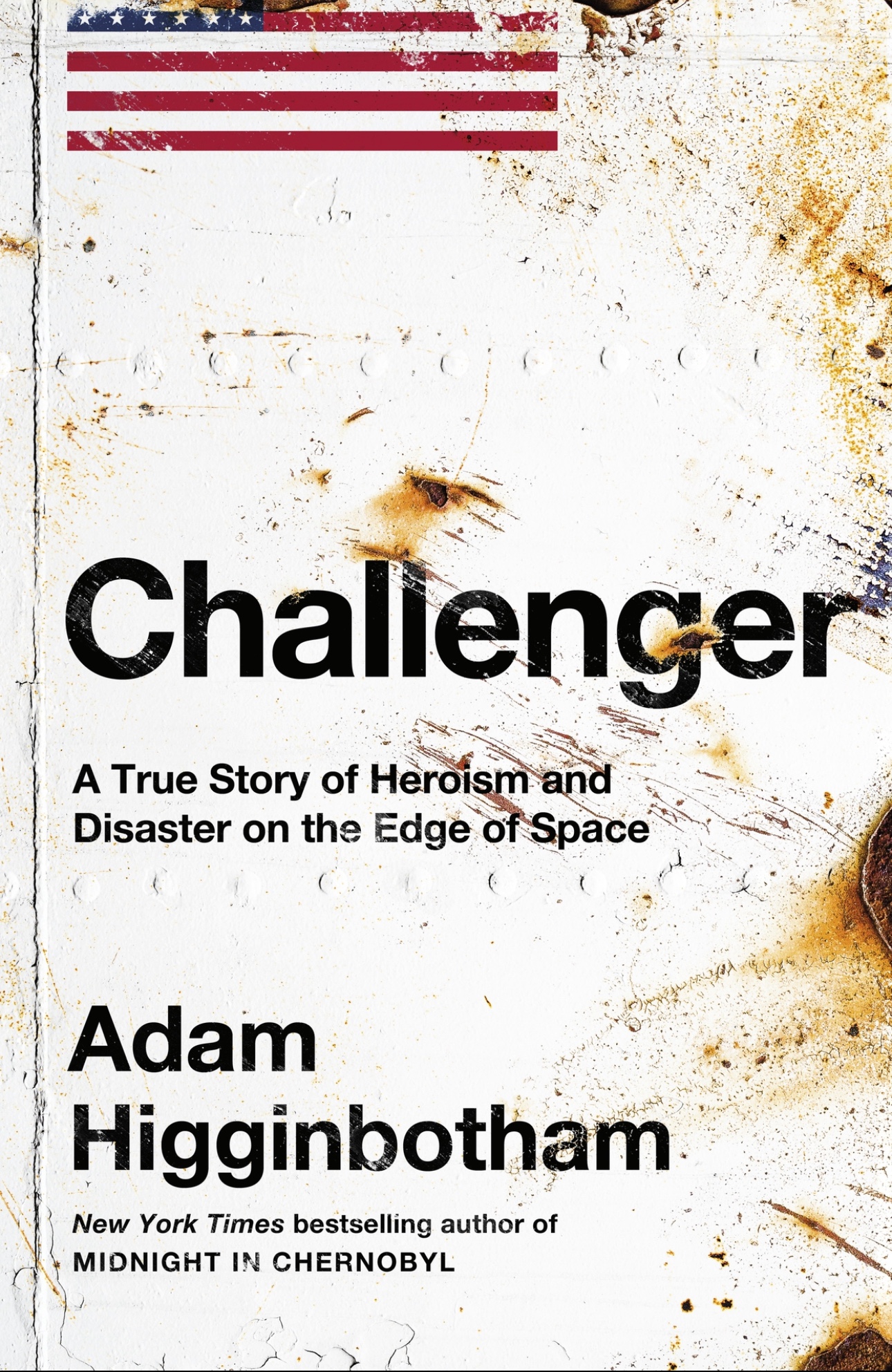
Challenger: A True Story of Heroism and Disaster on the Edge of Space by Adam Higginbotham.
My rating: five stars.
And now another childhood memory. I have convinced myself that I saw this catastrophe live on TV while at school, but surely that’s a misremembering: the difference in time between Florida and NSW would make that unlikely at best. I’m probably remembering seeing that horrible rockets-akimbo explosive end from its continual looping in the news cycles of the time. I won’t link the video here, but it’s the sort of thing that when it’s on I can’t turn away from: all these years later it still shocks and grips me with its awful finality.
I was an odd kid, and despite the disaster, I continually borrowed Orange library’s sole copy of The Space Shuttle Operator’s Manual repeatedly, perhaps trying to make sense of what had happened by… pretending to fly it? (I finally bought myself a copy as an adult and have found that while it’s a distinctly watered-down version of a flight manual, I still get a strangely aw yeah vibe from the thing.)
When asked what he was thinking about when preparing for launch aboard his Mercury-Redstone rocket, Alan Shepard, the first American in space, had infamously replied, “The fact that every part of this ship was built by the low bidder.”
Anyway, consider my purchase of Higginbotham’s book the next stage of that oddness. Morbidity? Maybe. But in terms of getting a grip on what happened, why it happened and who it happened to, I don’t know that I’ve read anything finer. It’s difficult to separate the individuals caught up in one of the catastrophes of the century, but this is as good an effort as I’ve seen: each astronaut, each decision-maker at Morton Thiokol, every person instrumental to the inquiry that followed the fated mission appears as a person.
This is crucial because what underpins the whole disaster is human behaviour. The corner-cutting, the secrecy, the ability to convince others of your point of view. The belief that things are OK when they’re clearly not. The way pressures compound to short-circuit logical behaviours. And, ultimately, how one deals with an uh-oh moment.
By the end of the day, Feynman was convinced that he had found evidence of the same syndrome in the main engine program that had led to catastrophe with the solid rockets: NASA managers who prioritized magical thinking over technical realities, while the alarm bells rung by their own engineers went unheard.
This is a harrowing read, and I think it’s probably the only way the story could be told. It’s shocking because it deserves to be. I’m no physics genius, but the stresses that underpinned the disaster – avoidable, for fuck’s sake – are adroitly explained, as are the politics that enabled it. I spent my time reading this with a perpetual oh fuck in mind, and would press this upon anyone with even a passing interest. It’s fucked and a shame and brilliant.
One other thing I obtained while overseas was another tattoo. It’s a way of keeping my departed fellers with me, and so it’s probably the best thing I brought home with me.

(That and the death-smell perfume, I guess.)
If you’re after some good bookish times, please check out my profile on TheStoryGraph.
If you’d like to buy me some books to review, there’s a wishlist over here.
 Yeah nah.
[…] in the year I read Adam Higginbotham’s most recent book, the excellent Challenger, which covered the space shuttle disaster in merciless detail. Midnight in Chernobyl is an earlier […]