
That’s quite a mouthful.

The reason we’re dealing with this random assemblage of topics is because once more I’ve been unable to keep up with the whole “write a review after you’ve finished five books” thing. So this time around you’re getting ten for the price of five.
Which is nothing, as this blog is free. So you get good (reviews) for nothing? Sweet.
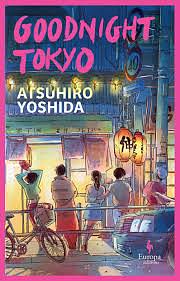
Goodnight Tokyo by Atsuhiro Yoshida.
My rating: four stars.
I had heard good things about this, a rare excursion into English by author and book designer Atsuhiro Yoshida, so I figured I’d give it a whirl.
The book is considered to be part of the cosy Japanese literature movement, encompassing the magical cafe series by Toshikazu Kawaguchi, the Midnight Diner manga (and adaptations, which you really should watch) and the raft of books released about restaurants, libraries, stationers, bookshops, pottery and convenience stores that provide some level of heartwarming human connection.
Goodnight Tokyo isn’t quite so saccharine, but it does detail pleasing Venn diagrams of human interaction over a particular night in the Japanese capital.
In this city, there were all sorts of reasons why people might bump into one another, countless paths and opportunities by which they might connect.
The book is a series of individual stories that ultimately weave together to present a full evening’s experience. There’s some dips into the past for context, but the focus is largely on the 2018 adventures on a coterie of characters surrounding Matsui, a taxi driver, and Mitsuki, a film props scout. This provides the author with characters constantly able to introduce new individuals and items of fascination with ease.
What follows is delightful and a little odd: a portrait of the city’s evening from the viewpoint of its night owls. There’s fruit thieves and people selling perfectly broken items. There’s cineastes searching for parents. There’s a crisis hotline operator and a phone undertaker. It’s all a little Wes Anderson, while it’s definitely on the lightweight side of the literary scale, I enjoyed its neon-lit narrative.
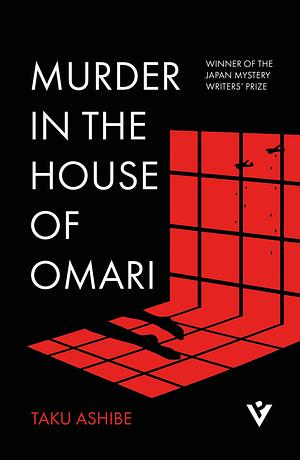
Murder in the House of Omari by Taku Ashibe.
My rating: four stars.
This somewhat convoluted story is an enjoyable example of the locked room mystery, albeit one with plenty of names to keep track of. The style of story has a large following in Japan, and I’ve read that Ashibe is considered one of that country’s neotraditionalist mystery writers.
Murder in the House of Omari is surprising, then, as it embraces the trappings of an intergenerational family saga in the service of a restricted, Christiesque contrivance of death.
The story follows Osaka’s manufacturing House of Omari from the 1900s to 1943. Though the present is full of death-raining bombings, there’s a past of elegance and sophistication, of health and beauty success (and the trappings, social status and servants that came with it). Wartime austerity and conscription have taken their toll on the household, and it is in this beleaguered period that the bodies start piling up.
Had anybody from the Omari household been there—that is, including those who were now dead—they might well have found the face of the man lying on the slab rather familiar.
Flitting between years of feast and famine, Ashibe switches from the here-and-now of a multiple murder investigation taking place beneath the shadow of military defeat. There’s a lightness to some of the decades-earlier sections – even when serious events take place – that give the Omari past a feeling of unreality. It’s almost dreamlike, which suits the way that these story elements are presented in recollection, and contrasts with the ratinocination that’s applied to the current-day (well, 1943) parts of the book.
This strange space, which had not seen the light of day in almost eighty years, was soon filled in again, and this time it vanished for good, reminding nobody of the vibrant way of life and commerce that the House of Omari had once brought to the area—nor of the mysterious series of murders that occurred there during its final days.
There’s plenty of detective story fanservice throughout: characters consider writing detective fiction, a flamboyantly Sherlockian gumshoe shows up, there’s a medical investigator with a feeling that something just ain’t right… it’s all in there. Edogawa Ranpo is constantly namechecked, and there’s a feeling that what we’re seeing, at least in terms of crime scenes, has escaped the pages of a mystery, with the addition of POSH FAMILY TREE DRAMA.
It’s not a particularly purist example of a detective story, but the novel has some interesting slices of historical research that made it more than worth my time. There’s a few twists and some particularly gruesome death imagery, which gave me a delightfully wicked tingle with my tea, so I didn’t feel all that bothered by Ashibe’s occasional swerves into meandering detail.
I’m pleased at the amount of Japanese mystery novels released in English these days. Pushkin Vertigo, who released this book, basically are guaranteed my money at this point for whatever they put out, as I’ve yet to be disappointed.
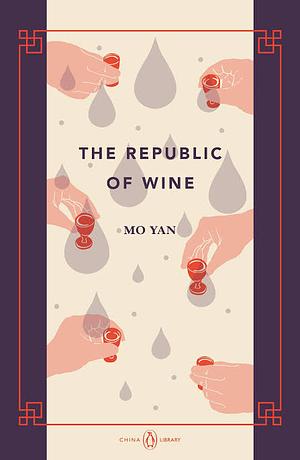
The Republic of Wine by Mo Yan (reread).
My rating: three stars.
I originally bought this book just after I finished university, and I remember that at the time I thought it was brilliant. I hadn’t read a lot of literature in translation, and the conceit of the novel – an investigator is sent to part of China where officials are rumoured to be eating children – seemed pretty wild.
Since then, I’ve constantly thought about reading the novel again, but the terrible typesetting – tiny text! – of that edition put me off. Finally, I caved and bought the newest Penguin edition, which at least features fonts that my shit eyes can handle, now that I’m old and my eyesight has fallen off a cliff.
‘Am I drunk?’ he asked Crewcut.
‘You’re not drunk, Boss, Crewcut replied. ‘How could a superior individual like you be drunk? People around here who get drunk are the dregs of society – illiterates, uncouth people. Highbrow folks, those of the “spring snow”, cannot get drunk. You’re a highbrow. Therefore, you cannot be drunk.’
The story felt more uneven this time around. I’d completely forgotten that it’s a novel of two sides: there’s the tale of special investigator Ding Gou’er, who’s searching the titular province for evidence of cannibalism (and who might have partaken, given the unreality that accompanies his visit due to the ferocious amount of piss-sinking the locals press upon him) – and then there’s the tale of Mo Yan.
Yes, the author himself is in there, the recipient of letters (and terrible writing) from Li Yidou, a would-be author and Doctor of Liquor Studies. The stories sent to him intersect with Ding Gou’er’s world, a bureaucratic and culinary maze that’s driven by the suave, seemingly supernatural Diamond Jin.
It’s a lot. And honestly, while the descriptiveness and the flips from narrative stream to narrative stream are generally executed to prime dramatic effect, it feels a bit rammed together rather than being all of a piece.
“You incompetent moron, can’t you even handle a run-of-the-mill truck driver? If the forty thieves ever showed up, they’d probably trick you out of your balls.”
Look, maybe I should’ve left The Republic of Wine in the past. Reading it again, I figured that there was a lot that I missed the first time around. The difference now is that I know there’s a lot of cultural critique that I’m missing (as I don’t have a deep knowledge of Communist China’s machinations, be they literary, liquor-related or libidinal) and I can’t help but wonder if that knowledge would be a skeleton key that could’ve unlocked actual enjoyment. Indeed, translator Howard Goldblatt makes mention that there’s certain local area jokes and references that are translated but not explained, because it’s unlikely the (Western) reader would know them… but fuck, I’d prefer a footnote to feeling as curiously disconnected from the work as I did.
As it stands, I can recognise the bravery of writing something super critical of the state. I just wish I knew what the joke was.
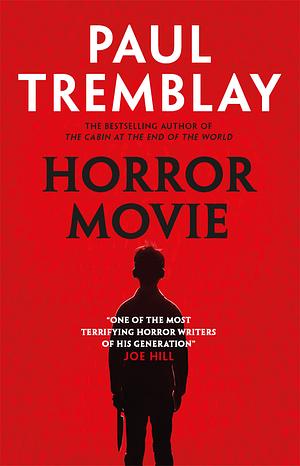
Horror Movie by Paul Tremblay.
My rating: four stars.
Tremblay is an author who I have heard great things about but hadn’t actually read until this, his most recent release. I’ve been on a bit of a horror jag over the past year, so I figured it was time to dive in.
Horror Movie is Tremblay’s take on the concept of the cursed film. It takes a never released student film as its subject – a film shot on location at a school before its impending demolition. The actors are a combination of drama-course thesps and an unexperienced, shy and strangely thin dude who lands the role of The Thin Kid, a gnomic, masked figure that will undergo all manner of trials in the film’s script and shoot.
We wonder how well our friends and loved ones know us. We wonder if they really knew us would they still want to be near us.Like everyone else in their early-to-mid-twenties on-set, I believed we were invincible, despite our making a film about vincibility.
The film is never released due to – problems – and it becomes a thing of myth, like NIN’s supposed snuff film. The film’s director releases snippets to the internet in 2008, long after the early ’90s shoot, sparking fandoms and subreddits. At the novel’s opening, the Thin Kid’s actor (and only surviving cast member) meets with a producer who wants his involvement in a new version of the film.
I’m sorry, but if you weren’t there, you didn’t earn the right to say you were. It’s less narcissism on my part (though I can’t guarantee there’s not a piece of that in there; does a narcissist know if they are one?), and more my protecting the honor of everyone else’s experience. Since I can’t change anything that happened, it’s all I can do. Our movie did not feature a crew of hundreds, never mind tens, as in multiple tens. There weren’t many of us then, and, yeah, there are a lot fewer of us still around now.
As the novel goes on, we learn more about what happened, and what’s happening. The story loops in on itself, all recursion and void, and it becomes apparent that there’s some things that probably shouldn’t be revisited. It’s standard, well paced horror, but there’s an excellent thread of loneliness, of crying out for someone else who understands throughout the piece that really drew me in.
This is the second filmic horror I’ve read this year (the first was Marisha Pessl‘s Night Film) and I’ve enjoyed the celluloid creepiness. I wonder whether I should add Silver Nitrate to the list and try for a trifecta?
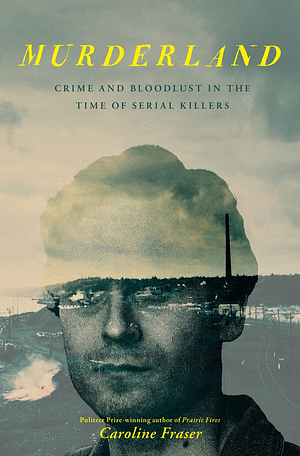
Murderland: Crime and Bloodlust in the Time of Serial Killers by Caroline Fraser.
My rating: four stars.
IN WHICH the author manages to write about her own abusive family, her history of growing up in Washington State near murderous floating bridges and off-the-charts pollution, and the life and times of serial murderers including Ted Bundy and BTK.
Yeah, it’s a lot.
The Pacific Northwest is known for five things: lumber, aircraft, tech, coffee, and crime. Weyerhaeuser, Boeing, Microsoft, Starbucks, and serial killers.
What unfurls, though, is a considered examination of industrial pollution and rapacious greed – from the Rockefellers and the Guggenheims on down – and the effect that environmental abuse has had on the area’s denizens. The argument Fraser makes clear is that lead poisoning and industrial pollution of the area (an inspiration (aside from coke and Islam) for Frank Herbert’s Dune) have a direct impact on the behaviours of its residents, including the storied cast of criminal monsters that’ve spent time amongst those forests.
I felt the book was a little too ornate when it began, but as it went on the style grew on me. The flipping from personal recollection to excellently referenced historical recounting wasn’t as unsettling as I’d imagined it would be, and the description of the industrial indignities visited upon locales (and the inability of anyone following the rampages to actually clean shit up effectively) is truly heinous. Rivers catch fire, horrible shit is pumped into rivers, and only late in the piece do the concepts of environmental protection actually get a look in.
Necrophilia is an acquired taste, and not many human beings acquire it. The desire to commit sexual acts with a dead body requires overriding the hardwired instinct against coming into contact with odors and substances associated with death, decay, and decomposition. Yet some serial killers, almost universally male, develop that taste, and an astonishing number of them have spent time in the Pacific Northwest.
It’s damning, and the evidence for the book’s key thesis – that lead exposure in childhood and violent crime in adulthood are correlated – seems pretty much bulletproof. (I mean, unless you work for the petrochemical sector, in which case I’m sure it’s perceived as lies, right?)
Murderland is not the sort of book I thought it would be. It’s true crime, yes, but it’s better than that as it takes a wider view than the usual who-did-what-to-whom grind of that genre. It’s a coherent work, remarkably so given its combination of personal and the public, and I was deeply affected by it.
Das Boot by Lothar-Günther Buchheim (read by Tim Bruce) (reread).
My rating: five stars.
Imagine WW2. Imagine being German, as the tide starts to – pun unintended – turn and you start heading for defeat. Now imagine experiencing all of this while enclosed in a fart-suffused filing cabinet that is occasionally filled with water or beaten with baseball bats for hours on end.
Welcome to the world of Das Boot.
I read sub survivor Lothar-Günther Buchheim’s novel years ago and was struck by how effective an antiwar novel it was, and how evocative the author wrote on the life below the waves. This time around I took the audiobook route (Tim Bruce’s narration is a bit eh-what-chaps but modulates to fit the different crew backgrounds well) and I was surprised at how the war itself – the reason all these men were gathered together in claustrophobic proximity – is at a remove. There’s pursuits and sinkings and all of that, but the sense of isolation, of being part of a war machine without being connected to it? Surprisingly touching.
Take it easy now – I’ve got first-class references from people who’ve been punched in the face by me. All of them were completely satisfied.
I guess what the book does well is riding the line between duty and going stir-crazy. As someone diagnosed with generalised anxiety int he time between readings, it’s remarkable at how well the author details the tricks people use to try and pretend anxiety isn’t a thing, that everything’s just fine even as they’re stuck on a sunken tube that may not rise again.
This quote really encapsulates the vibe of the proceedings:
But there really ought to be a film of all this: closeups of pure shit. Horizon bald as a baby’s bottom, a couple of clouds – and that’s it. Then they could film the inside of the boat: moldy bread, filthy necks, rotten lemons, torn shirts, sweaty blankets, and, as a grand finale, all of us looking utterly pissed-off.”
Luckily, Wolfgang Petersen got the memo.
This is an incredible piece of work. In terms of creating an atmosphere, you’ll be hard pressed to find something better. I’m not one for military writing, but I found this – again! – to be something I couldn’t turn from.
(Yes I will be watching both of those films after my work trip this week, why do you ask?)
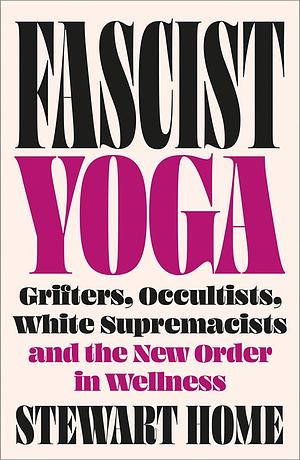
Fascist Yoga: Grifters, Occultists, White Supremacists and the New Order in Wellness by Stewart Home.
My rating: three stars.
This was a disappointment. It’s probably the newest book I’ve read this year – it was published in late July – and I had great expectations for it, knowing that the right-wing takeover of the conspirituality movement is something absolutely caustic and terrible, and deserving of ire.
Unfortunately, Home seems to have let the ire drive the narrative rather than the research. There’s a lot of research in here, to be sure – but it’s overwhelmed by the amount of vitriol the author has for yoga (or postural practice, as he calls it). Ultimately, this encapsulates the bulk of his argument:
I would argue the use of the word in English should not be confused with its many meanings in Sanskrit. Moreover, it is worth stressing again that there is no agreement on what modern postural yoga is, and that many different exercise systems are practised under its rubric.
Which… fine? I would’ve thought it was self-evident to anyone vaguely interested in yoga without having huffed a big line of the Pete Evans, Egg of the Universe antivaxxer woo-coke.

At any rate, Home draws out the links between the people behind the codification of “modern” yoga (using Blavatsky racist science, head stands and occult whiffery) and outright fascism. This isn’t exactly hidden (Savitri Devi? Julius fucking Evola?) but knowing that the author of Yoga Explained was a guest at Hitler’s Nuremberg Rally was new info for me.
The discussion of the reach of thoughts woven into the DNA of modern yogic practice (though perhaps not yogic flying? The author is silent on this matter.) reaches to current political figures such as Steve Bannon and, er, Current 93 and so on.
Evola himself might not have approved but in the mid-1980s, he became the ideological inspiration for a bunch of London-based, third-rate post-punk deadbeats, who needed a gimmick to sell their piss-poor music. This traditionalist provided them with a saleable image that propelled them into becoming founding fathers of a global neofolk scene.
Unfortunately, the book just… ends around the COVID period. Home lets us know that he felt that hacked off by yoga that he’d dumped it before the pandemic hit, and thus didn’t hear a lot of the accelerated rhetorical recruiting going on in the period. For someone writing about the role of white supremacist grifters, this seems like a bit of a missed opportunity. Especially given that the author criticises other books on the topic for skating past the fash underpinnings of the movement. Shit or get off the pot, mate.
I’m not sure if the rest of Home’s writing is like this. He’s written copious texts (including the novel Cunt, which I somehow have also not read) which indicate that there’s worth to his writing. It’s just a shame that this book – while absolutely on the right track as far as picking the holes in terrible conspirituality bullshit goes – reads like a collation of pissed-off Substacks, and perhaps just as easily written off.
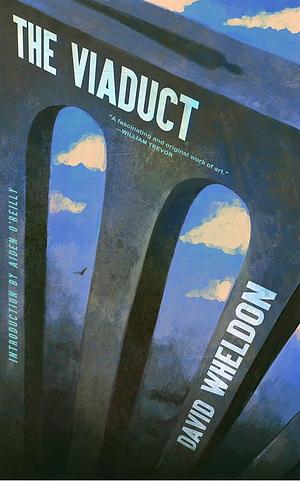
The Viaduct by David Wheldon.
My rating: four stars.
This 1983 work – recently given another lease on life by the excellent Valancourt Books – is a dreamlike experience that’s a bit like what you’d get if The Road took place somewhere in an England populated with railway bridge transients.
The book’s lead character, known only as A. for most of the time, has been released from prison. While in the joint, he could see a railway viaduct, towering over the town, and he knew that he wanted to walk along it.
So he does.
What transpires is a sort of pastoral Kafka tale. A. drifts along the viaduct and the abandoned railway it holds, learning the assorted superstitions of townsfolk and traveller alike. The mystery of his trial and imprisonment, much less his role in the world at present follows him like a fog, and the text regularly slides between narration and allegory as if through a semipermeable membrane.
The ways of lengthening life are few and poorly known,” he said. “But the ways of shortening it are universal.”
There’s no sense that we get to understand A.’s story to any degree: we instead observe how he moves through the world (to the extent that he’s permitted to, given the unspoken rules that keep everyone in their place) and feel how those strictures reach out of the pages to our own lives. What drives him? What drives you?
I still don’t know.
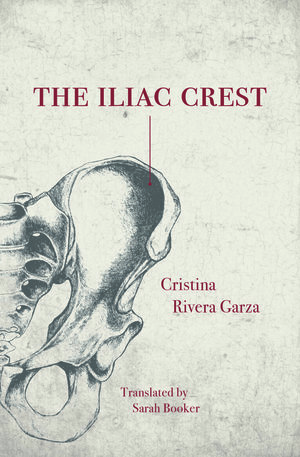
The Iliac Crest by Cristina Riviera Garza (translated by Sarah Booker).
My rating: four stars.
While it’s a cliche to say that a Mexican author’s work features a strong blast of magical (sur)realism, in this case it’s true and not just my laziness. The Iliac Crest begins with a narrator describing the unexpected arrival of a woman – claiming to be the (real) writer Amparo Dávila, though she obviously… isn’t? – to the home where his soon-to-be-ex-partner is in residence.
What follows is a gothic-as-in-Lynch tale of a life being taken over by the visitor, and the narrator’s attempt to nail down what the fuck is going on.
Now, after so much time has passed, I am still dwelling on it, incredulous. How is it possible that someone like me allowed an unknown woman into my house on a stormy night?
The story switches between past and present, and deals with gender and memory in a way that feels like vibes until Garza brings the hammer down. The importance of the body and what one calls it, the blurring of myth and reality and the insertion of passages of language incomprehensible to the narrator (but easily understood by the women of the novel) offers a tricky, slippery reading experience.
The novel was written to speak to Mexico’s ongoing femicides, to interrogate gender and death, self-chosen or otherwise. It’s something so slight (I read it in about an hour) but it leaves an enormous, cryptic mark upon the reader.
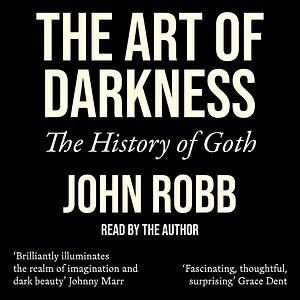
The Art of Darkness: The History of Goth by John Robb (read by John Robb).
My rating: three stars.
Man, I really wanted to like this one .
You see, I’ve been hanging for an excellent overview of goth music. I know Lol Tolhurst has written a book covering this period (and I remember enjoying his recollections of life in The Cure) but I wanted to see if Robb’s enormous tome would fit the bill.
It doesn’t.
That’s not to say the work lacks enthusiasm. If anything, it has nothing but enthusiasm. Robb is a musician himself, and he obviously knows fucking everybody. Despite his published status, he doesn’t come across as much of a writer, but as an enthusiast, a fan, a comrade in arms. But not a considered scribe. This in itself is not a fatal flaw – see Awopbopaloobop Alopbamboom for an example of enjoyable, fan-sided punditry – but it’s something that could’ve been reined in by some judicious editing and fact checking.
That’s something that isn’t in evidence here. The work (600-ish pages and 20-plus hours of narrative) is repetitive, possesses basic factual errors and lacks a real sense of purpose. The things that Robb is interested in are covered in vast detail (you will be a bit embarrassed by the level of worship given Siouxsie Sioux) while everything else is given short shrift. There’s okay writing about the nexus between punk and goth, and how the scenes fed off each other, but there’s not much recognition of that outside his own experience: the crucial role of The Saints in punk, say, receives about two sentences. This work needed a firm hand to interrogate its outline and say “hang on mate, that doesn’t hang together”, but this never happened. According to people who’ve read the book, there’s also multiple layout, spelling and grammar errors, which is unforgivable in something put out by a university imprint.
I get some of the slackness, truly. When I was editing music reviews for volunteer writers, I know there wasn’t a whole lot of pushing back I could do on quality, because when someone’s doing it for love, not money, there’s only so far that enthusiasm’ll stretch. If it becomes more like hard work, the writer will just nope out. But a proper book like this? Under the guise of academic writing? Come on, man.
This inattention stretches to the audiobook. While it’s narrated by Robb himself (and features countless tiresome musical interludes – I get it, dude’s got a flanger – wherever a dinkus might appear) there’s a real sense that he’s reading some of the text for the first time. It’s a snotty critique to piss on people for pronouncing words wrongly, and it’s something I do myself – there’s lots of things I’ve read and written but never said so I am certain I do this all the fucking time – but in a paid audiobook it smacks of ill preparation. There’s also a sense of weirdly dramatic smugness at play, like Robb’s trying to sound like he’s wicked and cave-bound. Which honestly just doesn’t work.
Then there’s the content. The chapters dedicated to individual bands work better than the generalist chapters (I enjoyed the Neubauten chapter, and learned more about New Model Army than I’d ever needed to know) but they’re of variable quality. Looking up something from the Laibach chapter clued me into the fact that whole chunks were lifted from Wikipedia, which then threw into question a lot of the rest of the text. Songs are misnamed, and the prose launches for the baroque only to land in confusion. (I honestly cannot tell you how many times “dark disco”, “dark magus” and other similarly eldritch terms are repeated.)
There’s not a huge amount of focus on what goth is. There’s some dismissive bullshit about Romantic poetry writing competitions (handwaving away Mary Shelley’s singlehanded invention of science fiction and a particular stream of horror) and a couple of historical references, but not a great deal tracing the development of the genre beyond repeating mad, bad and dangerous to know like it’s gonna Bloody Mary up an undead poet. Elsewhere, almost everyone interviewed denies that they’re goth – except for maybe Andrew Eldritch, but I suppose when your other longstanding bandmate’s a drum machine you end up being a bit contrary.
Robb has a tendency to make grandiose calls but then doesn’t drill down into the meat to validate his assertions, instead relying on the “I was there, you weren’t” vibe of his writing, coupled with an “…as such and such told me…” lead-in to quotations. As it’s leveraged off his experience – which is fine, but more suitable for an autobiography than a purported history – we get a raft of assumptions about the drivers behind goth (basically punk but with better sex? I still don’t know) and a focus that largely stays on the English scene, particularly Leeds and Manchester. Few women are involved (apart from the ubiquitous Siouxsie, coming from the Bromley contingent to Cleopatra-eyed superstardom) and the author’s politics, sexual and otherwise, leak into the text. (There’s some curiously biphobic passages, use of offensive trans language (including deadnaming and odd genital references) and a desire to shit all over some artists (rightly) for their moral transgressions, while giving a complete pass to Douglas P. from Death in June, and that whole associated scene.)
I guess this kind of boomers-in-black thing is the key to the work. By its end, I was autopiloting through, which is lucky as its author did the same. The derision for US scenes and the modern goth scene – well, the modern goth scene that isn’t bands reuniting to play album anniversary gigs, at least – is given short shrift, with gaming and social media given the Old Man Yells At Clouds (Because They’re Posers) treatment. There’s a veritable deluge of items covered in a chapter that could’ve been spread out a bit better, especially if there’d been much less on, say, The Cult.
The good thing about this book is that a lot of the caustic discussion about it has clued me in to better writers on the topic, which I’ll pursue instead. As it stands, it’s got some chapters that’d be good given a whip-through and turned into a longread article, but as a whole it’s not what goth deserves.
OK. That’s about enough from me. I’m off to Adelaide for work for a few days, so I’m hoping to blast out the cobwebs with a few quick, airport-friendly reads. (Fuck you, four hour layover.)
See you after I’ve a) read books and b) hopefully avoided deep vein thrombosis. Sooner rather than later, I hope.
If you’re after some good bookish times, please check out my profile on TheStoryGraph.
If you’d like to buy me some books to review, there’s a wishlist over here.
 Yeah nah.