Well, here we are. It’s almost the end of 2024! I figured I’d better get some reviews in for the books I’ve been reading recently. I want to ensure I’ve written up everything before the calendar flips over, because… OCD reasons.
The larger stuff I liked post for this year will be coming along (ideally on the last day of the year – i.e., tomorrow – but let’s not hold our breath too much) but here’s the books I read in the dying days of December.
(Ooh, alliteration! I’m fancy.)
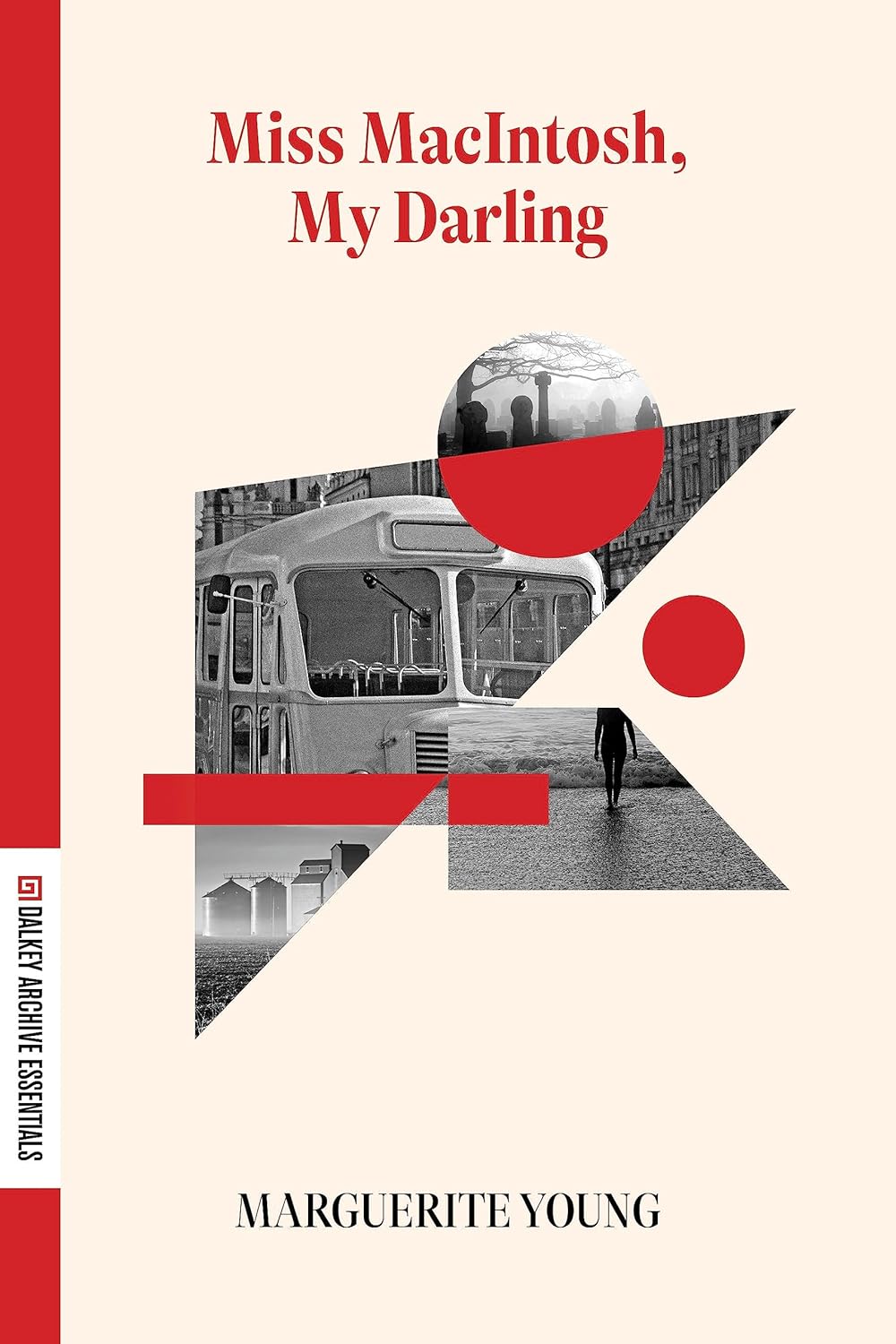
Miss MacIntosh, My Darling by Marguerite Young.
My rating: four stars.
This is, after The Power Broker, probably the longest thing I read this year. The difference is that this book has no footnotes, no list list of sources good for ticking off an easy hundred pages. What you see is what you get: 1340 pages of delirious, kaleidoscopic observation.
(There’s a bit more information about the book itself, and its imposing heft to be found here, written by a contributor to this edition.)
I’d followed the book’s path towards reprinting solely from the description on the publisher’s website. Delivery dates were pushed back and back and back and while I was snippy at the time of non-receipt, when I finally had the tome in my hands, I could see why. The thing is fucking enormous. It would likely be another couple of hundred pages longer if the paper size was more regular: the text flows across the page to a length greater than that easily scanned by the human eye. It requires work to read, line by line by line, this epic of ecstatic logorrhoea.
For all dead loves and all remembered things. I have travelled through many seas.
The book is basically a road-trip that devolves into reverie, personal history and revelation. It begins aboard a bus that’s a little like the tram-to-nowhere in the Half-Life games: a mode of transport unencumbered by the constraints of such frivolities as physics. Aboard is Vera Cartwheel, who’s in search of her nursemaid, the titular Miss MacIntosh. Vera’s mother, Catherine, lives in an opium haze, holding court in her declining house with people who aren’t there, except a lawyer (Spitzer) who is there, but who mightn’t be who people think he is as he’s one of a set of twins, and uncertain about which twin it is that’s dead. There’s a feminist icon cousin, a hangman keen on the intricacies of his trade, and a number of other characters that weave in and out of the prose.
She would have scolded God Himself for all this dreadful nonsense, had it been the last day of creation, had it been the first, would have found fault with God’s dreaming because of its being so simply excessive, as she would have expressed it, so out of this world and very, very expensive for a poor man— would have beaten back, with her stout umbrella, tides of imagination which break upon no shore—would have simplified everything and gotten rid of, not merely in actuality but also in dreams, these pretensions, lies, illusions of grandeur which here surrounded her like the old fog itself, and she was grateful for a beam of sunlight.
Fundamentally, the book is about women: their relationships with each other, their lives both real and imagined, and their place in the world. It’s an examination of the bonds between women: of blood and of situation, and of masking and unmasking. This sprawling work is a confession, woman to woman and woman to void, and an act of bearing witness to those stories. There’s a distinctly supernatural feeling to the text: doubles abound, the line between dream and reality is semi-permeable (when it’s there at all) and phantoms are never far away, whether actual revenants or just the haunts of memory. There’s a sense that the text is always working on another psychological level, which puts me in mind of Leonora Carrington or John Barth: there’s a lot here that I had to let wash over me, because it’s like drinking from a synaesthetic firehose.
This is a book that asks questions, though sometimes it’s hard to tell whether it’s asking for the sake of asking (as Miss MacIntosh herself is wont to do) or because it wants to hear the answer. It’s an undertaking that verges on the monomaniacal, yet there’s something on each page to enchant. Young was a Greenwich Village eccentric, a notable writing teacher, and a contemporary of Stein, McCullers and Capote. I earlier used the word kaleidoscopic in reference to the wordplay here, and it’s true: nothing in here is tossed off. It’s degree-perfect, precision-chosen narrative that, while it might obscure its true meaning, enchants for its duration.
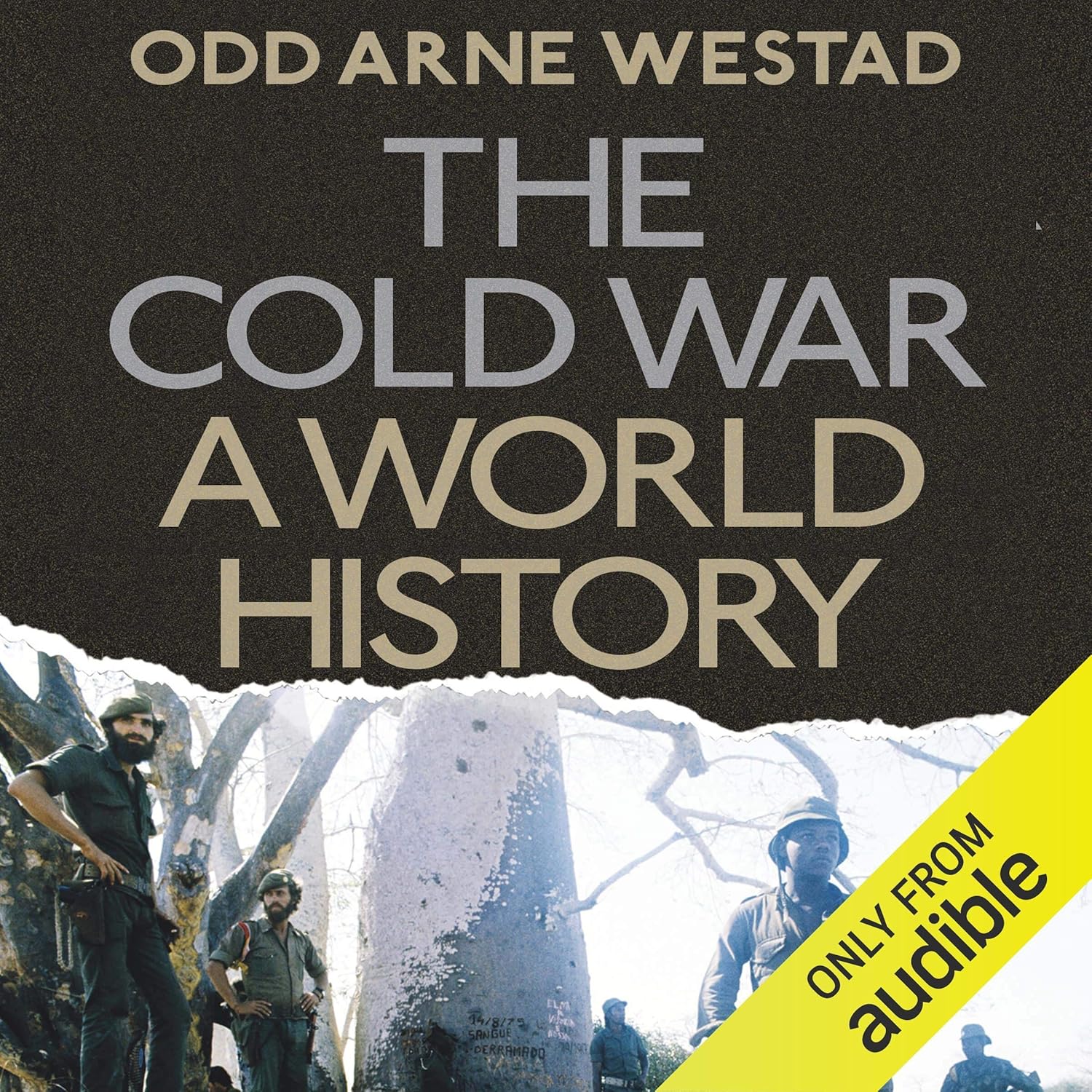
The Cold War: A World History by Odd Arne Westad (read by Jonathan Keeble).
My rating: four stars.
Another one in my try to learn more modern history you enormous idiot list of books this year. I am happy to note that my self-education in geopolitics has now progressed to the point that I am pretty sure that The Spy Who Loved Me played a bit fast and loose with the Soviet/UK information exchange relationship of the 1970s.
Westad does an admirable job in turning a subject that I’d always believed to be the equivalent of eating a kapok mattress into a coherent and compelling narrative. He charts the development of the cold war (essentially relations between the west/USA and UK-aligned nations and USSR/communist-aligned nations) from roughly the end of the second world war up until the disintegration of the former USSR.
The concept of “The West” was therefore meaningless before the 1950s. There were plenty of public references to a common heritage: Greece, Rome, Christianity, and badly disguised remarks about race. But there were no instruments of cohesion before military, economic, political, and cultural interaction sped up in the postwar era. These placed the United States at the center of western Europe’s consumer revolution, through its music, movies, and fashion as much as through its political ideals. An imagined America made it possible for many western Europeans to escape from restrictions of class, gender, or religion. The United States was therefore part of a European revolution that was in many ways as deep, and more lasting, than the Soviet impact in the eastern half of the continent.
The basis for the relationship is explained pretty clearly, and then the focus broadens. Rather than just being the story of two global superpowers – though it undoubtedly is that – I learned that many more countries were involved in (and influenced by) this period. I learned the distinction between Eastern European and Central European (and why people are incredibly offended if you use the wrong term), as well as the pro-Soviet history of India. My beliefs that the CIA basically fuck up everywhere they go, and that Sting’s beliefs about Russians and their children (though lacking in geopolitical heft) were affirmed. Basically, Westad provides a pretty concise look at the forces that have shaped the world we inhabit, and provided a little more detail than I had previously, which is exactly what I’d hoped for.
Jonathan Keeble’s narration was suitably solemn, but filled with excellent interpretative choices. As he did for the audiobook of Putin, Keeble uses accents to provide a bit of colour to the potentially dry text: Ronald Reagan has a suitably well, uh accent, Nixon sounds like a wheedling hamster, while Brezhnev has a stentorian tone that matches his eyebrows. (He also has a fairly good Churchill in his toolkit.) It certainly makes involved affairs easier to comprehend: I can’t imagine how lost one might be (or asleep) were this delivered in a searing monotone.

The Practice of Not Thinking: A Guide to Mindful Living by Ryunosuke Koike (read by Susan Momoko Hingley).
My rating: three stars.
This audiobook serves as an introduction to mindfulness as it is practised by a Zen Buddhist teacher. It’s expressly not a book of catechism or doctrine, and it’s highly rooted in the idea of not thinking in order to attain a sense of relaxed clarity.
This sounds like a pretty tall order, but Koike’s instructions are simple and to the point. Eating? Concentrate on every aspect of eating. If your mind zips off somewhere, bring it back to the task at hand. Drinking? Concentrate on drinking. Do one thing and do it with all your attention.
(None of this is particularly novel if you’ve dipped your toes into either therapy or mindfulness, or mindfulness therapy, though Koike does receive extra points for positing online behaviours to encourage mindfulness: that’s something I don’t think I’ve seen elsewhere.)
The end of the book features a conversation with a neuroscientist that, while interesting, felt more like padding than actual meaningful content.
I figured that this bite-sized snack might be a good entree into that mode of meditation. But ultimately it led me to the conclusion that a lot of the practices I’ve inherited from my work with my psychologist are very similar to what Koike describes here: do one thing and do it with all your attention.
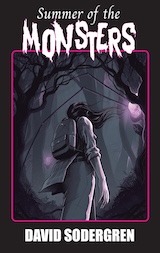
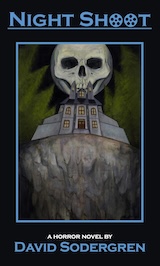

Summer of the Monsters, Night Shoot and Rotten Tommy by David Sodergren.
My rating: three, three and four stars.
Earlier in the year I read a few David Sodergren books, and enjoyed them a lot. As you might recall, Sodergren is a Scottish writer of enjoyably over-the-top horror novels which tend to explore certain tropes of the genre in a way that verges on fanservice but manage to extricate themselves from interpretation as mere copying. Basically, these are high concept titles that do exactly what they say on the tin: witches, sea monsters, ghasts oh, my!
As it’s the end of the year and I’ve read a lot of Serious and Sober works, I was looking for a period of brain defragging: fiction that would let me put my mind on cruise control and just go for the endorphins rather than attempting to increase my knowledge on any feels bad, man topics (invariably involving genocide). Three more Sodergren novels seemed to be right up my alley, and it’s fair to say I hoovered these up.
As ever, Sodergren’s work is relentlessly Scottish. It’s not above taking the piss out of itself, and these works all fit into the Castle Rock-like version of Scotland that the author has constructed. Each story refers to a town that features in other works, and this sense of connection is (still!) deeply pleasing.
Summer of the Monsters is the most recent of the author’s works, released earlier this month. It’s a coming-of-age tale involving a town besieged by monsters, which is not unusual given that there’s rumours the town sits atop a gate to hell. How does a misfit girl – one living in the ’90s, no less – make friends in a new school while also avoiding being sliced and diced by hellspawn? And how can she help her gormless dad get laid?
It’s all in there. The Stephen King vibes were strong with this one, but there was enough local colour to ensure that big Steve’s thumbprint was more a suggestion than a strict guide.
Night Shoot is the novel of Sodergren’s that I’ve probably gelled the least with. It tells the story of a university film crew trying to make a horror film for their final project. The filming takes place in a relative’s decaying pile, and they’re exhorted to be out before nightfall. Except, of course, they’re not and they find out exactly why they should’ve fucked off when they were said.
The Haunting of Lacey Carmichael. Elspeth winced just thinking about that title. Their final year at university, and the whole crew’s grades hinged on a horror film called The Haunting of Lacey Carmichael.
While it’s a reasonable fuck-around-and-find-out kind of tale, something about Night Shoot felt a little clumsy to me; there seemed to be a bit more telling rather than showing, at least compared to other of the author’s books – but I did enjoy the depiction of queer relationships (and that of the central character, Elspeth) which was subtle and a great riposte to the genre’s usual ingrained misogyny. (The genre at large, I mean – not specifically Sodergren’s works!)
Finally, Rotten Tommy turned out to be an absolute ball-tearer of a read. Easily the best of the author’s works, it’s a spook tale that mashes up elements of Ringu‘s sentient VHS tapes with Scarfolkian cursed children’s television programs of the 1970s, missing actresses, affairs and adults with autism.
It’s a great story, and one I can easily see being adapted into an excellently low-budget, high-vibes production. It encapsulates the just-up-from-panto aesthetics of television production with the concept of a mystery, a technological Macguffin, a remorseless killer and an uncertain reality.
There were several articles about her mum, and understandably so; TV actresses didn’t typically vanish without a trace. She had even found a few modern pieces about her mother, including a YouTube video titled The Top 10 Biggest Scottish Mysteries, where her mum was ranked ninth, ahead of Wee Jimmy Krankie, but behind The Loch Ness Monster.
Becky Sharp, Rotten Tommy‘s main character (the moon-faced titular monster notwithstanding) is an excellent depiction of an adult with autism. Her behaviours and fixations (Jason Statham movies!) are presented without especial fanfare, but with recognition. Sodergren is an adult recently diagnosed with autism, and while it’s clear Becky is not a self-portrait, there’s a respect in the portrayal that comes across clearly, as opposed to y’know, that fuckawful Fred Durst/John Travolta film. I have a lot of time for this novel, and quite aside from the subject matter (which is Extremely My Shit), this presentation is why. I’m definitely looking forward to what comes next.
Well, I guess that’s it for book reviews for 2024, unless the audiobook on stealth fighters I’m currently listening to really jams on the compulsive-listening sauce in the next day. (Never say never, but the ins and outs of radar signatures isn’t exactly doing it for me today.)
(Edit: bugger me, I finished it, so here you are.)
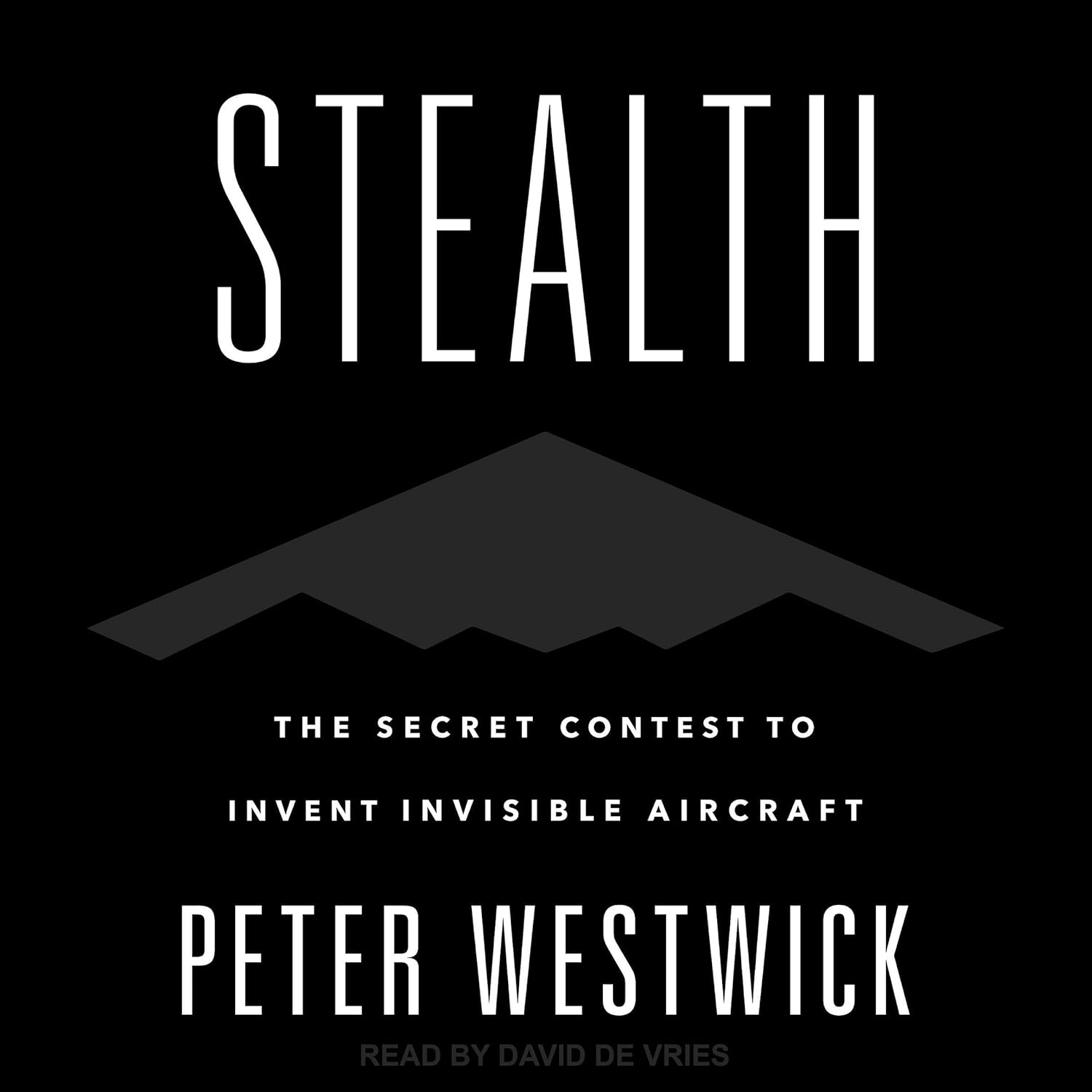
Stealth: the Secret Contest to Invent Invisible Aircraft by Peter Westwick (read by David de Vries).
My rating: two stars.
This audiobook details the competition between aircraft designers at Lockheed and Northrop to secure government endorsement to create an aircraft seemingly invisible to radar.
The book is, much like the salt flats in the Area 51 test area, dry. There’s a lot of detail in here – thankfully not in the form of equations – but the reams of names and design ephemera can be a bit much for the casual reader. (Though it must be noted, I’m not a casual reader: I used to play a stealth fighter simulator as a kid and was a bit of an aviation nerd which surprises absolutely nobody.)
That word again: fuckin’ NERD.
Look, the story is well told here, it’s just lacks a feeling of engagement. I can’t say for sure whether that’s because the narration lacks excitement, but I was a bit disappointed that a story full of so many iconoclastic dicks seemed a little bit dull. I wonder whether the story would be better experienced through designer biography? That could be a next year investigation.
This is as good a note as any to end the year on, but as ever, I’ll have an incredibly involved post about Stuff I Liked coming up pretty soon.
(Be still your beating heart.)
If you’re after some good bookish times, please check out my profile on TheStoryGraph.
If you’d like to buy me some books to review, there’s a wishlist over here.
 Yeah nah.
[…] I think Westad’s book The Cold War: A World History (read last year) was a better book as a history, this one is better if you are looking for a personal view of […]