
Obviously my intent to power through my backlog of reviews has stalled like my Mazda 323 shitbox once did on the Sydney Harbour Bridge. (Embarrassingly, lots of honking.)
So yeah, let’s get to it.
(You’ll be pleased to know that my reading has slowed down a little, at least in terms of numbers of books read: I’m currently ploughing through two volumes – one fiction, one not – of more than 1000 pages each, so the numbers are not ticking over especially quickly at present.)

Jaws by Peter Benchley (read by Erik Steele).
My rating: three stars.
Jaws was one of those films I watched on a rented VHS tape, so the movie always feels like it should smell of stale cigarette smoke or hot dust. I remember it freaking me the fuck out – well done, Spielberg, for someone already not particularly Good At Swimming, much to the chagrin of my national stereotype – but there was something I couldn’t stop obsessing over.
Anyway, when I was old enough to be buying secondhand books for myself, I bought Benchley’s novel and read it, though nothing much sticks in my mind from that 12-year-old me reading, other than Brody was described as taking an extraordinarily long time to have a morning piss.
I decided to give the audiobook a go while making a trip down to Sydney and back and was very pleasantly surprised. What Benchley presents – albeit with some very of-the-times vibes – is a portrait that, while it features an enormous garbage can with teeth, is really a story about class in a small seaside town.
For the film, Spielberg and the scriptwriting team (Benchley, Sackler and Gottlieb) excised a lot of this tension, reducing the story to a one man against the system (and a shark) sort of tale. Yes, there’s others in the frame – Ellen, Quint, Hooper, that incredibly old woman who apparently has a young son – but they’re a bit secondary to the story of Martin Brody, the only man with a sense of how fucked up things in Amity are. That’s something that obviously works on the screen: the tension is about what’ll happen when these two finally meet, especially given that one of them isn’t visible for a lot of the film (because the shark was basically a piece of shit that rarely worked).
The book, however, digs deep into the subtle frictions that rule an island that needs its rich summer people to ensure its survival through the lean times of winter. It’s about how long you have to be around to be considered a proper islander as opposed to a wealthy blow-in. It’s about how real estate deals with men in NYC who might be mafiosi is probably a bad idea. And it’s about how cliquey humans are, especially when they’re meant to be running things.
(There’s also a lot more about rape fantasies than I had expected to read. Let’s just say that writing about sex is not something Benchley was good at.)
Anyway, I was expecting a bit of a monster shocker and ended up standing in kitchens and feeling the currents of status and wealth eddy around my ankles. While there’s no way it’s as tense as the film version, it’s certainly better than any of the celluloid sequels, and is worth your time, especially if you are able to get your hands on the audiobook, which features some excellently pitched renditions of wiseguys-at-the-beach rubberneckers at a particular point that just makes the whole endeavour worthwhile.
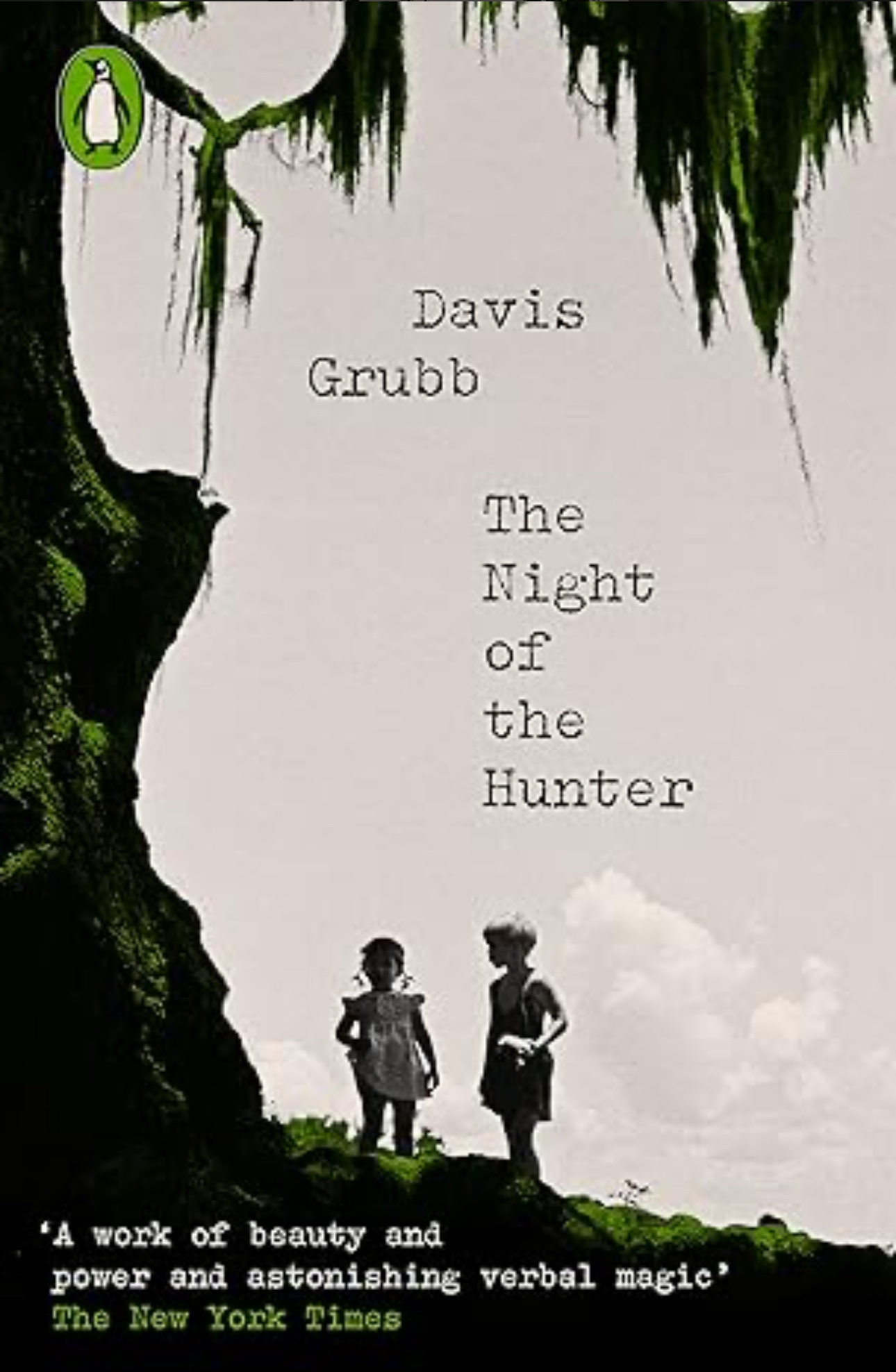
The Night of the Hunter by Davis Grubb.
My rating: four stars.
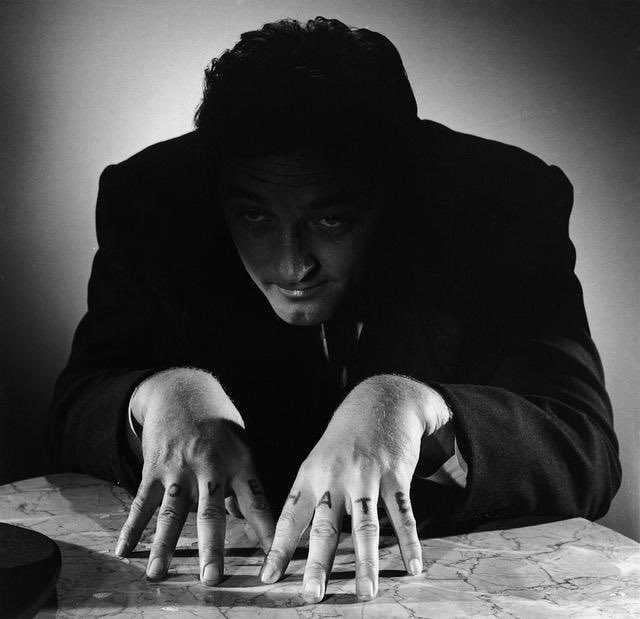
Another novel I came to after watching the film adaptation. I hadn’t actually seen the Charles Laughton-directed noir until fairly recently, but I was deeply familiar with the image of Robert Mitchum, knuckles tattooed, as the world’s least consoling preacher.
It suffices to say that the knuck-tatt crim-padre is unforgettable, though I was impressed by how relentlessly grim the rest of the film is, a sort of southern gothic with deeply held expressionist tendencies. On discovering the book from which the film was adapted had been rereleased in Penguin’s new sick-green range of crime classics meant one thing: I had to get it.
The novel, based somewhat on a true story, tells the story of Harry Powell, a murderous faux-preacher who insinuates himself in the family of his former cellmate, a man who had successfully hidden the proceeds of a bank theft and gone to his grave without revealing where.
Powell worms his way into the community, then the family, in an escalating nightmare of swampy water violence and coercion. The grit and the sweat of the locale seeps from the pages, the grasping greed of the motivating character plays against children justifying their behaviour to themselves, hoping to do right by an absent father in the face of overwhelming pressure.
This is a distressing book to read, but one that’s incredibly good. Grubb’s dialogue crackles, and the portraiture of a community with the arse out of its pants is second to none. This is a nasty little book, but it’s one I could not resist. If you’ve even a passing interest in film noir or crime lit, neither should you.
(I picked up my copy from York’s Criminally Good Books, the sort of place anyone with a yen for crime fiction should visit if they’re in that neck of the woods.)

Quint by Robert Lautner.
My rating: four stars.
After reading Jaws, I watched the film version of the story again. And again I was entranced most of all by Robert Shaw’s no-fucks-given portrayal of Quint, the salty seadog and all-round bastard who offers to catch a killer for the town. And I get that my love of that character is down to Shaw’s truculent, magnetic performance, but there’s something about the character – and his captivating USS Indianapolis tale – that always led to rumination. What makes a man like that?
That’s where Quint comes in. It’s the story of the titular grump, weaving in elements of Benchley’s tale (including characters given only passing reference, or those – that bloody mayor – who receive more fulsome coverage) to flesh out the story of Quint’s life. What we get is a tale presented in a telegraphic, Hemingway-style blast of hard drinking, fucked-up arms (armwrestling), knocked-out teeth, black-out drunkenness and an effortless knowledge of how to fish and earn money from men wanting to feel blood and guts in their teeth.
The book is presented as Quint’s recollections, put down on paper. Eventually we reach the point where action takes over – around the time of the events of Benchley’s book – and it feels as if things transfer into thoughts. At any rate, the pretence of writing a book seems to fall away or lose focus, which is something that irritates me a little after the fact, but in the thrust of narrative doesn’t seem to matter all that much.
What we get is a Man Telling Men’s Stories. It fleshes out what’s essentially a one-dimensional character (gruff sea mercenary!) as a man more fractured than his vices and self-regard will let on. The tale of the Indianapolis sinking and subsequent shark buffet is true to life (based upon survivors’ recollections) and shocking, and certainly more than enough fuel to propel a man into the world of a salt-preserved wanderer.
As I understand it, Quint was written at least a decade before publication. The Benchley estate – which has a particularly strong view on shark protection and is pretty protective of the IP– had to approve Lautner’s book. I’m not sure what finally tipped the scales enough to let it see the light, but I’m glad it happened.

Before We Forget Kindness by Toshikazu Kawaguchi (translated by Geoffrey Trousselot).
My rating: three stars.
This is the most recent instalment of a series of books written about a magical Japanese cafe that allows certain coffee-drinkers to travel back in time, with certain caveats applied. It’s the fifth in the series, the rest of which I read and reviewed earlier in the year.
As ever, the book is a selection of small stories which interlock with other tales in the series, to the extent that each book in the series contains a map explaining the relationships formed around the cafe, and whether the characters have travelled back in time, facilitate the travelling, or have been visited by someone from the past.
According to the publisher, the stories in this volume involve:
- The father who could not allow his daughter to get married
- A woman who couldn’t give Valentine’s Day chocolates to her loved one
- A boy who wants to show his smile to his divorced parents
- A wife holding a child with no name . . .
As is the case with the rest of the volumes, some of these stories are strong, and others seem a little unformed or unconvincing. (I am aware that it is perhaps a bit of a fool’s errand to look for convincing narrative about a caff where you can fix your past indiscretions for the cost of a flat white.) Where the stories are good, though, they are excellent – the Valentine’s Day tale is definitely the strongest of this collection, and the overall score indicates that this is a satisfying (though not exceptional) afternoon’s reading.
I’d like Kawaguchi to stretch out a little more, but given the strictures of the setup (and the undoubted success of the series) I’m not sure that’s going to happen. Still, it’s pleasant to spend time in a kissaten where there’s ghostly visitors and the chance of running into yourself.
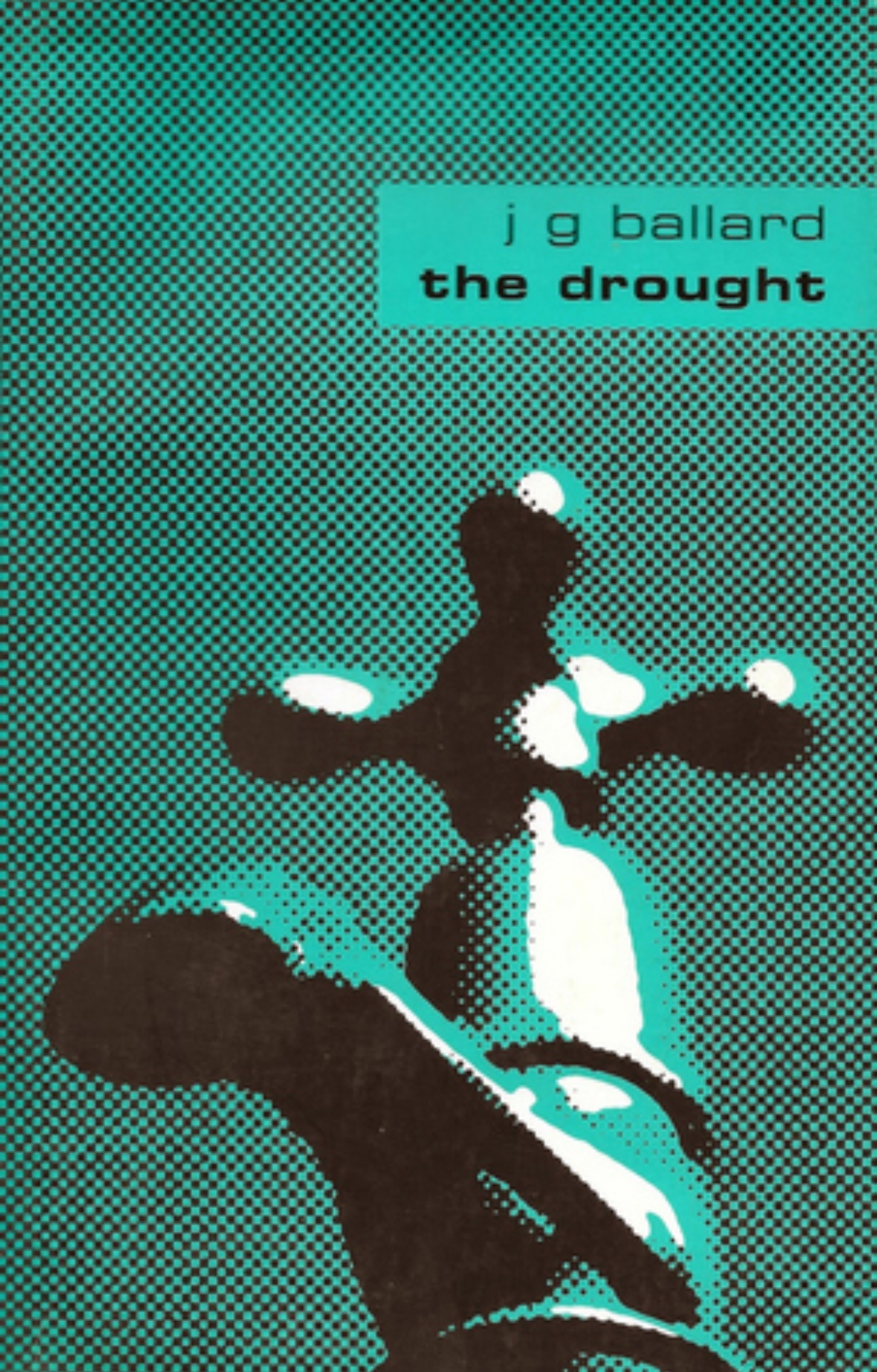
The Drought by J.G. Ballard.
My rating: four stars.
Reading Tim Winton’s Juice reminded me of this story of dystopian thirst. It’d been decades since I had read it, and I didn’t actually remember much of it, so a revisit was definitely in order. I also didn’t know until … now? … that this is an expanded version of The Burning World, published a year later. If it were a film I assume it’d be marketed as a director’s cut.
As the title probably explains, the novel tells the story of life on earth after we’ve fucked up the cycle that turns seawater into rain. Pollution, you know. What’s left is a kind of Mad Max-but-for-Evian situation where society collapses, the rich rot in a world of excess and the lines of reality become a bit more permeable.
It seems we have a knack of turning everything we touch into sand and dust. We’ve even sown the sea with its own salt.
Fittingly, the book feels parched. The mind of the main character, a doctor, seems to wither in the sun, the description of what he sees and undergoes increasingly seem as if they’re mediated through the hazy view of an oasis that might be just a couple of miles that way. There’s a lot in here that doesn’t quite hang together – not to mention a certain element of Ballard Bingo at work (whoops, dead dog! whee! the noble workingman savage!) – but the vibes are strong. It’s a lesser work compared to some of his other novels, but it’s still creepily prescient.
If you’re after some good bookish times, please check out my profile on TheStoryGraph.
If you’d like to buy me some books to review, there’s a wishlist over here.
 Yeah nah.